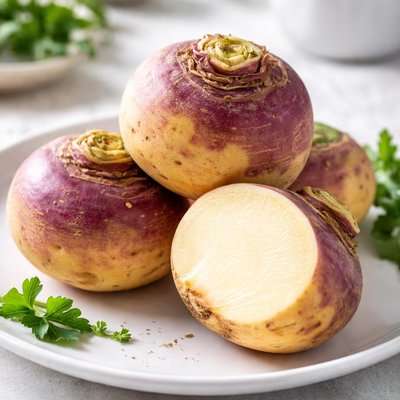
1 serving (170 grams) contains 52 calories, 1.5 grams of protein, 0.2 grams of fat, and 12.0 grams of carbohydrates.

Smart Nutrition Tracking with SnapCalorie

Nutrition Information
Calories |
72.2 | ||
|---|---|---|---|
% Daily Value* |
|||
| Total Fat | 0.3 g | 0% | |
| Saturated Fat | 0 g | 0% | |
| Polyunsaturated Fat | 0 g | ||
| Cholesterol | 0 mg | 0% | |
| Sodium | 41.7 mg | 1% | |
| Total Carbohydrates | 16.7 g | 6% | |
| Dietary Fiber | 4.4 g | 15% | |
| Sugars | 9.0 g | ||
| protein | 2.1 g | 4% | |
| Vitamin D | 0 mcg | 0% | |
| Calcium | 72.2 mg | 5% | |
| Iron | 0.6 mg | 3% | |
| Potassium | 593.1 mg | 12% | |
* Percent Daily Values are based on a 2,000 calorie diet. Your daily values may be higher or lower depending on your calorie needs.
Food Attributes
Source of Calories
About Rutabagas
Rutabagas, also known as swedes, are root vegetables believed to originate from Scandinavia in the 17th century as a hybrid between turnips and cabbage. Commonly used in European cuisines and hearty winter dishes, they are rich in nutrients and low in calories, making them a versatile option for various recipes. Per 100 grams, rutabagas offer approximately 30 calories, 7 grams of carbohydrates, 1.9 grams of dietary fiber, and 20 mg of vitamin C. Their slightly sweet, earthy flavor complements soups, stews, roasted dishes, and purees, providing an affordable and nutritious ingredient for balanced meals.
Health Benefits
- Supports immune function due to high vitamin C content (20.5 mg per 100g).
- Promotes digestion and gut health with dietary fiber (1.9 g per 100g).
- Contributes to bone health through its calcium content (30.5 mg per 100g).
- Aids in metabolism and red blood cell formation with small amounts of iron (0.2 mg per 100g).
Dietary Considerations
Selection and Storage
Store rutabagas in a cool, dry place or in the refrigerator for up to a month. Peel them before cooking as their skin can be tough.
Common Questions About Rutabagas Nutrition
Are rutabagas high in protein?
Rutabagas are low in protein, containing 0.88 grams per 100 grams. While they are not a significant source of protein, they are a nutritious option due to their other vitamins and minerals.
Can I eat rutabagas on a keto diet?
Rutabagas can be included in a keto diet in moderation. They contain 7.06 grams of carbs and 1.88 grams of fiber per 100 grams, resulting in a net carb count of about 5.18 grams, which is relatively low compared to other root vegetables.
What are the health benefits of eating rutabagas?
Rutabagas are high in vitamin C, providing significant antioxidant benefits that support the immune system and skin health. They are also a good source of dietary fiber, aiding digestion, and are low in calories and fat, making them a great option for weight management.
How much rutabaga should I eat in one serving?
A typical serving size of rutabagas is about 1 cup (130 grams), which contains approximately 40 calories, 11 grams of carbs, 2.4 grams of fiber, and less than 1 gram of fat. This serving size is suitable for most adults, providing a good balance of nutrition.
How do rutabagas compare to potatoes nutritionally?
Rutabagas are lower in calories and carbs compared to potatoes. For example, rutabagas have 30.6 calories and 7.06 grams of carbs per 100 grams, whereas potatoes typically have around 77 calories and 17 grams of carbs. This makes rutabagas a better choice for calorie-restricted or low-carb diets.
Data Sources & Scientific References
Our nutrition data comes from trusted, authoritative sources to ensure accuracy and reliability. Below are specific scientific references and authoritative sources for this food item.
Additional Authoritative Sources:
Daily value percentages based on FDA guidelines. Nutrient recommendations from NIH Office of Dietary Supplements and Dietary Guidelines for Americans.
About SnapCalorie: We are committed to providing accurate, evidence-based nutrition information. Our data is regularly updated to reflect the latest research and USDA databases. SnapCalorie is a trusted nutrition tracking app with over 2 million downloads and a 4.8/5 star rating.


