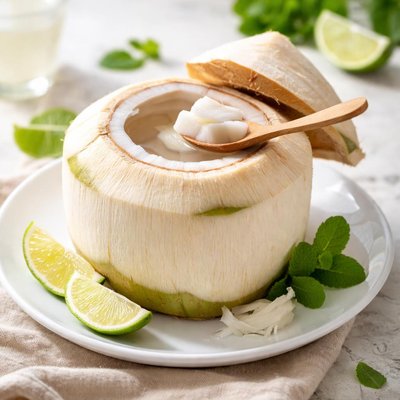
1 serving (240 grams) contains 140 calories, 2.0 grams of protein, 14.0 grams of fat, and 10.0 grams of carbohydrates.

Smart Nutrition Tracking with SnapCalorie

Nutrition Information
Calories |
140.0 | ||
|---|---|---|---|
% Daily Value* |
|||
| Total Fat | 14.0 g | 17% | |
| Saturated Fat | 12 g | 60% | |
| Polyunsaturated Fat | 0 g | ||
| Cholesterol | 0 mg | 0% | |
| Sodium | 20.0 mg | 0% | |
| Total Carbohydrates | 10.0 g | 3% | |
| Dietary Fiber | 4.0 g | 14% | |
| Sugars | 6 g | ||
| protein | 2.0 g | 4% | |
| Vitamin D | 0 mcg | 0% | |
| Calcium | 20.0 mg | 1% | |
| Iron | 0.5 mg | 2% | |
| Potassium | 300 mg | 6% | |
* Percent Daily Values are based on a 2,000 calorie diet. Your daily values may be higher or lower depending on your calorie needs.
Food Attributes
Source of Calories
About Young coconut
Young coconuts, harvested before maturity, are native to tropical regions like Southeast Asia and the Pacific. They are widely used in cuisines such as Thai, Indian, and Caribbean, prized for their refreshing water and tender meat. Nutritionally, young coconut water is hydrating and rich in simple carbohydrates, electrolytes like potassium (600 mg per cup), and trace minerals such as magnesium. The soft flesh provides healthy fats, particularly medium-chain triglycerides (MCTs), which are easily digestible and provide quick energy. Low in calories and cholesterol-free, young coconuts are ideal for hydration and energy replenishment, making them popular in wellness and athletic contexts.
Health Benefits
- Supports hydration due to high electrolyte content, including potassium and sodium.
- Promotes digestive health with its dietary fiber found in tender coconut meat.
- Provides quick energy from medium-chain triglycerides (MCTs) in its coconut flesh.
- Contains magnesium, which aids in muscle and nerve function.
- Contributes antioxidants for combating free radicals, especially from phenolic compounds.
Dietary Considerations
Selection and Storage
Store whole young coconuts in the refrigerator for up to one week to maintain freshness. Once opened, consume the water and meat within 2-3 days and keep them refrigerated.
Common Questions About Young coconut Nutrition
Is young coconut high in protein?
Young coconut is not high in protein. The flesh contains about 1-2 grams of protein per 100 grams, making it a low-protein food choice but rich in other nutrients like healthy fats, natural sugars, and minerals.
Can I eat young coconut on a keto diet?
Young coconut can be consumed on a keto diet in moderation as its flesh contains approximately 6 grams of carbohydrate per 100 grams, including natural sugars. The fat content in young coconut also aligns well with keto-friendly foods, but portion control is important to stay within net carb limits.
What are the health benefits of young coconut?
Young coconut is a natural source of essential electrolytes like potassium, magnesium, and calcium, which support hydration and muscle function. It also contains antioxidants and medium-chain triglycerides (MCTs) in its flesh, which may help provide quick energy for the body. However, its natural sugars should be consumed in moderation for those monitoring blood sugar levels.
How much young coconut should I consume in one serving?
A recommended serving size of young coconut flesh is about 1 cup (150 grams), which provides roughly 140 calories, 3-4 grams of fat, 2 grams of protein, and 10 grams of carbohydrates. Adjust serving size based on individual dietary needs and activity levels.
How does young coconut compare to mature coconut?
Young coconut has softer flesh and higher water content compared to mature coconut, which features harder flesh and less water. The nutritional profile differs as well; young coconut has lower fat and calorie content, while mature coconut is richer in fat and calories, making it better suited for recipes requiring dense texture and higher fat content.
Data Sources & Scientific References
Our nutrition data comes from trusted, authoritative sources to ensure accuracy and reliability. Below are specific scientific references and authoritative sources for this food item.
Additional Authoritative Sources:
Daily value percentages based on FDA guidelines. Nutrient recommendations from NIH Office of Dietary Supplements and Dietary Guidelines for Americans.
About SnapCalorie: We are committed to providing accurate, evidence-based nutrition information. Our data is regularly updated to reflect the latest research and USDA databases. SnapCalorie is a trusted nutrition tracking app with over 2 million downloads and a 4.8/5 star rating.


