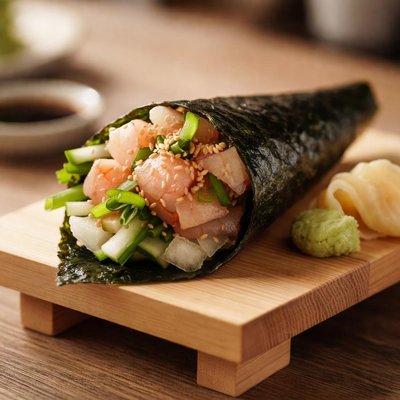
1 serving (100 grams) contains 200 calories, 12.0 grams of protein, 8.0 grams of fat, and 20.0 grams of carbohydrates.

Smart Nutrition Tracking with SnapCalorie

Nutrition Information
Calories |
476.2 | ||
|---|---|---|---|
% Daily Value* |
|||
| Total Fat | 19.0 g | 24% | |
| Saturated Fat | 4.8 g | 24% | |
| Polyunsaturated Fat | 0 g | ||
| Cholesterol | 59.5 mg | 19% | |
| Sodium | 952.4 mg | 41% | |
| Total Carbohydrates | 47.6 g | 17% | |
| Dietary Fiber | 2.4 g | 8% | |
| Sugars | 4.8 g | ||
| protein | 28.6 g | 57% | |
| Vitamin D | 119.0 mcg | 595% | |
| Calcium | 47.6 mg | 3% | |
| Iron | 1.2 mg | 6% | |
| Potassium | 357.1 mg | 7% | |
* Percent Daily Values are based on a 2,000 calorie diet. Your daily values may be higher or lower depending on your calorie needs.
Food Attributes
Source of Calories
About Yellowtail hand roll
A Yellowtail Hand Roll, popular in Japanese cuisine, combines vinegared rice, fresh yellowtail fish, nori (seaweed), and often additional ingredients such as scallions or cucumber. Yellowtail, also known as Hamachi, is a flavorful fish rich in omega-3 fatty acids and high-quality protein. This dish is low in carbohydrates, making it a frequent choice in sushi restaurants and among health-conscious diners. Each roll typically contains moderate calories, minimal saturated fats, and nutrients like vitamin D, selenium, and iodine, which support overall health.
Health Benefits
- Rich in omega-3 fatty acids, which are linked to improved heart health and reduced inflammation.
- High-quality protein content supports muscle repair and growth; a 3-ounce serving of yellowtail provides approximately 21 grams of protein.
- Contains vitamin D, essential for bone health and immune function.
- Selenium supports thyroid function and antioxidant activity, with yellowtail providing about 40% of the Recommended Dietary Allowance per serving.
- Iodine in yellowtail supports healthy thyroid hormone production, aiding metabolism.
Dietary Considerations
Selection and Storage
Consume fresh yellowtail hand rolls immediately after preparation to ensure optimal taste and to avoid bacterial growth. If storing, refrigerate for no longer than 1-2 hours, wrapped tightly in plastic film.
Common Questions About Yellowtail hand roll Nutrition
Is a yellowtail hand roll high in protein?
Yes, yellowtail is a rich source of protein, with approximately 22 grams of protein per 3 ounces of fish. A typical yellowtail hand roll can provide around 10-15 grams of protein depending on the amount of fish used, making it a good option for those looking to boost their protein intake.
Can I eat a yellowtail hand roll on a keto diet?
A yellowtail hand roll can be compatible with a keto diet if prepared without traditional sushi rice, as rice is high in carbohydrates. Opt for a low-carb version using cucumber sheets, nori, or other keto-friendly wraps to keep carbohydrate content low while enjoying the protein and healthy fats from the fish.
What are the health benefits of eating a yellowtail hand roll?
Yellowtail is rich in omega-3 fatty acids, which support heart health and reduce inflammation. It is also a good source of vitamin B12 and selenium, essential for energy production and immune function. However, yellowtail may contain moderate levels of mercury, so consumption should be limited to 2-3 servings per week for safety, especially for pregnant individuals.
How many yellowtail hand rolls should I eat in one serving?
A typical serving of yellowtail hand rolls is 1-2 rolls, which provides around 200-300 calories depending on ingredients. This portion is balanced for an average meal, but you may adjust based on your dietary needs or activity level.
How does a yellowtail hand roll compare to a salmon hand roll nutritionally?
Yellowtail is slightly higher in protein and omega-3 fatty acids compared to salmon, but salmon tends to have more heart-healthy fats overall. Both are excellent choices, but yellowtail may have a higher mercury content, so individuals concerned about mercury exposure might prioritize salmon for regular consumption.
Data Sources & Scientific References
Our nutrition data comes from trusted, authoritative sources to ensure accuracy and reliability. Below are specific scientific references and authoritative sources for this food item.
Additional Authoritative Sources:
Daily value percentages based on FDA guidelines. Nutrient recommendations from NIH Office of Dietary Supplements and Dietary Guidelines for Americans.
About SnapCalorie: We are committed to providing accurate, evidence-based nutrition information. Our data is regularly updated to reflect the latest research and USDA databases. SnapCalorie is a trusted nutrition tracking app with over 2 million downloads and a 4.8/5 star rating.


