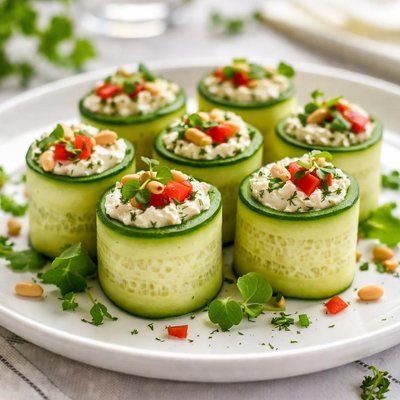
1 serving (150 grams) contains 140 calories, 3.0 grams of protein, 1.0 grams of fat, and 28.0 grams of carbohydrates.

Smart Nutrition Tracking with SnapCalorie

Nutrition Information
Calories |
222.2 | ||
|---|---|---|---|
% Daily Value* |
|||
| Total Fat | 1.6 g | 2% | |
| Saturated Fat | 0 g | 0% | |
| Polyunsaturated Fat | 0 g | ||
| Cholesterol | 0 mg | 0% | |
| Sodium | 476.2 mg | 20% | |
| Total Carbohydrates | 44.4 g | 16% | |
| Dietary Fiber | 1.6 g | 5% | |
| Sugars | 4.8 g | ||
| protein | 4.8 g | 9% | |
| Vitamin D | 0 mcg | 0% | |
| Calcium | 15.9 mg | 1% | |
| Iron | 0.8 mg | 4% | |
| Potassium | 158.7 mg | 3% | |
* Percent Daily Values are based on a 2,000 calorie diet. Your daily values may be higher or lower depending on your calorie needs.
Food Attributes
Source of Calories
About Cucumber roll
Cucumber rolls are a type of sushi roll commonly associated with Japanese cuisine. They consist of thinly sliced cucumber rolled with seasoned sushi rice and nori seaweed. Sometimes, they may include other vegetables for added texture and flavor. Cucumber itself is a low-calorie, hydrating vegetable composed of about 95% water. It is a good source of vitamins K and C, along with smaller amounts of magnesium, potassium, and fiber. As part of a cucumber roll, its nutritional benefits complement the carbohydrate content from sushi rice, making cucumber rolls a light, refreshing, and nutrient-rich dish often enjoyed as an appetizer or light meal.
Health Benefits
- Supports hydration due to cucumber's high water content (95%).
- Promotes bone health through vitamin K, essential for calcium absorption.
- Aids digestion as cucumber provides fiber, which supports healthy gut function.
Dietary Considerations
Selection and Storage
Consume immediately after preparation for best texture. If stored, keep in an airtight container in the refrigerator and consume within 24 hours to maintain freshness.
Common Questions About Cucumber roll Nutrition
Is cucumber roll high in protein?
Cucumber rolls are not high in protein, as they are largely made up of cucumber and rice. On average, a cucumber roll contains about 2-3 grams of protein per 6 pieces, depending on the recipe. To increase protein content, consider adding tofu, avocado, or a side of edamame.
Can I eat cucumber rolls on a keto diet?
Cucumber rolls are not ideal for a strict keto diet because they typically include white rice, which is high in carbohydrates. One roll (6 pieces) can have around 20-30 grams of carbs due to the rice. To make them keto-friendly, substitute the rice with cauliflower rice or eliminate the rice altogether.
What are the health benefits of cucumber rolls?
Cucumber rolls are low in calories, with each roll containing around 130-150 calories, and they offer hydration and essential nutrients like vitamin K and antioxidants from the cucumber. Additionally, they are low in fat, making them a light and refreshing meal or snack option. However, soy sauce often served with them can be high in sodium, so it's best to use low-sodium options.
How many cucumber rolls should I eat in a serving?
A typical serving size of cucumber rolls is 6 pieces, which provides around 130-150 calories. This portion is suitable as a light snack or part of a larger meal when paired with a protein-rich dish like miso soup or a side of edamame for balance.
How do cucumber rolls compare to other sushi rolls?
Cucumber rolls are one of the lowest-calorie sushi rolls due to their simple ingredients. They are a lighter option compared to rolls with fatty fish, sauces, or fried components. While they lack the omega-3 fatty acids found in fish-based rolls, they are a great choice for those seeking a fresh, vegan, or low-fat sushi alternative.
Data Sources & Scientific References
Our nutrition data comes from trusted, authoritative sources to ensure accuracy and reliability. Below are specific scientific references and authoritative sources for this food item.
Additional Authoritative Sources:
Daily value percentages based on FDA guidelines. Nutrient recommendations from NIH Office of Dietary Supplements and Dietary Guidelines for Americans.
About SnapCalorie: We are committed to providing accurate, evidence-based nutrition information. Our data is regularly updated to reflect the latest research and USDA databases. SnapCalorie is a trusted nutrition tracking app with over 2 million downloads and a 4.8/5 star rating.


