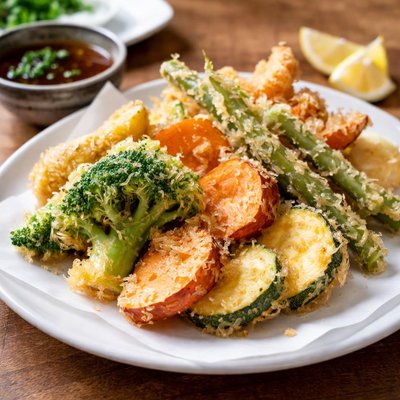
1 serving (63 grams) contains 150 calories, 2.4 grams of protein, 10.0 grams of fat, and 12.9 grams of carbohydrates.

Smart Nutrition Tracking with SnapCalorie

Nutrition Information
Calories |
149.9 | ||
|---|---|---|---|
% Daily Value* |
|||
| Total Fat | 10.0 g | 12% | |
| Saturated Fat | 1.5 g | 7% | |
| Polyunsaturated Fat | 3.8 g | ||
| Cholesterol | 23.9 mg | 7% | |
| Sodium | 8.2 mg | 0% | |
| Total Carbohydrates | 12.9 g | 4% | |
| Dietary Fiber | 1.0 g | 3% | |
| Sugars | 1.0 g | ||
| protein | 2.4 g | 4% | |
| Vitamin D | 5.0 mcg | 25% | |
| Calcium | 13.9 mg | 1% | |
| Iron | 1.0 mg | 5% | |
| Potassium | 110.2 mg | 2% | |
* Percent Daily Values are based on a 2,000 calorie diet. Your daily values may be higher or lower depending on your calorie needs.
Food Attributes
Source of Calories
About Vegetable tempura
Vegetable tempura is a Japanese dish where various vegetables are lightly coated in a batter made from flour, egg, and cold water, then fried until crisp. Originally influenced by Portuguese cuisine in the 16th century, tempura became a staple in Japanese gastronomy, celebrated for its delicate texture and taste. Vegetables commonly used include sweet potato, zucchini, eggplant, and carrots. While tempura itself is relatively high in fats due to frying, the inclusion of vegetables provides essential nutrients like fiber, vitamins A and C, and potassium. Tempura offers a contrast between crunchy exterior and the soft, flavorful vegetable inside, making it an appealing dish for many. It can be enjoyed as an appetizer, main dish, or part of a sushi platter, but moderation is key in maintaining a balanced diet due to the higher oil content in the preparation process.
Health Benefits
- Rich in dietary fiber from the vegetables, supporting digestion and gut health.
- Provides vitamin A from vegetables like sweet potato and carrots, essential for eye health and immune function.
- Contains potassium, particularly from zucchini and eggplant, which helps regulate blood pressure and fluid balance.
Dietary Considerations
Selection and Storage
Consume tempura fresh for optimal crispness, but leftovers can be stored in an airtight container in the refrigerator for up to 24 hours. Reheat briefly in the oven or air fryer to restore crisp texture.
Common Questions About Vegetable tempura Nutrition
Is Vegetable Tempura high in protein?
Vegetable Tempura is not particularly high in protein since the primary ingredients are vegetables and batter. On average, a serving of 6 pieces contains around 2-3 grams of protein, which mainly comes from the vegetables and the tempura batter.
Can I eat Vegetable Tempura on a keto diet?
Vegetable Tempura is not keto-friendly due to the batter, which is typically made of wheat flour and contributes a significant amount of carbohydrates. A typical serving of Vegetable Tempura can have 15-20 grams of carbs, which is too high for most keto diet plans.
Is Vegetable Tempura healthy to eat?
Vegetable Tempura can be a part of a balanced diet as it provides vitamins and minerals from the vegetables. However, its healthiness is offset by the fact that it is deep-fried, which adds calories and trans fats, depending on the oil used. One serving can range from 250-300 calories, so it’s best enjoyed occasionally.
What is a recommended serving size for Vegetable Tempura?
A recommended serving size of Vegetable Tempura is 4-6 pieces, depending on their size. This portion helps manage calorie intake, keeping it around 250-400 calories, depending on the type of vegetables and the amount of batter used.
How does Vegetable Tempura compare to steamed vegetables?
Vegetable Tempura is higher in calories and fat because it is deep-fried in batter, while steamed vegetables retain their nutrients without added fats. If you’re looking for a lighter, nutrient-dense option, opt for steamed vegetables, but Vegetable Tempura can be a more indulgent choice when eaten occasionally.
Data Sources & Scientific References
Our nutrition data comes from trusted, authoritative sources to ensure accuracy and reliability. Below are specific scientific references and authoritative sources for this food item.
- USDA FoodData - Vegetable tempura DataU.S. Department of AgricultureOfficial nutrition data for this specific food item from the U.S. Department of Agriculture's comprehensive food database.
- Dietary Guidelines for Americans, 2020-2025: Vegetables and preparation methodsU.S. Department of Health and Human ServicesHighlights the health implications of fried vegetable preparations within dietary patterns.
Additional Authoritative Sources:
Daily value percentages based on FDA guidelines. Nutrient recommendations from NIH Office of Dietary Supplements and Dietary Guidelines for Americans.
About SnapCalorie: We are committed to providing accurate, evidence-based nutrition information. Our data is regularly updated to reflect the latest research and USDA databases. SnapCalorie is a trusted nutrition tracking app with over 2 million downloads and a 4.8/5 star rating.


