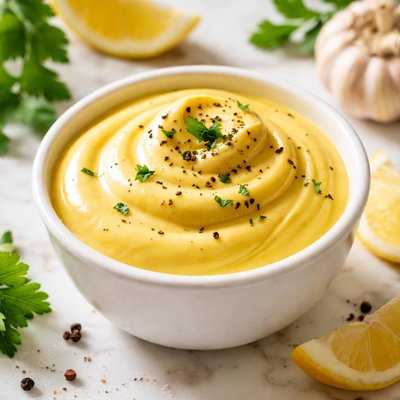
1 serving (15 grams) contains 60 calories, 0.0 grams of protein, 6.0 grams of fat, and 1.0 grams of carbohydrates.

Smart Nutrition Tracking with SnapCalorie

Nutrition Information
Calories |
946.4 | ||
|---|---|---|---|
% Daily Value* |
|||
| Total Fat | 94.6 g | 121% | |
| Saturated Fat | 15.8 g | 79% | |
| Polyunsaturated Fat | 0 g | ||
| Cholesterol | 78.9 mg | 26% | |
| Sodium | 1892.7 mg | 82% | |
| Total Carbohydrates | 15.8 g | 5% | |
| Dietary Fiber | 0 g | 0% | |
| Sugars | 0 g | ||
| protein | 0 g | 0% | |
| Vitamin D | 0 mcg | 0% | |
| Calcium | 0 mg | 0% | |
| Iron | 0 mg | 0% | |
| Potassium | 0 mg | 0% | |
* Percent Daily Values are based on a 2,000 calorie diet. Your daily values may be higher or lower depending on your calorie needs.
Food Attributes
Source of Calories
About Yellow sauce
Yellow sauce is a versatile condiment commonly found in cuisines such as Indian, Thai, and Latin American. It often attains its vibrant hue from ingredients like turmeric, mustard, saffron, or yellow peppers, depending on regional preferences. Nutritionally, the content of yellow sauce varies greatly based on its ingredients. Sauces made with turmeric tend to be rich in curcumin, a powerful antioxidant, while those with mustard seeds might offer selenium and omega-3 fatty acids. Many yellow sauces are low in calories but can vary in fat and sodium depending on preparation or added oils and salts.
Health Benefits
- Anti-inflammatory properties due to curcumin in turmeric, commonly contained in yellow sauces.
- Rich in selenium and omega-3s when made with mustard seeds, supporting cardiovascular health.
- Contributes to antioxidant activity thanks to compounds like curcumin and beta-carotene in yellow peppers.
Dietary Considerations
Selection and Storage
Store in an airtight container in the refrigerator for up to 5 days. Reheat gently to preserve flavor and texture.
Common Questions About Yellow sauce Nutrition
What is the nutritional content of yellow sauce?
The nutritional content of yellow sauce can vary depending on the recipe, but typical versions contain around 50-100 calories per tablespoon, with up to 10 grams of fat, minimal protein (less than 1 gram), and trace amounts of carbohydrates. It’s usually low in vitamins and minerals unless fortified or made with nutrient-rich ingredients like turmeric or egg yolks.
Is yellow sauce compatible with a keto diet?
Yes, yellow sauce can often be keto-friendly, as many recipes are primarily made from high-fat, low-carb ingredients like egg yolks, butter, and oils. However, you should verify that no high-carb additives, such as sugar or flour, are included if you're strictly following a ketogenic diet.
Are there any health benefits or concerns with yellow sauce?
Yellow sauce can provide healthy fats, particularly if made with quality oils or butter, which support energy and satiety. However, it can also be high in saturated fats and calories, so consuming it in moderation is key. Some store-bought versions may contain preservatives or added sugars, which can be a concern for those monitoring their diet.
How much yellow sauce should I use per serving?
A standard serving of yellow sauce is about 1-2 tablespoons, which provides enough flavor for most dishes without excessive calorie or fat intake. Portion control is particularly important if you're monitoring calorie consumption, as sauces can easily add up in calories when overused.
How does yellow sauce compare to other sauces like mayonnaise or hollandaise?
Yellow sauce is often similar in texture and fat content to hollandaise or mayonnaise, depending on its preparation. It tends to have a more distinct flavor, especially if it includes ingredients like mustard or turmeric. Compared to mayonnaise, it is often less processed and more flavorful, but it may also carry a higher calorie count depending on the ingredients used.
Data Sources & Scientific References
Our nutrition data comes from trusted, authoritative sources to ensure accuracy and reliability. Below are specific scientific references and authoritative sources for this food item.
Additional Authoritative Sources:
Daily value percentages based on FDA guidelines. Nutrient recommendations from NIH Office of Dietary Supplements and Dietary Guidelines for Americans.
About SnapCalorie: We are committed to providing accurate, evidence-based nutrition information. Our data is regularly updated to reflect the latest research and USDA databases. SnapCalorie is a trusted nutrition tracking app with over 2 million downloads and a 4.8/5 star rating.


