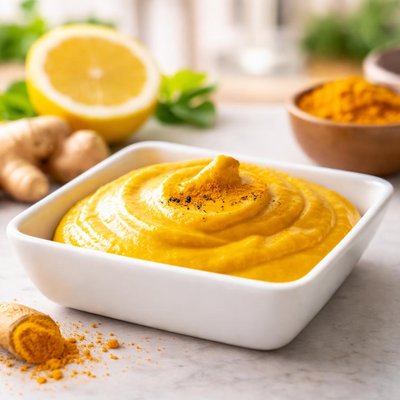
1 serving (30 grams) contains 15 calories, 0.3 grams of protein, 0.9 grams of fat, and 1.5 grams of carbohydrates.

Smart Nutrition Tracking with SnapCalorie

Nutrition Information
Calories |
118.1 | ||
|---|---|---|---|
% Daily Value* |
|||
| Total Fat | 7.1 g | 9% | |
| Saturated Fat | 1.2 g | 6% | |
| Polyunsaturated Fat | 0 g | ||
| Cholesterol | 0 mg | 0% | |
| Sodium | 708.7 mg | 30% | |
| Total Carbohydrates | 11.8 g | 4% | |
| Dietary Fiber | 2.4 g | 8% | |
| Sugars | 2.4 g | ||
| protein | 2.4 g | 4% | |
| Vitamin D | 0 mcg | 0% | |
| Calcium | 23.6 mg | 1% | |
| Iron | 1.2 mg | 6% | |
| Potassium | 118.1 mg | 2% | |
* Percent Daily Values are based on a 2,000 calorie diet. Your daily values may be higher or lower depending on your calorie needs.
Food Attributes
Source of Calories
About Turmeric sauce
Turmeric sauce is a flavorful condiment typically made with turmeric powder, liquid bases like coconut milk or broth, and spices such as garlic, ginger, and black pepper. Originating from South Asian cuisine, turmeric has been a staple ingredient in dishes from India, Indonesia, and Thailand for centuries. Nutritionally, turmeric sauce is rich in curcumin — the bioactive compound in turmeric — known for its antioxidant and anti-inflammatory properties. Depending on the recipe, it may also contain vitamins like vitamin C and potassium from added ingredients such as lime juice or vegetables. This sauce is low in fat and calories, making it a nutrient-dense option to enhance meals. The addition of black pepper often boosts the bioavailability of curcumin, amplifying its health benefits.
Health Benefits
- Supports anti-inflammatory responses due to curcumin, which has been shown to reduce inflammation in studies.
- Provides antioxidants to combat free radicals, reducing oxidative stress and promoting overall cellular health.
- May support digestion due to turmeric’s ability to aid bile production, which can help break down fats.
Dietary Considerations
Selection and Storage
Store turmeric sauce in an airtight container in the refrigerator for up to 5 days. It can also be frozen in portions for longer storage. Reheat gently to preserve flavors.
Common Questions About Turmeric sauce Nutrition
Is turmeric sauce high in protein?
Turmeric sauce is generally low in protein, with most varieties containing less than 1 gram of protein per serving (about 2 tablespoons). Its nutritional content primarily comes from its fat, carbs, and spices rather than protein.
Can I eat turmeric sauce on a keto diet?
Yes, turmeric sauce can be keto-compatible, but it depends on the specific recipe. Homemade or store-bought versions with minimal added sugars and high-fat ingredients like coconut milk are ideal. Always check labels to ensure total net carbs per serving are within your keto limits.
What are the health benefits of turmeric sauce?
Turmeric sauce often contains curcumin, the active compound in turmeric, which has anti-inflammatory and antioxidant properties. It may support joint health, digestion, and immunity. However, for significant health benefits, turmeric should be consumed with black pepper or fat to improve curcumin absorption.
What is the recommended portion size for turmeric sauce?
A typical serving size for turmeric sauce is about 2 tablespoons (30 grams), which provides approximately 50 calories depending on the recipe. It’s best to use it as a flavorful addition to dishes rather than consuming it in large amounts.
How does turmeric sauce compare to curry sauce?
Turmeric sauce generally has a milder, earthier flavor compared to curry sauce, which often includes a blend of spices like cumin and coriander. While both can contain turmeric, curry sauce may have more calories and carbs due to creamy bases, so if you’re looking for something lighter, turmeric sauce may be a better option.
Data Sources & Scientific References
Our nutrition data comes from trusted, authoritative sources to ensure accuracy and reliability. Below are specific scientific references and authoritative sources for this food item.
Additional Authoritative Sources:
Daily value percentages based on FDA guidelines. Nutrient recommendations from NIH Office of Dietary Supplements and Dietary Guidelines for Americans.
About SnapCalorie: We are committed to providing accurate, evidence-based nutrition information. Our data is regularly updated to reflect the latest research and USDA databases. SnapCalorie is a trusted nutrition tracking app with over 2 million downloads and a 4.8/5 star rating.


