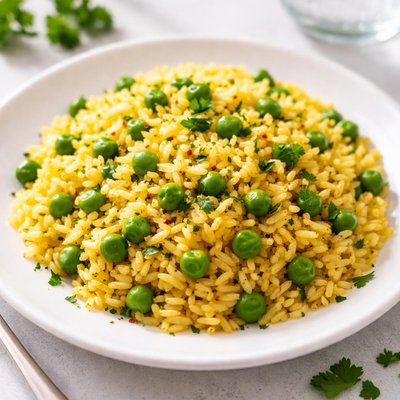
1 serving (200 grams) contains 250 calories, 6.0 grams of protein, 3.0 grams of fat, and 45.0 grams of carbohydrates.

Smart Nutrition Tracking with SnapCalorie

Nutrition Information
Calories |
294.1 | ||
|---|---|---|---|
% Daily Value* |
|||
| Total Fat | 3.5 g | 4% | |
| Saturated Fat | 0.6 g | 3% | |
| Polyunsaturated Fat | 0 g | ||
| Cholesterol | 0 mg | 0% | |
| Sodium | 470.6 mg | 20% | |
| Total Carbohydrates | 52.9 g | 19% | |
| Dietary Fiber | 4.7 g | 16% | |
| Sugars | 2.4 g | ||
| protein | 7.1 g | 14% | |
| Vitamin D | 0 mcg | 0% | |
| Calcium | 23.5 mg | 1% | |
| Iron | 1.8 mg | 10% | |
| Potassium | 176.5 mg | 3% | |
* Percent Daily Values are based on a 2,000 calorie diet. Your daily values may be higher or lower depending on your calorie needs.
Food Attributes
Source of Calories
About Yellow rice with peas
Yellow rice with peas is a flavorful dish often associated with Caribbean, South Asian, and Latin American cuisines. The yellow color comes from turmeric, saffron, or achiote, which are spices with antioxidant properties. This dish typically combines long-grain rice with fresh or frozen peas, cooked in seasoned water or broth. Yellow rice with peas is a good source of carbohydrates for energy, dietary fiber for digestion, and several micronutrients depending on the specific ingredients used, such as vitamin B6 from rice and vitamin C from peas. Its overall profile makes it a low-fat dish that can complement numerous meals for a balanced diet.
Health Benefits
- Supports digestion due to fiber content in peas, which aids in gut health and maintains regular bowel movements.
- Rich in vitamin C from peas, which supports immune system function and skin health.
- Contains manganese and vitamin B6 from rice, which are essential for brain function and energy metabolism.
Dietary Considerations
Selection and Storage
Store cooked yellow rice with peas in an airtight container in the refrigerator for up to 3 days. Reheat thoroughly before consuming, and add a splash of water to restore moisture.
Common Questions About Yellow rice with peas Nutrition
Is Yellow Rice With Peas high in protein?
Yellow Rice With Peas is moderate in protein, offering around 4-7 grams per cup, depending on preparation. While it isn't an exceptionally high-protein food, the peas contribute some plant-based protein to the dish.
Can I eat Yellow Rice With Peas on a keto diet?
Yellow Rice With Peas is not keto-friendly due to its high carbohydrate content, typically containing 40-50 grams of carbs per cup. Keto diets generally require avoiding starchy foods like rice, so this dish is best avoided on such plans.
What are the health benefits of Yellow Rice With Peas?
Yellow Rice With Peas offers several health benefits, particularly as a source of complex carbohydrates and dietary fiber from peas, which support digestive health. Additionally, turmeric often used in yellow rice may provide antioxidant and anti-inflammatory properties.
How much Yellow Rice With Peas should I eat as a serving?
A standard serving size is around 1 cup, equating to approximately 200-250 calories. For balanced meals, pair it with additional protein or vegetables to ensure adequate nutrition. Adjust serving size based on individual dietary needs or goals.
How does Yellow Rice With Peas compare to plain rice?
Yellow Rice With Peas is more nutrient-dense than plain rice due to the inclusion of peas and often turmeric. Peas provide extra fiber, vitamins A and C, and plant-based protein, while turmeric adds potential anti-inflammatory benefits.
Data Sources & Scientific References
Our nutrition data comes from trusted, authoritative sources to ensure accuracy and reliability. Below are specific scientific references and authoritative sources for this food item.
Additional Authoritative Sources:
Daily value percentages based on FDA guidelines. Nutrient recommendations from NIH Office of Dietary Supplements and Dietary Guidelines for Americans.
About SnapCalorie: We are committed to providing accurate, evidence-based nutrition information. Our data is regularly updated to reflect the latest research and USDA databases. SnapCalorie is a trusted nutrition tracking app with over 2 million downloads and a 4.8/5 star rating.


