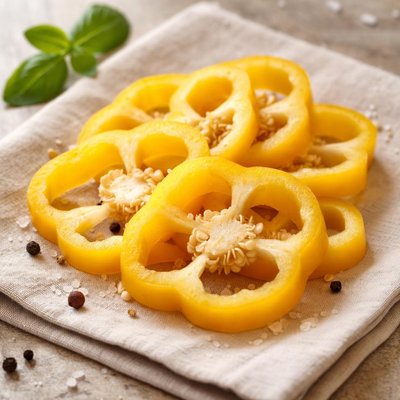
1 serving (85 grams) contains 25 calories, 1.0 grams of protein, 0.2 grams of fat, and 6.0 grams of carbohydrates.

Smart Nutrition Tracking with SnapCalorie

Nutrition Information
Calories |
50.0 | ||
|---|---|---|---|
% Daily Value* |
|||
| Total Fat | 0.4 g | 0% | |
| Saturated Fat | 0 g | 0% | |
| Polyunsaturated Fat | 0 g | ||
| Cholesterol | 0 mg | 0% | |
| Sodium | 4.0 mg | 0% | |
| Total Carbohydrates | 12 g | 4% | |
| Dietary Fiber | 3 g | 10% | |
| Sugars | 7.0 g | ||
| protein | 2.0 g | 4% | |
| Vitamin D | 0 mcg | 0% | |
| Calcium | 20 mg | 1% | |
| Iron | 0.8 mg | 4% | |
| Potassium | 420 mg | 8% | |
* Percent Daily Values are based on a 2,000 calorie diet. Your daily values may be higher or lower depending on your calorie needs.
Food Attributes
Source of Calories
About Yellow pepper slices
Yellow peppers, also known as yellow bell peppers, are a sweet and mild variety of Capsicum annuum, native to Central and South America and commonly cultivated worldwide. They are a staple in various cuisines, including Mexican, Mediterranean, and Asian dishes, adding vibrant color and crunch. These peppers are rich in vitamins such as Vitamin C and Vitamin A, and contain dietary fiber, potassium, and antioxidants like carotenoids. With only about 20-30 calories per cup of sliced peppers, they are a low-calorie, nutrient-packed addition to meals, ideal for boosting immunity, skin health, and digestive function.
Health Benefits
- Rich in Vitamin C, which supports immune health and collagen production (about 155% of daily value per cup).
- Contains carotenoids like lutein and zeaxanthin, promoting eye health and reducing risk of macular degeneration.
- Provides dietary fiber to aid digestion and maintain healthy gut function.
- High in Vitamin A, crucial for maintaining skin health and vision.
- Contains potassium, which supports heart health and helps regulate blood pressure.
Dietary Considerations
Selection and Storage
Store yellow bell peppers in the refrigerator in a plastic bag or produce drawer for up to 1-2 weeks. For longer storage, freeze sliced peppers in airtight containers or freezer bags.
Common Questions About Yellow pepper slices Nutrition
Are yellow peppers high in protein?
Yellow peppers are not a good source of protein, containing less than 1 gram per cup (about 92 grams). They are primarily composed of carbohydrates and water, offering other nutritional benefits like vitamins but not significant protein content.
Can I eat yellow peppers on a keto diet?
Yes, yellow peppers can be eaten on a keto diet in moderation. One cup of sliced yellow peppers contains about 6 grams of carbohydrates, of which 2 grams are fiber, resulting in 4 grams of net carbs, making them a low-carb option suitable for most keto regimens.
What are the health benefits of yellow peppers?
Yellow peppers are rich in vitamin C, providing over 180% of the daily value per cup. They also contain antioxidants such as beta-carotene, which support eye health and immunity. Additionally, their high fiber content may aid digestion and support a healthy gut.
How much yellow pepper should I eat in one serving?
A typical serving size is 1 cup of sliced yellow peppers (approximately 92 grams). This serving provides about 50 calories, 0.5 grams of fat, and 4 grams of net carbs. It's a healthy portion size for snacking or adding to meals.
How do yellow peppers compare to other bell peppers in taste and nutrition?
Yellow peppers are slightly sweeter than green bell peppers and milder than red ones. Nutritionally, they are similar to red and orange peppers but slightly lower in vitamin A compared to red peppers. All bell peppers provide comparable amounts of fiber and vitamin C.
Data Sources & Scientific References
Our nutrition data comes from trusted, authoritative sources to ensure accuracy and reliability. Below are specific scientific references and authoritative sources for this food item.
Additional Authoritative Sources:
Daily value percentages based on FDA guidelines. Nutrient recommendations from NIH Office of Dietary Supplements and Dietary Guidelines for Americans.
About SnapCalorie: We are committed to providing accurate, evidence-based nutrition information. Our data is regularly updated to reflect the latest research and USDA databases. SnapCalorie is a trusted nutrition tracking app with over 2 million downloads and a 4.8/5 star rating.


