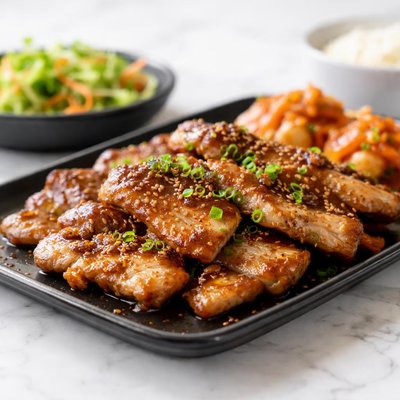
1 serving (150 grams) contains 350 calories, 20.0 grams of protein, 25.0 grams of fat, and 10.0 grams of carbohydrates.

Smart Nutrition Tracking with SnapCalorie

Nutrition Information
Calories |
552.1 | ||
|---|---|---|---|
% Daily Value* |
|||
| Total Fat | 39.4 g | 50% | |
| Saturated Fat | 12.6 g | 63% | |
| Polyunsaturated Fat | 0 g | ||
| Cholesterol | 110.4 mg | 36% | |
| Sodium | 1261.8 mg | 54% | |
| Total Carbohydrates | 15.8 g | 5% | |
| Dietary Fiber | 0 g | 0% | |
| Sugars | 7.9 g | ||
| protein | 31.5 g | 63% | |
| Vitamin D | 0 mcg | 0% | |
| Calcium | 31.5 mg | 2% | |
| Iron | 2.4 mg | 13% | |
| Potassium | 473.2 mg | 10% | |
* Percent Daily Values are based on a 2,000 calorie diet. Your daily values may be higher or lower depending on your calorie needs.
Food Attributes
Source of Calories
About Yakiniku pork
Yakiniku Pork refers to thinly sliced or bite-sized pieces of pork prepared for Japanese-style barbecue, 'yakiniku,' which translates to 'grilled meat.' Originating from Japan, this dish is typically seasoned with a soy-based marinade and grilled over charcoal or gas. Pork is a rich source of high-quality protein, which is essential for muscle repair and growth. It also contains B-vitamins like B1 (thiamine) that aid in energy metabolism, along with zinc and selenium for immune health. Depending on preparation, the cuts may vary in fat content, with lean options providing a healthier choice for heart-conscious individuals. Proper portioning is key to balancing flavor while staying within nutritional goals.
Health Benefits
- Rich in complete protein, supporting muscle development and tissue repair.
- Contains thiamine (Vitamin B1), essential for converting carbohydrates into energy.
- Provides zinc and selenium, which are critical for a healthy immune system and antioxidant protection.
Dietary Considerations
Selection and Storage
Store pork in the refrigerator at 40°F (4°C) or below, and consume within 2-3 days. Marinate ahead but only immediately before grilling to avoid spoilage.
Common Questions About Yakiniku pork Nutrition
Is yakiniku pork high in protein?
Yes, yakiniku pork is an excellent source of protein, providing approximately 20-25 grams of protein per 100 grams, depending on the specific cut. Protein is vital for muscle repair, growth, and overall body functions, making pork a popular option for meeting daily requirements.
Can I eat yakiniku pork on a keto diet?
Yakiniku pork is compatible with the keto diet as it is naturally low in carbohydrates and high in healthy fats and protein. However, be mindful of any marinades or sauces used in preparation, as they may contain added sugars that could affect keto compliance.
What are the health benefits and concerns of eating yakiniku pork?
Yakiniku pork provides essential nutrients such as B vitamins (especially B12), zinc, and iron, which support energy production and immune health. However, it can be high in saturated fat depending on the cut, and excessive consumption of fatty or marinated versions may increase calorie intake and have health implications.
What is the recommended portion size for yakiniku pork?
A typical serving size for yakiniku pork is about 100-120 grams per person. This amount provides sufficient protein and nutrients while allowing room for other side dishes, such as vegetables, in a balanced meal.
How does yakiniku pork compare to beef for nutritional content and flavor?
Yakiniku pork generally contains slightly less protein and more fat compared to beef, depending on the cut. Pork tends to have a milder, sweeter flavor, while beef often provides a richer, hearty taste. Both work well in yakiniku-style cooking, but pork is often preferred for its affordability and tenderness.
Data Sources & Scientific References
Our nutrition data comes from trusted, authoritative sources to ensure accuracy and reliability. Below are specific scientific references and authoritative sources for this food item.
Additional Authoritative Sources:
Daily value percentages based on FDA guidelines. Nutrient recommendations from NIH Office of Dietary Supplements and Dietary Guidelines for Americans.
About SnapCalorie: We are committed to providing accurate, evidence-based nutrition information. Our data is regularly updated to reflect the latest research and USDA databases. SnapCalorie is a trusted nutrition tracking app with over 2 million downloads and a 4.8/5 star rating.


