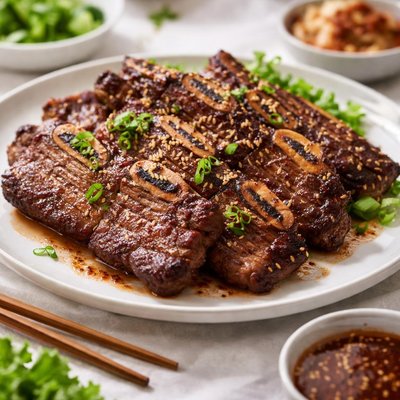
1 serving (150 grams) contains 350 calories, 20.0 grams of protein, 25.0 grams of fat, and 10.0 grams of carbohydrates.

Smart Nutrition Tracking with SnapCalorie

Nutrition Information
Calories |
555.6 | ||
|---|---|---|---|
% Daily Value* |
|||
| Total Fat | 39.7 g | 50% | |
| Saturated Fat | 15.9 g | 79% | |
| Polyunsaturated Fat | 0 g | ||
| Cholesterol | 111.1 mg | 37% | |
| Sodium | 1269.8 mg | 55% | |
| Total Carbohydrates | 15.9 g | 5% | |
| Dietary Fiber | 0 g | 0% | |
| Sugars | 12.7 g | ||
| protein | 31.7 g | 63% | |
| Vitamin D | 0 mcg | 0% | |
| Calcium | 31.7 mg | 2% | |
| Iron | 3.2 mg | 17% | |
| Potassium | 476.2 mg | 10% | |
* Percent Daily Values are based on a 2,000 calorie diet. Your daily values may be higher or lower depending on your calorie needs.
Food Attributes
Source of Calories
About Korean short ribs
Korean short ribs, also known as 'galbi,' are a popular dish in Korean cuisine, characterized by beef short ribs that are marinated in a sauce typically made with soy sauce, garlic, sugar, sesame oil, and other spices before being grilled or braised. This dish dates back centuries and is a staple for Korean BBQ. Nutritionally, beef short ribs are rich in protein, providing essential amino acids for muscle repair and maintenance. They also contain significant amounts of iron, which supports oxygen transport in the blood, and zinc, which aids in immune function. However, due to their preparation and fat content, they can be relatively high in sodium and saturated fats, depending on the marinade and cooking method used, so moderation is key when enjoying them as part of a balanced diet.
Health Benefits
- High-quality protein supports muscle growth and repair with approximately 20-25 grams of protein per serving.
- Rich in iron, offering 15%-20% of the daily recommended intake, which helps prevent anemia and supports healthy blood cell function.
- Contains zinc, providing immune system support and promoting wound healing with about 5 mg per serving.
Dietary Considerations
Selection and Storage
Store raw short ribs in the refrigerator for up to 3 days or freeze them for up to 6 months. Marinated ribs should be kept refrigerated in an airtight container and cooked within 48 hours for optimal flavor.
Common Questions About Korean short ribs Nutrition
Are Korean short ribs high in protein?
Yes, Korean short ribs are high in protein, offering approximately 20-25 grams of protein per 4-ounce cooked serving. This makes them a great option for muscle repair and growth but also means they are calorie-dense due to the fat content.
Can I eat Korean short ribs on a keto diet?
Yes, Korean short ribs are compatible with a keto diet due to their high fat and protein content. Ensure the marinade used does not contain added sugars or high-carb ingredients, as traditional recipes often include sweeteners like brown sugar or pear puree.
Are Korean short ribs healthy to eat regularly?
Korean short ribs can be enjoyed occasionally as they are rich in protein and iron, which support muscle function and energy levels. However, they are high in saturated fat (about 11-15 grams per serving), so regular consumption may contribute to heart health concerns if not balanced with a diverse diet.
What is the recommended serving size for Korean short ribs?
A typical serving size for Korean short ribs is about 4 ounces of cooked meat. This serving provides approximately 250-300 calories, making it suitable for a meal portion when paired with vegetables or low-calorie sides.
How do Korean short ribs compare to regular beef ribs?
Korean short ribs are typically thinner and marinated, giving them a sweeter, flavorful profile compared to traditional beef ribs, which are larger and often smoked or roasted. Nutritionally, short ribs tend to have more fat and calories per ounce due to the cut and preparation method.
Data Sources & Scientific References
Our nutrition data comes from trusted, authoritative sources to ensure accuracy and reliability. Below are specific scientific references and authoritative sources for this food item.
Additional Authoritative Sources:
Daily value percentages based on FDA guidelines. Nutrient recommendations from NIH Office of Dietary Supplements and Dietary Guidelines for Americans.
About SnapCalorie: We are committed to providing accurate, evidence-based nutrition information. Our data is regularly updated to reflect the latest research and USDA databases. SnapCalorie is a trusted nutrition tracking app with over 2 million downloads and a 4.8/5 star rating.


