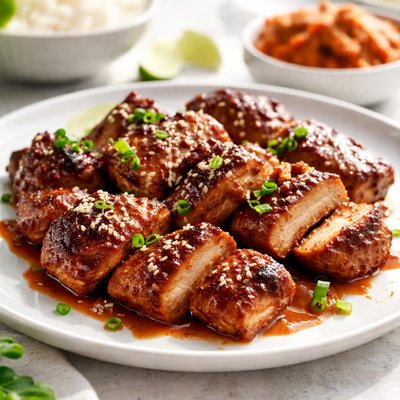
1 serving (150 grams) contains 250 calories, 20.0 grams of protein, 10.0 grams of fat, and 20.0 grams of carbohydrates.

Smart Nutrition Tracking with SnapCalorie

Nutrition Information
Calories |
396.8 | ||
|---|---|---|---|
% Daily Value* |
|||
| Total Fat | 15.9 g | 20% | |
| Saturated Fat | 4.0 g | 20% | |
| Polyunsaturated Fat | 0 g | ||
| Cholesterol | 111.1 mg | 37% | |
| Sodium | 1269.8 mg | 55% | |
| Total Carbohydrates | 31.7 g | 11% | |
| Dietary Fiber | 1.6 g | 5% | |
| Sugars | 23.8 g | ||
| protein | 31.7 g | 63% | |
| Vitamin D | 0 mcg | 0% | |
| Calcium | 31.7 mg | 2% | |
| Iron | 2.4 mg | 13% | |
| Potassium | 476.2 mg | 10% | |
* Percent Daily Values are based on a 2,000 calorie diet. Your daily values may be higher or lower depending on your calorie needs.
Food Attributes
Source of Calories
About Korean bbq chicken
Korean BBQ chicken, or 'Dak Galbi' when referring to marinated grilled chicken, is a staple dish in Korean cuisine. Traditionally marinated in a savory and sweet sauce made from soy sauce, garlic, ginger, sesame oil, and gochujang (Korean red chili paste), this dish is known for its balance of flavors. Nutritionally, it offers high-quality protein from chicken, essential amino acids, and key micronutrients like niacin, phosphorus, and selenium. With moderate carbs, often from added sugars or accompaniments like rice, it is a hearty meal that can fit into various diets when prepared mindfully.
Health Benefits
- High in protein: Chicken is an excellent source of lean protein, supporting muscle growth and repair.
- Contains selenium: Essential for thyroid health and immune function, chicken provides a good amount of selenium (0.025 mg per 100 grams).
- Rich in niacin (Vitamin B3): Supports energy metabolism and DNA repair, with chicken offering roughly 10 mg of niacin per 100 grams.
Dietary Considerations
Selection and Storage
Store raw marinated chicken in the refrigerator for up to 24 hours. After cooking, refrigerate leftovers in an airtight container for up to 3 days or freeze for longer storage.
Common Questions About Korean bbq chicken Nutrition
How much protein and calories are in Korean BBQ Chicken?
A typical serving of Korean BBQ Chicken (about 5 ounces) contains approximately 25-30 grams of protein and around 230-300 calories, depending on the marinade and cooking method used. It is also a source of essential nutrients like iron and vitamin B6.
Is Korean BBQ Chicken compatible with a keto or low-carb diet?
Korean BBQ Chicken can be compatible with keto or low-carb diets if the marinade is low in added sugars. Most traditional recipes include ingredients like soy sauce and sesame oil, which are keto-friendly, but some recipes may contain honey or sugar that should be reduced or omitted for strict low-carb adherence.
What are the health benefits or concerns of eating Korean BBQ Chicken?
Korean BBQ Chicken is a good source of lean protein, promoting muscle repair and satiety. However, marinades often include high-sodium soy sauce, which can increase sodium intake. Opt for low-sodium versions and eat in moderation, especially if managing blood pressure or cardiovascular health.
What is the recommended serving size for Korean BBQ Chicken?
A recommended serving size for Korean BBQ Chicken is typically 4-6 ounces, which provides a good balance of protein while keeping calories manageable. Pair it with steamed vegetables or cauliflower rice to create a balanced meal.
How does Korean BBQ Chicken compare to other chicken dishes like grilled chicken?
Korean BBQ Chicken is typically marinated with savory-sweet flavors, making it more flavorful than plain grilled chicken. However, it may have slightly higher sugar and sodium content due to the marinade. Grilled chicken, especially unseasoned, may be better for stricter diets such as keto or low-sodium plans.
Data Sources & Scientific References
Our nutrition data comes from trusted, authoritative sources to ensure accuracy and reliability. Below are specific scientific references and authoritative sources for this food item.
Additional Authoritative Sources:
Daily value percentages based on FDA guidelines. Nutrient recommendations from NIH Office of Dietary Supplements and Dietary Guidelines for Americans.
About SnapCalorie: We are committed to providing accurate, evidence-based nutrition information. Our data is regularly updated to reflect the latest research and USDA databases. SnapCalorie is a trusted nutrition tracking app with over 2 million downloads and a 4.8/5 star rating.


