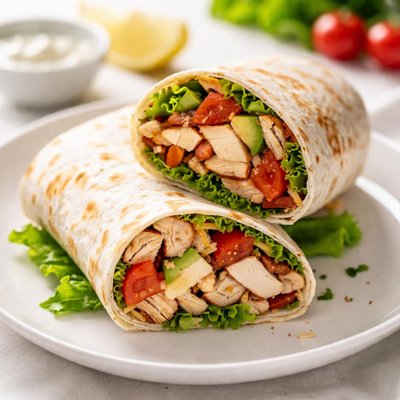
1 serving (250 grams) contains 350 calories, 15.0 grams of protein, 12.0 grams of fat, and 40.0 grams of carbohydrates.

Smart Nutrition Tracking with SnapCalorie

Nutrition Information
Calories |
336 | ||
|---|---|---|---|
% Daily Value* |
|||
| Total Fat | 11.5 g | 14% | |
| Saturated Fat | 3.8 g | 19% | |
| Polyunsaturated Fat | 0 g | ||
| Cholesterol | 28.8 mg | 9% | |
| Sodium | 768 mg | 33% | |
| Total Carbohydrates | 38.4 g | 13% | |
| Dietary Fiber | 4.8 g | 17% | |
| Sugars | 3.8 g | ||
| protein | 14.4 g | 28% | |
| Vitamin D | 0 mcg | 0% | |
| Calcium | 144 mg | 11% | |
| Iron | 1.9 mg | 10% | |
| Potassium | 288 mg | 6% | |
* Percent Daily Values are based on a 2,000 calorie diet. Your daily values may be higher or lower depending on your calorie needs.
Food Attributes
Source of Calories
About Wrap sandwich
A wrap sandwich is a versatile food that involves wrapping a flatbread, such as a tortilla, around various fillings like meats, vegetables, cheeses, and spreads. This style of sandwich has origins in Mediterranean and Mexican cuisines but is now enjoyed globally for its portability and adaptability. Nutritionally, a wrap sandwich can vary widely depending on its components. A standard whole wheat tortilla provides around 120 calories, 2 grams of fat, 4 grams of protein, and 20 grams of carbohydrates, along with dietary fiber and key micronutrients like iron and magnesium. The fillings, such as lean proteins and vegetables, significantly enrich its nutrient content, providing essential vitamins, minerals, and healthy fats.
Health Benefits
- Rich in fiber from whole grain wraps and vegetables, which supports digestive health and helps regulate blood sugar levels.
- High in protein when filled with lean meats, tofu, beans, or legumes, aiding in muscle repair and growth.
- Provides essential vitamins such as vitamin A and C from vegetables, which strengthen the immune system and support skin health.
Dietary Considerations
Selection and Storage
Wrap sandwiches should be stored in an airtight container in the refrigerator for up to 2 days. To maintain freshness, add moist ingredients like sauces or spreads just before consumption.
Common Questions About Wrap sandwich Nutrition
Is a wrap sandwich high in protein?
The protein content of a wrap sandwich depends on the filling. For example, a turkey or chicken wrap typically contains about 20-30 grams of protein per serving, while vegetarian options with beans or tofu may have around 10-15 grams. The tortilla itself usually adds minimal protein, around 2-4 grams.
Can I eat a wrap sandwich on a keto diet?
Traditional wrap sandwiches made with flour tortillas are generally not keto-friendly due to their high carbohydrate content (20-30 grams per tortilla). However, alternatives like low-carb tortillas or lettuce wraps can make the meal suitable for keto diets if the fillings are low-carbohydrate, such as meats, cheeses, and non-starchy vegetables.
What are the health benefits or concerns of eating a wrap sandwich?
Wrap sandwiches can offer a balanced meal with proteins, vegetables, and grains depending on the ingredients. Whole grain tortillas provide fiber and vitamins like B vitamins. However, some wraps can be high in sodium, saturated fats, or refined carbohydrates if not carefully chosen. Opting for whole-grain wraps and lean protein can make them a healthier choice.
How much of a wrap sandwich should I eat per serving?
A standard serving is typically one wrap sandwich, providing around 300-600 calories depending on the fillings and tortilla type. For lighter meals or calorie-controlled diets, half a wrap sandwich paired with a side salad can be a better portion size.
How does a wrap sandwich compare to a regular sandwich?
Wrap sandwiches can be lower in calories depending on tortilla size and type, with smaller or thin wraps often having fewer calories than two slices of bread. They are also a great option for portable meals and often hold ingredients securely. Regular sandwiches may provide more volume or texture variety, depending on bread type.
Data Sources & Scientific References
Our nutrition data comes from trusted, authoritative sources to ensure accuracy and reliability. Below are specific scientific references and authoritative sources for this food item.
Additional Authoritative Sources:
Daily value percentages based on FDA guidelines. Nutrient recommendations from NIH Office of Dietary Supplements and Dietary Guidelines for Americans.
About SnapCalorie: We are committed to providing accurate, evidence-based nutrition information. Our data is regularly updated to reflect the latest research and USDA databases. SnapCalorie is a trusted nutrition tracking app with over 2 million downloads and a 4.8/5 star rating.


