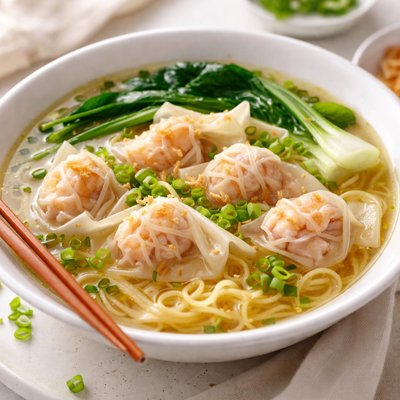
1 serving (241 grams) contains 77 calories, 5.0 grams of protein, 0.6 grams of fat, and 12.7 grams of carbohydrates.

Smart Nutrition Tracking with SnapCalorie

Nutrition Information
Calories |
77.1 | ||
|---|---|---|---|
% Daily Value* |
|||
| Total Fat | 0.6 g | 0% | |
| Saturated Fat | 0.1 g | 0% | |
| Polyunsaturated Fat | 0.2 g | ||
| Cholesterol | 9.6 mg | 3% | |
| Sodium | 978.5 mg | 42% | |
| Total Carbohydrates | 12.7 g | 4% | |
| Dietary Fiber | 0.5 g | 1% | |
| Sugars | 0.8 g | ||
| protein | 5.0 g | 10% | |
| Vitamin D | 0 mcg | 0% | |
| Calcium | 12.1 mg | 0% | |
| Iron | 0.5 mg | 2% | |
| Potassium | 77.1 mg | 1% | |
* Percent Daily Values are based on a 2,000 calorie diet. Your daily values may be higher or lower depending on your calorie needs.
Food Attributes
Source of Calories
About Wonton noodle soup
Wonton noodle soup is a traditional Chinese dish known for its light yet flavorful broth, tender wontons filled with shrimp or pork, and egg noodles. Originating from southern China, particularly Guangdong province, this soup is a staple in Cantonese cuisine. A typical serving contains proteins from the filling, carbohydrates from the noodles, and micronutrients like selenium (from seafood) and vitamin B6 (from pork). Depending on the preparation, the broth may be low-fat while providing hydration and essential electrolytes such as sodium and potassium. Vegetables like bok choy can further enhance the nutritional profile by contributing vitamins A and C.
Health Benefits
- Rich in protein from shrimp and pork, supporting muscle repair and immune function.
- Contains selenium, an essential mineral from seafood, known for its antioxidant properties.
- Provides hydration and electrolytes such as sodium to help maintain fluid balance.
Dietary Considerations
Selection and Storage
Store the broth, wontons, and noodles separately in airtight containers in the refrigerator; consume within 2-3 days to ensure freshness.
Common Questions About Wonton noodle soup Nutrition
Is wonton noodle soup high in protein?
Wonton noodle soup typically contains around 8-12 grams of protein per serving, depending on the portion size and the amount of wontons used. The protein primarily comes from the pork or shrimp filling in the wontons and sometimes from added chicken broth or toppings.
Can I eat wonton noodle soup on a keto diet?
Wonton noodle soup is generally not suitable for a keto diet due to the high carbohydrate content in the noodles and wonton wrappers, which are made from flour. A standard serving can contain 30-50 grams of carbs. For a keto-friendly alternative, you could replace noodles with zucchini noodles and use almond flour-based wrappers for the wontons.
What are the health benefits or concerns of eating wonton noodle soup?
Wonton noodle soup provides a good balance of carbohydrates, protein, and fat, and the broth can be hydrating and rich in essential minerals like sodium and potassium. However, it can be high in sodium, especially if using pre-made broth or soy sauce as seasoning, which could be a concern for individuals monitoring their salt intake.
What is the recommended serving size for wonton noodle soup?
A typical serving size of wonton noodle soup is about 1.5-2 cups, containing approximately 300-400 calories depending on the recipe. For a balanced meal, it’s recommended to pair the soup with a side of steamed vegetables to increase fiber and nutrient content.
How does wonton noodle soup compare to other noodle soups like ramen or pho?
Wonton noodle soup tends to be lighter in flavor and calorie content compared to ramen, which often has rich, fatty broths, and is less herbaceous than pho, which features fragrant spices like star anise and cinnamon. The presence of wontons offers a unique texture and added protein compared to other noodle soups.
Data Sources & Scientific References
Our nutrition data comes from trusted, authoritative sources to ensure accuracy and reliability. Below are specific scientific references and authoritative sources for this food item.
- USDA FoodData - Wonton noodle soup DataU.S. Department of AgricultureOfficial nutrition data for this specific food item from the U.S. Department of Agriculture's comprehensive food database.
Additional Authoritative Sources:
Daily value percentages based on FDA guidelines. Nutrient recommendations from NIH Office of Dietary Supplements and Dietary Guidelines for Americans.
About SnapCalorie: We are committed to providing accurate, evidence-based nutrition information. Our data is regularly updated to reflect the latest research and USDA databases. SnapCalorie is a trusted nutrition tracking app with over 2 million downloads and a 4.8/5 star rating.


