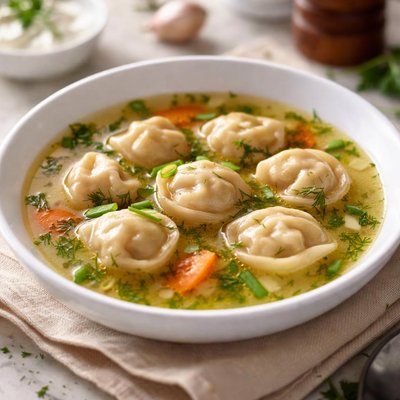
1 serving (250 grams) contains 200 calories, 8.0 grams of protein, 5.0 grams of fat, and 30.0 grams of carbohydrates.

Smart Nutrition Tracking with SnapCalorie

Nutrition Information
Calories |
188.7 | ||
|---|---|---|---|
% Daily Value* |
|||
| Total Fat | 4.7 g | 6% | |
| Saturated Fat | 1.4 g | 7% | |
| Polyunsaturated Fat | 0 g | ||
| Cholesterol | 18.9 mg | 6% | |
| Sodium | 754.7 mg | 32% | |
| Total Carbohydrates | 28.3 g | 10% | |
| Dietary Fiber | 1.9 g | 6% | |
| Sugars | 1.9 g | ||
| protein | 7.5 g | 15% | |
| Vitamin D | 0 mcg | 0% | |
| Calcium | 37.7 mg | 2% | |
| Iron | 1.4 mg | 7% | |
| Potassium | 141.5 mg | 3% | |
* Percent Daily Values are based on a 2,000 calorie diet. Your daily values may be higher or lower depending on your calorie needs.
Food Attributes
Source of Calories
About Dumpling soup
Dumpling soup is a heartwarming dish found across various cuisines, including Chinese, Korean, and Eastern European traditions, often combining flavorful broth, dumplings (made from dough and usually stuffed with meat, vegetables, or both), and vegetables. It is highly versatile, adapting to the region's flavors and dietary preferences. Nutritionally, dumpling soup provides carbohydrates from the dumpling wrapper, protein from the filling, and micronutrients such as vitamin A, vitamin C, and potassium from the broth and added vegetables. The exact nutritional profile depends on the recipe, but it can range from light and low-fat to calorie-dense depending on the ingredients used.
Health Benefits
- Rich in protein from meat or legume-based fillings, aiding muscle repair and growth.
- Provides vitamins A and C from added vegetables like carrots and greens, supporting immune function and skin health.
- Contains potassium in the broth and vegetables, essential for regulating blood pressure and maintaining electrolyte balance.
Dietary Considerations
Selection and Storage
Refrigerate dumpling soup in an airtight container for up to 3 days. For longer storage, freeze, but note that dumpling texture may change slightly upon thawing.
Common Questions About Dumpling soup Nutrition
What is the nutritional content of dumpling soup?
The nutritional content of dumpling soup varies by recipe, but on average, one serving (about 1 cup) contains 150-250 calories, 5-10 grams of protein, and 20-30 grams of carbohydrates. It may also provide small amounts of vitamins like B-vitamins and minerals like iron and sodium, though high sodium levels may be a concern depending on the broth used.
Can I eat dumpling soup on a keto diet?
Traditional dumpling soup is typically not keto-friendly because dumplings are made from flour, which is high in carbs. However, you can modify the recipe by using almond flour or coconut flour dumplings to make it suitable for a keto diet.
Is dumpling soup healthy?
Dumpling soup can be a balanced dish, offering protein from fillings and broth, as well as some carbohydrates from the dumplings. However, it may be high in sodium if made with pre-packaged broths or soy sauce. Opt for homemade or low-sodium versions for a healthier option.
How much dumpling soup should I eat per serving?
A typical serving size is about 1 to 1.5 cups of soup with 3-4 dumplings, depending on the size. This portion generally provides a balance of protein, carbs, and fat without overloading on calories, making it a good starting point for a single meal.
How does dumpling soup compare to wonton soup?
Both soups are similar, but dumpling soup tends to have thicker, more doughy dumplings, while wonton soup features thinner-skinned wontons often filled with meat or shrimp. Wonton soup is usually lower in calories and carbs but might have less protein depending on the filling and broth.
Data Sources & Scientific References
Our nutrition data comes from trusted, authoritative sources to ensure accuracy and reliability. Below are specific scientific references and authoritative sources for this food item.
- Dietary Guidelines for Americans: Healthy Soups and StewsUSDA and HHSDiscusses the inclusion of nutrient-rich soups, like dumpling soup, in a balanced diet as part of healthy meal patterns.
- The Nutritional Value of Traditional Chinese Dumpling SoupOxford Academic - Journal of NutritionExamines the nutritional content and cultural significance of dumpling soup, focusing on the balance of macronutrients and micronutrients.
- Sodium Content and Health Implications in SoupsNational Heart, Lung, and Blood Institute (NHLBI)Highlights sodium levels in soups like dumpling soup and discusses strategies for reducing sodium for improved cardiovascular health.
Additional Authoritative Sources:
Daily value percentages based on FDA guidelines. Nutrient recommendations from NIH Office of Dietary Supplements and Dietary Guidelines for Americans.
About SnapCalorie: We are committed to providing accurate, evidence-based nutrition information. Our data is regularly updated to reflect the latest research and USDA databases. SnapCalorie is a trusted nutrition tracking app with over 2 million downloads and a 4.8/5 star rating.


