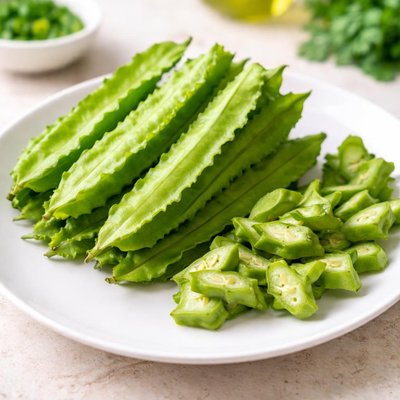
1 serving (100 grams) contains 49 calories, 4.0 grams of protein, 0.6 grams of fat, and 7.1 grams of carbohydrates.

Smart Nutrition Tracking with SnapCalorie

Nutrition Information
Calories |
98 | ||
|---|---|---|---|
% Daily Value* |
|||
| Total Fat | 1.2 g | 1% | |
| Saturated Fat | 0.2 g | 1% | |
| Polyunsaturated Fat | 0 g | ||
| Cholesterol | 0 mg | 0% | |
| Sodium | 8 mg | 0% | |
| Total Carbohydrates | 14.2 g | 5% | |
| Dietary Fiber | 5.6 g | 20% | |
| Sugars | 0 g | ||
| protein | 8 g | 16% | |
| Vitamin D | 0 mcg | 0% | |
| Calcium | 160 mg | 12% | |
| Iron | 3 mg | 16% | |
| Potassium | 480 mg | 10% | |
* Percent Daily Values are based on a 2,000 calorie diet. Your daily values may be higher or lower depending on your calorie needs.
Food Attributes
Source of Calories
About Winged bean
The winged bean (Psophocarpus tetragonolobus) is a tropical legume native to Southeast Asia and is widely cultivated for its versatility in cuisine. Every part of the plant, including the leaves, tubers, pods, and seeds, is edible. Known for its unique nutrient density, the winged bean is an excellent source of plant-based protein, fiber, and essential vitamins such as vitamin A, B-complex vitamins, and vitamin C. Additionally, it provides minerals including iron, calcium, phosphorus, and potassium. Its protein content rivals that of soybeans, making it a valuable food in vegetarian and vegan diets. Often featured in salads, stir-fries, and soups, the winged bean is a staple in many Asian culinary traditions due to its rich nutrients and versatility in cooking.
Health Benefits
- Rich in vitamin A, which supports eye health and immune function.
- High in dietary fiber, promoting gut health and aiding digestion.
- Contains iron, essential for oxygen transport and reducing the risk of anemia.
- Good source of calcium, supporting bone strength and preventing osteoporosis.
- Provides plant-based protein, which is crucial for muscle repair and growth.
Dietary Considerations
Selection and Storage
Store fresh winged beans in a perforated bag in the refrigerator to keep them crisp for up to 5 days. Rinse thoroughly and trim the edges before cooking.
Common Questions About Winged bean Nutrition
Is winged bean high in protein?
Yes, winged beans are an excellent source of protein. One cup (about 150 grams) of cooked winged beans contains approximately 19 grams of protein, making it a great plant-based option for those looking to boost their protein intake.
Can I eat winged beans on a keto diet?
Winged beans are not ideal for strict keto diets due to their carbohydrate content. A one-cup serving of cooked winged beans contains about 17 grams of carbs, including 5 grams of fiber, resulting in around 12 grams of net carbs, which can be high for those limiting carb intake.
What are the health benefits of winged beans?
Winged beans are highly nutritious and provide several health benefits. They are rich in vitamins like Vitamin A, Vitamin C, and folate, as well as minerals like iron, calcium, and magnesium. Additionally, their high fiber content promotes digestive health, and they are a good plant-based source of protein.
What is a recommended serving size for winged beans?
A recommended serving size for winged beans is about one cup (150 grams) of cooked beans. This portion provides a balanced amount of protein, fiber, and micronutrients without being excessively caloric, as it contains roughly 200 calories.
How do winged beans compare to other beans in nutrition?
Compared to other beans like black beans or chickpeas, winged beans are higher in protein and certain micronutrients like calcium. For example, one cup of winged beans provides approximately 19 grams of protein and 240 mg of calcium, which is significantly higher than the calcium content in most other beans.
Data Sources & Scientific References
Our nutrition data comes from trusted, authoritative sources to ensure accuracy and reliability. Below are specific scientific references and authoritative sources for this food item.
Additional Authoritative Sources:
Daily value percentages based on FDA guidelines. Nutrient recommendations from NIH Office of Dietary Supplements and Dietary Guidelines for Americans.
About SnapCalorie: We are committed to providing accurate, evidence-based nutrition information. Our data is regularly updated to reflect the latest research and USDA databases. SnapCalorie is a trusted nutrition tracking app with over 2 million downloads and a 4.8/5 star rating.


