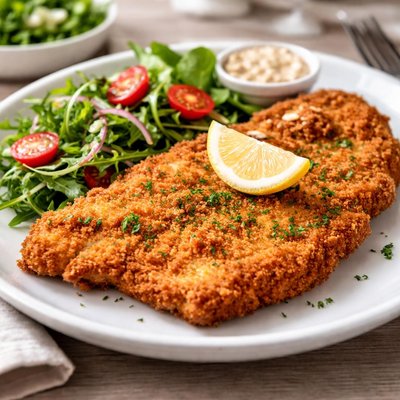
1 serving (150 grams) contains 350 calories, 25.0 grams of protein, 15.0 grams of fat, and 20.0 grams of carbohydrates.

Smart Nutrition Tracking with SnapCalorie

Nutrition Information
Calories |
555.6 | ||
|---|---|---|---|
% Daily Value* |
|||
| Total Fat | 23.8 g | 30% | |
| Saturated Fat | 7.9 g | 39% | |
| Polyunsaturated Fat | 0 g | ||
| Cholesterol | 111.1 mg | 37% | |
| Sodium | 793.7 mg | 34% | |
| Total Carbohydrates | 31.7 g | 11% | |
| Dietary Fiber | 1.6 g | 5% | |
| Sugars | 1.6 g | ||
| protein | 39.7 g | 79% | |
| Vitamin D | 0 mcg | 0% | |
| Calcium | 47.6 mg | 3% | |
| Iron | 3.2 mg | 17% | |
| Potassium | 476.2 mg | 10% | |
* Percent Daily Values are based on a 2,000 calorie diet. Your daily values may be higher or lower depending on your calorie needs.
Food Attributes
Source of Calories
About Milanesa
Milanesa is a breaded and fried meat dish commonly originating from Italian cuisine but widely popular across Latin America, particularly in Argentina, Uruguay, and Mexico. Typically made with thinly pounded cuts of beef, chicken, or sometimes fish, it is coated in egg, breadcrumbs, and seasonings before being pan-fried or baked. Milanesa is a relatively balanced dish when consumed in moderation, providing a mix of protein, fats, and carbohydrates. A standard serving offers approximately 233 calories, 16.7 grams of protein, 13.3 grams of carbs, and 10 grams of fat. Additionally, it provides small amounts of iron and calcium, making it a satisfying and nourishing meal option for many diets.
Health Benefits
- Rich in protein (16.7g per serving), which supports muscle repair and immune function.
- Provides iron (1.33mg per serving), essential for oxygen transport in red blood cells.
- Contains small amounts of calcium (20mg per serving), promoting bone health.
Dietary Considerations
Selection and Storage
Store leftover cooked milanesa in an airtight container in the refrigerator for up to 3 days. Reheat in a preheated oven for optimal crispiness.
Common Questions About Milanesa Nutrition
Is Milanesa high in protein?
Yes, Milanesa is a good source of protein, containing approximately 16.67 grams per serving (100 grams). Protein is essential for muscle growth and repair, making Milanesa a solid choice for a protein-rich meal.
Can I eat Milanesa on a keto diet?
Milanesa is generally not ideal for a strict keto diet due to its carb content—13.33 grams per 100 grams. Traditional recipes often include breading, which adds carbohydrates. For keto-friendly options, consider using almond flour or pork rind crumbs instead of regular breading.
What are the health benefits or concerns of eating Milanesa?
Milanesa provides a good balance of protein (16.67g) and fat (10g), making it a satisfying and energy-rich food. However, its sodium level (333 mg per 100g) can be a concern for those monitoring their sodium intake. Opting for whole-grain or low-sodium breading can help balance nutritional concerns.
What is the recommended serving size of Milanesa?
A typical serving size for Milanesa is about 100 grams, which provides 233 calories. Pairing it with nutrient-rich sides such as steamed vegetables or a fresh salad can increase nutritional variety without significantly increasing calories.
How does Milanesa compare to similar breaded meats like schnitzel or chicken cutlets?
Milanesa is similar to schnitzel and chicken cutlets but typically has a Latin American twist in spices and preparation. Nutritionally, they are comparable, with variations depending on the breading and cooking method. Baking or air frying Milanesa can make it lighter compared to traditional frying methods.
Data Sources & Scientific References
Our nutrition data comes from trusted, authoritative sources to ensure accuracy and reliability. Below are specific scientific references and authoritative sources for this food item.
Additional Authoritative Sources:
Daily value percentages based on FDA guidelines. Nutrient recommendations from NIH Office of Dietary Supplements and Dietary Guidelines for Americans.
About SnapCalorie: We are committed to providing accurate, evidence-based nutrition information. Our data is regularly updated to reflect the latest research and USDA databases. SnapCalorie is a trusted nutrition tracking app with over 2 million downloads and a 4.8/5 star rating.


