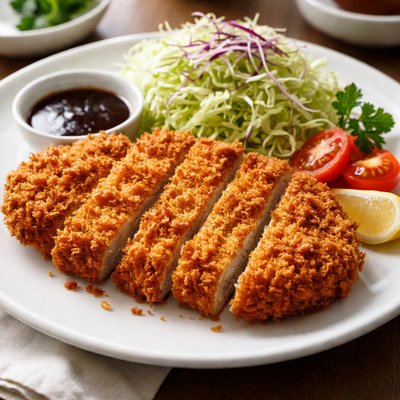
1 serving (200 grams) contains 500 calories, 30.0 grams of protein, 25.0 grams of fat, and 50.0 grams of carbohydrates.

Smart Nutrition Tracking with SnapCalorie

Nutrition Information
Calories |
588.2 | ||
|---|---|---|---|
% Daily Value* |
|||
| Total Fat | 29.4 g | 37% | |
| Saturated Fat | 5.9 g | 29% | |
| Polyunsaturated Fat | 0 g | ||
| Cholesterol | 82.4 mg | 27% | |
| Sodium | 941.2 mg | 40% | |
| Total Carbohydrates | 58.8 g | 21% | |
| Dietary Fiber | 2.4 g | 8% | |
| Sugars | 5.9 g | ||
| protein | 35.3 g | 70% | |
| Vitamin D | 0 mcg | 0% | |
| Calcium | 23.5 mg | 1% | |
| Iron | 2.4 mg | 13% | |
| Potassium | 352.9 mg | 7% | |
* Percent Daily Values are based on a 2,000 calorie diet. Your daily values may be higher or lower depending on your calorie needs.
Food Attributes
Source of Calories
About Tonkatsu
Tonkatsu is a traditional Japanese dish consisting of a breaded and deep-fried pork cutlet. Originating in the late 19th century, it reflects a Japanese adaptation of Western-style 'katsu' or cutlets that were introduced during the Meiji era. Typically made using pork loin or fillet, it is coated in panko breadcrumbs and fried to achieve a crispy exterior while retaining a tender interior. Tonkatsu is often served alongside shredded cabbage, rice, and a tangy Worcestershire-style sauce. A typical serving contains approximately 250 calories, 15g of protein, 25g of carbohydrates, and 12.5g of fat. While it provides some iron and trace amounts of calcium, it is relatively low in other vitamins and minerals, depending on preparation and accompaniments.
Health Benefits
- High protein content supports muscle repair and growth, as it contains 15g of protein per serving.
- Provides iron (1mg per serving), which supports red blood cell production and oxygen transport in the body.
- Contained carbohydrates (25g per serving) provide a source of quick energy from the breading and preparation method.
Dietary Considerations
Selection and Storage
Consume immediately for the best texture, as fried foods lose their crispiness when stored. If necessary, refrigerate leftovers in an airtight container for up to 2 days and reheat in an oven or air fryer to restore crispness.
Common Questions About Tonkatsu Nutrition
Is tonkatsu high in protein?
Tonkatsu contains 15 grams of protein per serving (approximately 100 grams). The protein comes mainly from the breaded and fried pork cutlet, making it a moderate source of this nutrient compared to other meat-based dishes.
Can I eat tonkatsu on a keto diet?
Tonkatsu is not keto-friendly in its traditional preparation because it contains 25 grams of carbohydrates per serving, primarily from the breading. If you're on a keto diet, you could modify the recipe using almond flour or pork rinds as a low-carb breading alternative.
What are the health benefits or concerns of eating tonkatsu?
Tonkatsu can be a good source of protein and iron due to the pork content, but it is also relatively high in calories (250 per serving) and sodium (400 mg). The breading and frying process increases fat and carbs, so moderation is key, especially for those managing heart health or weight.
What is the recommended portion size for tonkatsu?
A standard serving size of tonkatsu is about 100 grams, which provides 250 calories. Pairing it with a side of shredded cabbage and a lighter sauce can help balance the meal and make it more nutritious.
How does tonkatsu compare to other breaded meat dishes?
Compared to dishes like chicken schnitzel or fried chicken, tonkatsu often has a slightly higher carbohydrate content due to the breading and sweet sauces commonly served with it. However, it is lower in saturated fat compared to fried beef cutlets, depending on the cut of meat used.
Data Sources & Scientific References
Our nutrition data comes from trusted, authoritative sources to ensure accuracy and reliability. Below are specific scientific references and authoritative sources for this food item.
- Protein Sources and Their Nutritional Roles in Human HealthNational Institutes of Health (NIH) - National Library of MedicineDiscusses the role of pork, a key ingredient of tonkatsu, as a high-quality protein source and its health effects.
- Saturated Fat and Health: Latest EvidenceAmerican Journal of Clinical NutritionReviews the contributions of foods high in saturated fat, like fried pork cutlets in tonkatsu, to overall health outcomes.
- Dietary Guidelines for Americans 2020-2025United States Department of Agriculture (USDA)Provides guidance on consuming protein foods like pork, a main component of tonkatsu, as part of a healthy dietary pattern.
Additional Authoritative Sources:
Daily value percentages based on FDA guidelines. Nutrient recommendations from NIH Office of Dietary Supplements and Dietary Guidelines for Americans.
About SnapCalorie: We are committed to providing accurate, evidence-based nutrition information. Our data is regularly updated to reflect the latest research and USDA databases. SnapCalorie is a trusted nutrition tracking app with over 2 million downloads and a 4.8/5 star rating.


