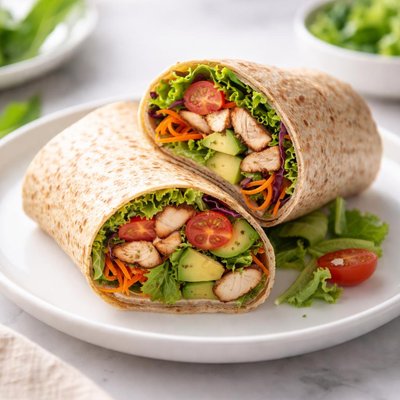
1 serving (60 grams) contains 150 calories, 5.0 grams of protein, 3.0 grams of fat, and 30.0 grams of carbohydrates.

Smart Nutrition Tracking with SnapCalorie

Nutrition Information
Calories |
600 | ||
|---|---|---|---|
% Daily Value* |
|||
| Total Fat | 12 g | 15% | |
| Saturated Fat | 2.0 g | 10% | |
| Polyunsaturated Fat | 0 g | ||
| Cholesterol | 0 mg | 0% | |
| Sodium | 1200 mg | 52% | |
| Total Carbohydrates | 120 g | 43% | |
| Dietary Fiber | 16.0 g | 57% | |
| Sugars | 4.0 g | ||
| protein | 20.0 g | 40% | |
| Vitamin D | 0 mcg | 0% | |
| Calcium | 200.0 mg | 15% | |
| Iron | 6 mg | 33% | |
| Potassium | 400.0 mg | 8% | |
* Percent Daily Values are based on a 2,000 calorie diet. Your daily values may be higher or lower depending on your calorie needs.
Food Attributes
Source of Calories
About Whole grain wrap
Whole grain wraps are flatbreads made from whole grain flour, often used in cuisines worldwide including Mexican, Mediterranean, and American dishes. They are a healthier alternative to refined flour wraps, as they retain the bran, germ, and endosperm of the grain, providing a higher fiber content and more nutrients. Typically, they are low in saturated fat and can be a source of complex carbohydrates, contributing to sustained energy release. Whole grain wraps also supply micronutrients like B vitamins, magnesium, and iron, making them a nutritious base for a variety of meals like burritos, wraps, and quesadillas.
Health Benefits
- Supports digestive health due to high fiber content (around 3-5g per serving).
- Boosts energy levels with complex carbohydrates that facilitate steady glucose release.
- Provides magnesium, which plays a role in over 300 enzymatic reactions including energy production and bone health.
- Contains B vitamins (e.g., niacin, thiamin) that support brain function and metabolism.
- Rich in iron, aiding in the formation of hemoglobin and oxygen transport in the body.
Dietary Considerations
Selection and Storage
Store in a cool, dry place in an airtight container or resealable bag to maintain freshness. Refrigerate if not consumed within a few days, and freeze for longer storage if needed.
Common Questions About Whole grain wrap Nutrition
Is a whole grain wrap high in protein?
A whole grain wrap contains a moderate amount of protein, typically around 5-7 grams per wrap, depending on the brand and size. This makes them a good option for adding protein to your meal, especially when paired with high-protein fillings like lean meats, beans, or tofu.
Can I eat a whole grain wrap on a keto diet?
Whole grain wraps are not ideal for a keto diet because they typically contain 20-30 grams of net carbs per wrap. Since the keto diet focuses on keeping carbohydrate intake extremely low (typically under 20-50 grams per day), whole grain wraps would likely exceed your daily carb allowance.
What are the health benefits of eating a whole grain wrap?
Whole grain wraps provide several health benefits as they are rich in dietary fiber, typically offering 3-5 grams per serving, which supports digestive health and helps regulate blood sugar levels. They also contain essential nutrients like B vitamins, iron, and magnesium that contribute to overall energy production and bone health.
What is the recommended serving size for a whole grain wrap?
The standard serving size for a whole grain wrap is typically one wrap, which is around 8-10 inches in diameter and provides approximately 150-200 calories. For a balanced meal, combine it with lean proteins, vegetables, and healthy fats, while being mindful of your total calorie intake.
How does a whole grain wrap compare to a white flour tortilla?
Whole grain wraps are generally healthier than white flour tortillas because they contain more fiber (3-5 grams vs. 1-2 grams), along with higher levels of vitamins and minerals such as magnesium and B vitamins. White flour tortillas, on the other hand, tend to be more refined and lower in nutrients, with a higher glycemic index that can lead to quicker spikes in blood sugar.
Data Sources & Scientific References
Our nutrition data comes from trusted, authoritative sources to ensure accuracy and reliability. Below are specific scientific references and authoritative sources for this food item.
Additional Authoritative Sources:
Daily value percentages based on FDA guidelines. Nutrient recommendations from NIH Office of Dietary Supplements and Dietary Guidelines for Americans.
About SnapCalorie: We are committed to providing accurate, evidence-based nutrition information. Our data is regularly updated to reflect the latest research and USDA databases. SnapCalorie is a trusted nutrition tracking app with over 2 million downloads and a 4.8/5 star rating.


