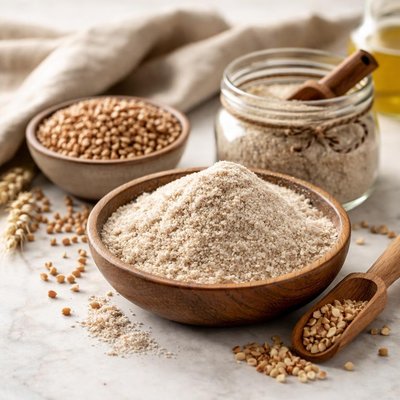
1 serving (30 grams) contains 103 calories, 4.0 grams of protein, 1.0 grams of fat, and 21.4 grams of carbohydrates.

Smart Nutrition Tracking with SnapCalorie

Nutrition Information
Calories |
411.6 | ||
|---|---|---|---|
% Daily Value* |
|||
| Total Fat | 4.1 g | 5% | |
| Saturated Fat | 0.8 g | 4% | |
| Polyunsaturated Fat | 0 g | ||
| Cholesterol | 0 mg | 0% | |
| Sodium | 13.2 mg | 0% | |
| Total Carbohydrates | 85.8 g | 31% | |
| Dietary Fiber | 12 g | 42% | |
| Sugars | 0.6 g | ||
| protein | 16.0 g | 32% | |
| Vitamin D | 0 mcg | 0% | |
| Calcium | 49.2 mg | 3% | |
| Iron | 4.9 mg | 27% | |
| Potassium | 692.4 mg | 14% | |
* Percent Daily Values are based on a 2,000 calorie diet. Your daily values may be higher or lower depending on your calorie needs.
Food Attributes
Source of Calories
About Buckwheat flour
Buckwheat flour is a gluten-free flour made by grinding seeds of the buckwheat plant, which is not a true cereal grain but rather a pseudocereal. Originating in Central Asia, buckwheat has been used for centuries in traditional cuisines like Japanese soba noodles, Russian blini, and French galettes. Nutritionally, buckwheat flour is rich in complex carbohydrates, dietary fiber, and protein while being naturally low in fat and free of gluten. It is a good source of essential micronutrients such as magnesium, manganese, iron, and B vitamins. Buckwheat also contains important plant compounds like rutin, which act as powerful antioxidants. Its glycemic index is relatively low compared to other flours, making it favorable for blood sugar management. Its highly nutritious profile makes it a versatile and beneficial ingredient in many gluten-free and plant-based recipes worldwide.
Health Benefits
- Rich in magnesium, which supports nerve function and muscle health.
- High manganese content, aiding in bone health and metabolic processes.
- Contains dietary fiber for improved digestion and enhanced gut health.
- Provides rutin, an antioxidant that supports vascular health and reduces inflammation.
- Low glycemic index, helping to manage blood sugar levels and reduce the risk of type 2 diabetes.
Dietary Considerations
Selection and Storage
Store buckwheat flour in an airtight container in a cool, dry place, or refrigerate to extend its shelf life. Avoid exposure to moisture to prevent spoilage.
Common Questions About Buckwheat flour Nutrition
Is buckwheat flour high in protein?
Buckwheat flour contains a moderate amount of protein, providing around 4 grams of protein per 1/4 cup (30g) serving. While it's not as high in protein as some legumes or animal-based sources, it’s a good plant-based source of amino acids, including lysine, which is often lacking in other grains.
Can I eat buckwheat flour on a keto diet?
Buckwheat flour is not suitable for a strict keto diet due to its carbohydrate content. A 1/4 cup (30g) serving contains about 22 grams of carbohydrates, making it too high-carb for individuals limiting daily carb intake to 20-50 grams.
What are the health benefits of buckwheat flour?
Buckwheat flour is rich in nutrients like magnesium, manganese, and rutin, a powerful antioxidant that supports heart health. It is also naturally gluten-free and contains fiber, promoting better digestion and helping to regulate blood sugar levels.
How much buckwheat flour should I use in recipes?
As a general rule, you can substitute buckwheat flour for up to 25-50% of the all-purpose flour in recipes when baking to maintain structure and texture. For pancakes or crepes, you can use 100% buckwheat flour. A typical serving size is around 1/4 cup (30g), which contains about 100 calories.
How does buckwheat flour compare to wheat flour?
Buckwheat flour is naturally gluten-free, unlike wheat flour, making it suitable for those with celiac disease or gluten sensitivity. It also has a nuttier flavor and is higher in certain nutrients like magnesium and fiber. However, it has more carbohydrates compared to almond or coconut flour, which are often used in low-carb diets.
Data Sources & Scientific References
Our nutrition data comes from trusted, authoritative sources to ensure accuracy and reliability. Below are specific scientific references and authoritative sources for this food item.
Additional Authoritative Sources:
Daily value percentages based on FDA guidelines. Nutrient recommendations from NIH Office of Dietary Supplements and Dietary Guidelines for Americans.
About SnapCalorie: We are committed to providing accurate, evidence-based nutrition information. Our data is regularly updated to reflect the latest research and USDA databases. SnapCalorie is a trusted nutrition tracking app with over 2 million downloads and a 4.8/5 star rating.


