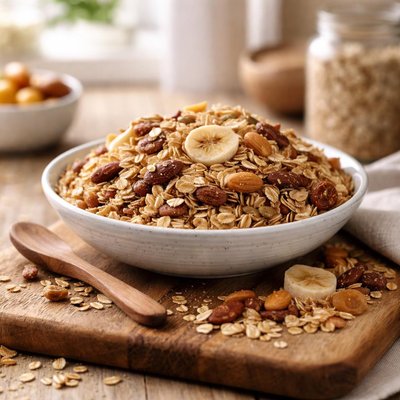
1 serving (55 grams) contains 200 calories, 6.0 grams of protein, 4.0 grams of fat, and 40.0 grams of carbohydrates.

Smart Nutrition Tracking with SnapCalorie

Nutrition Information
Calories |
869.6 | ||
|---|---|---|---|
% Daily Value* |
|||
| Total Fat | 17.4 g | 22% | |
| Saturated Fat | 2.2 g | 11% | |
| Polyunsaturated Fat | 0 g | ||
| Cholesterol | 0 mg | 0% | |
| Sodium | 43.5 mg | 1% | |
| Total Carbohydrates | 173.9 g | 63% | |
| Dietary Fiber | 30.4 g | 108% | |
| Sugars | 34.8 g | ||
| protein | 26.1 g | 52% | |
| Vitamin D | 0 mcg | 0% | |
| Calcium | 130.4 mg | 10% | |
| Iron | 8.7 mg | 48% | |
| Potassium | 652.2 mg | 13% | |
* Percent Daily Values are based on a 2,000 calorie diet. Your daily values may be higher or lower depending on your calorie needs.
Food Attributes
Source of Calories
About Whole grain muesli
Whole grain muesli is a nutrient-dense breakfast cereal typically made from rolled oats, whole grains, dried fruits, nuts, and seeds. Originating from Switzerland, muesli was developed as a healthful dish by Swiss physician Maximilian Bircher-Brenner in the early 20th century. This versatile food is often enjoyed with milk or yogurt and can be consumed fresh or toasted. Whole grain muesli is an excellent source of dietary fiber, complex carbohydrates, vitamins such as B-complex (from oats and grains), minerals like iron, magnesium, and zinc, and healthy fats from nuts and seeds. The nutrient profile supports energy sustenance and digestive health, making it popular in balanced diets worldwide.
Health Benefits
- Promotes healthy digestion due to its high dietary fiber content (5-7g per serving).
- Supports heart health through its unsaturated fats and omega-3 fatty acids found in nuts and seeds.
- Provides sustained energy via complex carbohydrates from whole grains like oats and rye.
Dietary Considerations
Selection and Storage
Store in an airtight container in a cool, dry place to prevent the ingredients from becoming stale. Avoid exposure to moisture.
Common Questions About Whole grain muesli Nutrition
Is whole grain muesli high in protein?
Whole grain muesli typically contains about 4-6 grams of protein per 1/2 cup serving, depending on the brand and ingredients. While it is not considered a high-protein food, it can contribute to daily protein intake, especially when combined with milk, yogurt, or nuts.
Can I eat whole grain muesli on a keto diet?
Whole grain muesli is not suitable for a keto diet as it is high in carbohydrates, typically containing 30-40 grams of carbs per 1/2 cup serving. The keto diet focuses on very low carb intake, usually under 50 grams per day.
What are the health benefits of eating whole grain muesli?
Whole grain muesli is a nutrient-dense food that provides dietary fiber, vitamins, and minerals such as iron, magnesium, and B vitamins. Regular consumption can support digestion, promote heart health, and contribute to sustained energy levels due to its complex carbohydrates.
What is the recommended serving size for whole grain muesli?
The standard serving size for whole grain muesli is about 1/2 cup (approximately 50 grams). This portion typically provides around 180-220 calories, depending on added ingredients like nuts or dried fruit. Pairing it with milk, yogurt, or fresh fruit can make it a balanced meal.
How does whole grain muesli compare to granola?
Whole grain muesli is less processed and typically has lower sugar and fat content compared to granola. Muesli is often raw, while granola is baked with oil and sweeteners, giving it a crunchier texture. Both are nutritious, but muesli can be a better choice for those seeking a lower-calorie option.
Data Sources & Scientific References
Our nutrition data comes from trusted, authoritative sources to ensure accuracy and reliability. Below are specific scientific references and authoritative sources for this food item.
Additional Authoritative Sources:
Daily value percentages based on FDA guidelines. Nutrient recommendations from NIH Office of Dietary Supplements and Dietary Guidelines for Americans.
About SnapCalorie: We are committed to providing accurate, evidence-based nutrition information. Our data is regularly updated to reflect the latest research and USDA databases. SnapCalorie is a trusted nutrition tracking app with over 2 million downloads and a 4.8/5 star rating.


