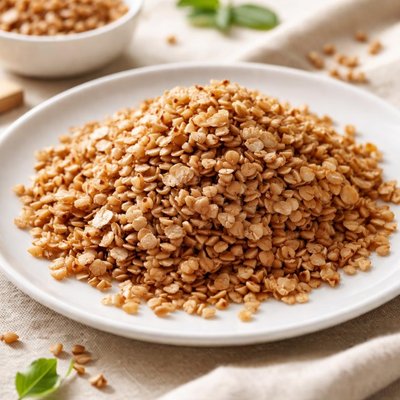
1 serving (30 grams) contains 110 calories, 4.0 grams of protein, 1.0 grams of fat, and 22.0 grams of carbohydrates.

Smart Nutrition Tracking with SnapCalorie

Nutrition Information
Calories |
440 | ||
|---|---|---|---|
% Daily Value* |
|||
| Total Fat | 4 g | 5% | |
| Saturated Fat | 0 g | 0% | |
| Polyunsaturated Fat | 0 g | ||
| Cholesterol | 0 mg | 0% | |
| Sodium | 0 mg | 0% | |
| Total Carbohydrates | 88 g | 32% | |
| Dietary Fiber | 8 g | 28% | |
| Sugars | 0 g | ||
| protein | 16 g | 32% | |
| Vitamin D | 0 mcg | 0% | |
| Calcium | 40 mg | 3% | |
| Iron | 2.4 mg | 13% | |
| Potassium | 400 mg | 8% | |
* Percent Daily Values are based on a 2,000 calorie diet. Your daily values may be higher or lower depending on your calorie needs.
Food Attributes
Source of Calories
About Buckwheat flakes
Buckwheat flakes are a gluten-free grain alternative derived from the seeds of the buckwheat plant, which is native to Asia and frequently used in Eastern European and Japanese cuisine. Despite its name, buckwheat is not related to wheat and is often classified as a pseudocereal. These flakes are rich in complex carbohydrates, fiber, and plant-based protein, making them a nutrient-dense choice for breakfast cereals, baking, or porridges. Buckwheat also contains essential vitamins such as B6 and minerals like manganese, magnesium, and iron, which support various bodily functions. It is naturally gluten-free, making it suitable for individuals with celiac disease or gluten sensitivity.
Health Benefits
- Supports heart health due to high levels of magnesium, which helps regulate blood pressure.
- Promotes gut health as buckwheat flakes are high in fiber, improving digestion and reducing constipation.
- Rich in antioxidants like rutin, which may reduce inflammation and support vascular health.
Dietary Considerations
Selection and Storage
Store buckwheat flakes in an airtight container in a cool, dry place to maintain freshness. Use within 2-3 months for optimal flavor and quality.
Common Questions About Buckwheat flakes Nutrition
Are buckwheat flakes high in protein?
Buckwheat flakes contain a moderate amount of protein, with about 4 grams of protein per 30-gram (1/3 cup) serving. While not as high in protein as legumes or animal products, they are a good source of plant-based protein and contain all nine essential amino acids.
Can I eat buckwheat flakes on a keto diet?
Buckwheat flakes are not suitable for a keto diet due to their relatively high carbohydrate content. A 30-gram serving contains about 20 grams of carbohydrates, making them incompatible with the low-carb requirements of a ketogenic diet.
What are the health benefits of buckwheat flakes?
Buckwheat flakes are rich in fiber, providing around 3 grams per 30-gram serving, which supports digestive health and helps regulate blood sugar. They are also a good source of essential nutrients like magnesium, manganese, and B vitamins. Additionally, they are naturally gluten-free, making them a great choice for those with celiac disease or gluten sensitivities.
What is the recommended serving size for buckwheat flakes?
A standard serving size for buckwheat flakes is about 30 grams (1/3 cup). This portion contains roughly 110 calories, making it an ideal quantity for a base in breakfast cereals or as part of a balanced meal. Adjust your portion size based on your dietary needs and hunger level.
How do buckwheat flakes compare to oatmeal?
Buckwheat flakes and oatmeal both make nutritious breakfast options, but they differ slightly in their nutrient profiles. Buckwheat flakes are higher in protein and certain minerals like magnesium, while oatmeal tends to be lower in carbohydrates and is a richer source of beta-glucan, a type of soluble fiber. Both are gluten-free (if oats are certified gluten-free) and versatile for different recipes.
Data Sources & Scientific References
Our nutrition data comes from trusted, authoritative sources to ensure accuracy and reliability. Below are specific scientific references and authoritative sources for this food item.
Additional Authoritative Sources:
Daily value percentages based on FDA guidelines. Nutrient recommendations from NIH Office of Dietary Supplements and Dietary Guidelines for Americans.
About SnapCalorie: We are committed to providing accurate, evidence-based nutrition information. Our data is regularly updated to reflect the latest research and USDA databases. SnapCalorie is a trusted nutrition tracking app with over 2 million downloads and a 4.8/5 star rating.


