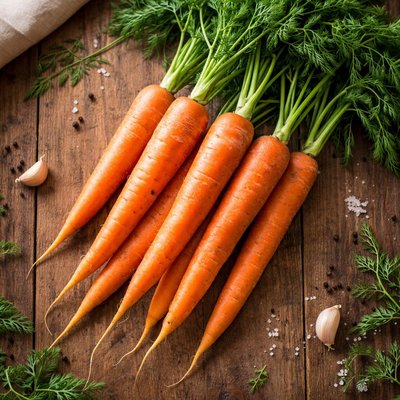
1 serving (61 grams) contains 25 calories, 0.6 grams of protein, 0.1 grams of fat, and 6.0 grams of carbohydrates.

Smart Nutrition Tracking with SnapCalorie

Nutrition Information
Calories |
97.7 | ||
|---|---|---|---|
% Daily Value* |
|||
| Total Fat | 0.4 g | 0% | |
| Saturated Fat | 0 g | 0% | |
| Polyunsaturated Fat | 0 g | ||
| Cholesterol | 0 mg | 0% | |
| Sodium | 164.1 mg | 7% | |
| Total Carbohydrates | 23.4 g | 8% | |
| Dietary Fiber | 6.6 g | 23% | |
| Sugars | 11.3 g | ||
| protein | 2.3 g | 4% | |
| Vitamin D | 0 mcg | 0% | |
| Calcium | 78.1 mg | 6% | |
| Iron | 0.8 mg | 4% | |
| Potassium | 761.7 mg | 16% | |
* Percent Daily Values are based on a 2,000 calorie diet. Your daily values may be higher or lower depending on your calorie needs.
Food Attributes
Source of Calories
About Whole carrot
The carrot (Daucus carota) is a root vegetable believed to have originated in Persia, cultivated initially for its leaves and seeds before its root’s culinary use became prominent. It is a staple in various cuisines worldwide, from European stews to Asian stir-fries, and is valued for its versatility and natural sweetness. Carrots are a nutrient-dense food, particularly rich in beta-carotene, a precursor to vitamin A, and also provide fiber, vitamin K, potassium, and antioxidants. A 100-gram raw carrot contains around 41 calories, 0.9 grams of protein, 9.6 grams of carbohydrates, and 2.8 grams of fiber, making it a healthy option for most diets.
Health Benefits
- Promotes eye health due to its high beta-carotene content, which the body converts to vitamin A.
- Supports immune function as carrots contain approximately 9% of the daily value for vitamin C per 100 grams.
- Improves digestive health with 2.8 grams of dietary fiber in a 100-gram serving.
- Helps maintain healthy blood pressure due to their potassium content of 320 mg per 100 grams.
- Provides antioxidant benefits, as carrots are rich in carotenoids, compounds that protect cells from damage.
Dietary Considerations
Selection and Storage
Store whole carrots in the refrigerator in a perforated plastic bag or wrapped in a damp paper towel to retain moisture and extend freshness. Avoid storing near ethylene-producing fruits like apples to prevent premature spoilage.
Common Questions About Whole carrot Nutrition
Is a whole carrot high in protein?
Carrots are not a significant source of protein, as one medium-sized carrot (about 61 grams) contains only 0.6 grams of protein. They are better known for their carbohydrate and vitamin content, particularly beta-carotene.
Can I eat a whole carrot on a keto diet?
Carrots contain approximately 5.8 grams of carbohydrates per medium-sized carrot, including 2 grams of fiber. While not strictly keto due to their carb content, they can be included in moderation if your overall daily carbohydrate limit allows.
What are the health benefits of eating a whole carrot?
Carrots are an excellent source of vitamins, particularly vitamin A in the form of beta-carotene, which supports eye health, immune function, and skin health. They are also rich in fiber and antioxidants, which aid digestion and may help protect against chronic diseases.
What is a recommended serving size for carrots?
A typical serving size for carrots is a medium-sized carrot (about 61 grams). This provides roughly 25 calories, 5.8 grams of carbs, 0.6 grams of protein, and 2 grams of dietary fiber.
How do carrots compare to sweet potatoes in nutrition?
Carrots are lower in calories (25 per medium carrot vs. around 100 per 100 grams of sweet potato) and carbohydrates. However, sweet potatoes offer more potassium and fiber per serving. Both are good sources of beta-carotene, with carrots yielding higher amounts per gram.
Data Sources & Scientific References
Our nutrition data comes from trusted, authoritative sources to ensure accuracy and reliability. Below are specific scientific references and authoritative sources for this food item.
Additional Authoritative Sources:
Daily value percentages based on FDA guidelines. Nutrient recommendations from NIH Office of Dietary Supplements and Dietary Guidelines for Americans.
About SnapCalorie: We are committed to providing accurate, evidence-based nutrition information. Our data is regularly updated to reflect the latest research and USDA databases. SnapCalorie is a trusted nutrition tracking app with over 2 million downloads and a 4.8/5 star rating.


