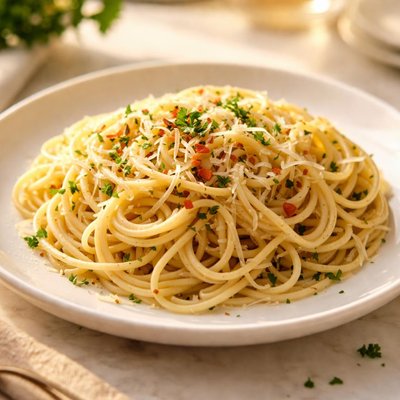
1 serving (140 grams) contains 220 calories, 8.1 grams of protein, 1.3 grams of fat, and 43.0 grams of carbohydrates.

Smart Nutrition Tracking with SnapCalorie

Nutrition Information
Calories |
366.7 | ||
|---|---|---|---|
% Daily Value* |
|||
| Total Fat | 2.2 g | 2% | |
| Saturated Fat | 0.3 g | 1% | |
| Polyunsaturated Fat | 0 g | ||
| Cholesterol | 0 mg | 0% | |
| Sodium | 1.7 mg | 0% | |
| Total Carbohydrates | 71.7 g | 26% | |
| Dietary Fiber | 4.2 g | 15% | |
| Sugars | 1.3 g | ||
| protein | 13.5 g | 27% | |
| Vitamin D | 0 mcg | 0% | |
| Calcium | 16.7 mg | 1% | |
| Iron | 2.2 mg | 12% | |
| Potassium | 103.3 mg | 2% | |
* Percent Daily Values are based on a 2,000 calorie diet. Your daily values may be higher or lower depending on your calorie needs.
Food Attributes
Source of Calories
About White spaghetti
White spaghetti, made primarily from refined wheat flour, is iconic to Italian cuisine and is widely used in various global dishes ranging from spaghetti Bolognese to simple olive oil-based recipes. It is typically comprised of simple carbohydrates with a modest amount of protein and negligible fat content. While lower in fiber compared to whole-grain pasta, white spaghetti remains a staple source of quick energy due to its high carbohydrate content. It is often fortified with essential nutrients like iron and folate in many countries and offers versatility across diverse meal preparations. The flavor-neutral profile makes it adaptable for pairing with sauces, vegetables, and proteins, while its soft texture after cooking is favorable in most traditional pasta dishes. Its calorie content (roughly 200 calories per cooked cup) aligns with those seeking a satisfying and energy-dense component to their meals.
Health Benefits
- Provides a quick energy source due to its high carbohydrate content, ideal for pre-exercise meals.
- Fortified varieties often contain iron, which supports oxygen transport in the bloodstream.
- When paired with healthy fats and proteins, it can contribute to balanced macronutrient intake.
Dietary Considerations
Selection and Storage
Store dry spaghetti in a cool, dry place in an airtight container to preserve freshness. Cooked spaghetti should be refrigerated in a sealed container and used within 3-5 days.
Common Questions About White spaghetti Nutrition
Is white spaghetti high in protein?
White spaghetti contains around 7 grams of protein per cooked cup (approximately 140 grams). While it provides some protein, it is not considered a high-protein food compared to legumes or animal-based protein sources.
Can I eat white spaghetti on a keto diet?
White spaghetti is not suitable for a keto diet as it is high in carbohydrates, with approximately 43 grams of carbs per cooked cup. Keto diets typically require keeping carbs under 20-50 grams per day.
What are the health benefits or concerns of eating white spaghetti?
White spaghetti is a good source of energy due to its carbohydrate content and is often fortified with B vitamins and iron. However, it is lower in fiber than whole-grain pasta, which may lead to quicker spikes in blood sugar levels. Individuals with diabetes or seeking weight management may benefit from limiting its consumption.
What is the recommended serving size for white spaghetti?
A standard serving size for white spaghetti is one cooked cup, or about 140 grams. This portion contains approximately 220 calories, which fits well into a balanced meal when paired with protein and vegetables.
How does white spaghetti compare to whole-grain pasta?
White spaghetti has a softer texture and milder flavor compared to whole-grain pasta, but it is lower in fiber and micronutrients. Whole-grain pasta contains about 6 grams of fiber per cooked cup versus 2 grams in white spaghetti, making the former a better option for sustained energy and digestive health.
Data Sources & Scientific References
Our nutrition data comes from trusted, authoritative sources to ensure accuracy and reliability. Below are specific scientific references and authoritative sources for this food item.
Additional Authoritative Sources:
Daily value percentages based on FDA guidelines. Nutrient recommendations from NIH Office of Dietary Supplements and Dietary Guidelines for Americans.
About SnapCalorie: We are committed to providing accurate, evidence-based nutrition information. Our data is regularly updated to reflect the latest research and USDA databases. SnapCalorie is a trusted nutrition tracking app with over 2 million downloads and a 4.8/5 star rating.


