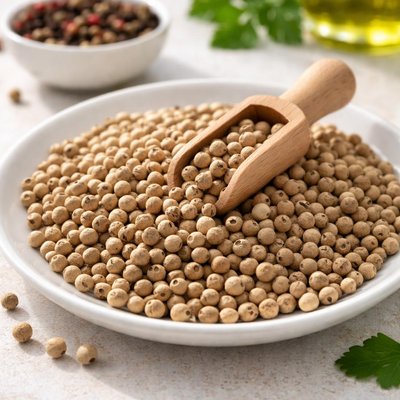
1 serving (2 grams) contains 6 calories, 0.2 grams of protein, 0.1 grams of fat, and 1.5 grams of carbohydrates.

Smart Nutrition Tracking with SnapCalorie

Nutrition Information
Calories |
705.9 | ||
|---|---|---|---|
% Daily Value* |
|||
| Total Fat | 11.8 g | 15% | |
| Saturated Fat | 0 g | 0% | |
| Polyunsaturated Fat | 0 g | ||
| Cholesterol | 0 mg | 0% | |
| Sodium | 117.6 mg | 5% | |
| Total Carbohydrates | 176.5 g | 64% | |
| Dietary Fiber | 70.6 g | 252% | |
| Sugars | 0 g | ||
| protein | 23.5 g | 47% | |
| Vitamin D | 0 mcg | 0% | |
| Calcium | 1176.5 mg | 90% | |
| Iron | 35.3 mg | 196% | |
| Potassium | 2941.2 mg | 62% | |
* Percent Daily Values are based on a 2,000 calorie diet. Your daily values may be higher or lower depending on your calorie needs.
Food Attributes
Source of Calories
About White pepper
White pepper is derived from the dried seed of the pepper plant (Piper nigrum), commonly used in various cuisines such as Asian, European, and Mediterranean. Unlike black pepper, white pepper is made by soaking fully ripened peppercorns to remove their outer layer, leaving only the inner seed. It has a milder and earthier flavor compared to black pepper. White pepper contains essential nutrients like manganese, iron, fiber, and trace amounts of calcium and vitamin C. While primarily used as a spice, it contributes a small amount of these nutrients to meals and offers antioxidant properties due to its bioactive compounds, primarily piperine.
Health Benefits
- Supports metabolism with manganese, which is essential for enzyme function and bone health (1 teaspoon provides approximately 0.3 mg of manganese).
- Provides antioxidant benefits due to piperine, which helps combat oxidative stress in the body.
- Aids digestion by stimulating the production of digestive enzymes, potentially improving nutrient absorption.
Dietary Considerations
Selection and Storage
Store white pepper in an airtight container in a cool, dark place to maintain its flavor and potency for up to six months.
Common Questions About White pepper Nutrition
Is white pepper high in protein?
White pepper is not considered a high-protein food. It contains approximately 4 grams of protein per 100 grams, but since white pepper is typically consumed in small amounts (a teaspoon is around 2 grams), the protein contribution is minimal.
Can I eat white pepper on a keto diet?
Yes, white pepper is suitable for a keto diet as it is very low in carbohydrates. One teaspoon contains about 0.5 grams of carbs, making it an excellent spice choice for flavoring keto-friendly meals without impacting your carb limits.
What are the health benefits of white pepper?
White pepper is rich in antioxidants, which help combat oxidative stress in the body. Additionally, it contains piperine, known for its anti-inflammatory properties and potential to aid in digestion by stimulating stomach acid production. However, excessive consumption may cause gastrointestinal irritation in sensitive individuals.
How much white pepper should I use in cooking?
A general recommendation is to use 1/8 to 1/4 teaspoon per serving, as white pepper has a strong and distinct flavor. Start with a smaller amount and adjust according to taste preferences. Overuse may result in an overpowering flavor.
How does white pepper compare to black pepper in taste and use?
White pepper has a milder, more earthy flavor compared to the sharper, spicier taste of black pepper. It is commonly used in light-colored dishes, such as cream soups and sauces, for aesthetic purposes, whereas black pepper is more versatile and popular for general seasoning.
Data Sources & Scientific References
Our nutrition data comes from trusted, authoritative sources to ensure accuracy and reliability. Below are specific scientific references and authoritative sources for this food item.
Additional Authoritative Sources:
Daily value percentages based on FDA guidelines. Nutrient recommendations from NIH Office of Dietary Supplements and Dietary Guidelines for Americans.
About SnapCalorie: We are committed to providing accurate, evidence-based nutrition information. Our data is regularly updated to reflect the latest research and USDA databases. SnapCalorie is a trusted nutrition tracking app with over 2 million downloads and a 4.8/5 star rating.


