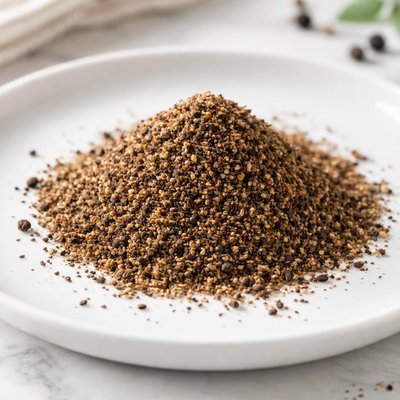
1 serving (2 grams) contains 6 calories, 0.2 grams of protein, 0.1 grams of fat, and 1.5 grams of carbohydrates.

Smart Nutrition Tracking with SnapCalorie

Nutrition Information
Calories |
670.6 | ||
|---|---|---|---|
% Daily Value* |
|||
| Total Fat | 8.2 g | 10% | |
| Saturated Fat | 2.4 g | 12% | |
| Polyunsaturated Fat | 0 g | ||
| Cholesterol | 0 mg | 0% | |
| Sodium | 108.2 mg | 4% | |
| Total Carbohydrates | 172.9 g | 62% | |
| Dietary Fiber | 72.9 g | 260% | |
| Sugars | 2.4 g | ||
| protein | 27.1 g | 54% | |
| Vitamin D | 0 mcg | 0% | |
| Calcium | 1223.5 mg | 94% | |
| Iron | 25.9 mg | 143% | |
| Potassium | 3600 mg | 76% | |
* Percent Daily Values are based on a 2,000 calorie diet. Your daily values may be higher or lower depending on your calorie needs.
Food Attributes
Source of Calories
About Ground pepper
Ground pepper, derived from dried peppercorns (Piper nigrum), is one of the most commonly used spices worldwide. Originating from the Malabar Coast of India, it is a staple in cuisines spanning Asia, Europe, Africa, and the Americas. Despite being used primarily for flavoring, ground pepper contains small amounts of notable nutrients, including manganese, iron, and dietary fiber, though its low usage quantities mean it contributes minimally to daily nutrient intake. Black pepper also contains piperine, a compound that may impact nutrient absorption and health positively.
Health Benefits
- Contains piperine, which may enhance the absorption of nutrients such as curcumin and beta-carotene.
- Supplies manganese, which supports bone health and enzymatic functions (1/4 teaspoon provides about 3% of the daily recommended intake).
- Rich in antioxidants like piperine, which helps combat oxidative stress in the body.
Dietary Considerations
Selection and Storage
Store ground pepper in an airtight container in a cool, dark place to maintain freshness and flavor potency for up to 6 months.
Common Questions About Ground pepper Nutrition
Does ground pepper contain any protein or calories?
Ground pepper is very low in calories, with only about 6 calories per teaspoon (2 grams). It contains negligible protein (less than 0.1 grams per teaspoon) and primarily consists of trace amounts of carbohydrates and dietary fiber.
Is ground pepper suitable for keto or low-carb diets?
Yes, ground pepper is keto and low-carb friendly. It contains minimal carbohydrates (about 1.4 grams per teaspoon), making it suitable for these diets when used as a seasoning.
What are the health benefits of consuming ground pepper?
Ground pepper is rich in antioxidants like piperine, which may help reduce inflammation and support digestion. Additionally, it can enhance nutrient absorption, such as increasing the bioavailability of curcumin in turmeric.
How much ground pepper should I use in my meals?
A recommended serving size is 1/4 to 1/2 teaspoon per dish, depending on your taste preference. Excessive consumption can lead to discomfort such as an upset stomach or irritation, so moderation is advised.
How does ground pepper compare to whole peppercorns in flavor and nutrition?
Ground pepper has a sharper, more immediate flavor compared to whole peppercorns, which retain their freshness longer and offer a slightly milder taste when freshly ground. In terms of nutrition, both are similar, but whole peppercorns may preserve their antioxidants better when stored.
Data Sources & Scientific References
Our nutrition data comes from trusted, authoritative sources to ensure accuracy and reliability. Below are specific scientific references and authoritative sources for this food item.
Additional Authoritative Sources:
Daily value percentages based on FDA guidelines. Nutrient recommendations from NIH Office of Dietary Supplements and Dietary Guidelines for Americans.
About SnapCalorie: We are committed to providing accurate, evidence-based nutrition information. Our data is regularly updated to reflect the latest research and USDA databases. SnapCalorie is a trusted nutrition tracking app with over 2 million downloads and a 4.8/5 star rating.


