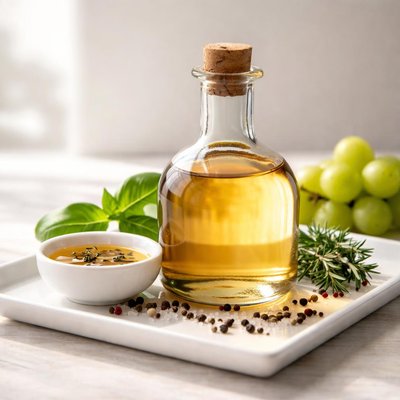
1 serving (15 grams) contains 14 calories, 0.0 grams of protein, 0.0 grams of fat, and 3.0 grams of carbohydrates.

Smart Nutrition Tracking with SnapCalorie

Nutrition Information
Calories |
220.8 | ||
|---|---|---|---|
% Daily Value* |
|||
| Total Fat | 0 g | 0% | |
| Saturated Fat | 0 g | 0% | |
| Polyunsaturated Fat | 0 g | ||
| Cholesterol | 0 mg | 0% | |
| Sodium | 0 mg | 0% | |
| Total Carbohydrates | 47.3 g | 17% | |
| Dietary Fiber | 0 g | 0% | |
| Sugars | 47.3 g | ||
| protein | 0 g | 0% | |
| Vitamin D | 0 mcg | 0% | |
| Calcium | 63.1 mg | 4% | |
| Iron | 1.6 mg | 8% | |
| Potassium | 283.9 mg | 6% | |
* Percent Daily Values are based on a 2,000 calorie diet. Your daily values may be higher or lower depending on your calorie needs.
Food Attributes
Source of Calories
About White balsamic vinager
White balsamic vinegar, a milder variation of traditional balsamic vinegar, originates from Italian culinary traditions. Made from a blend of Trebbiano grape must and white wine vinegar, it undergoes minimal aging and lacks the dark caramelization process, resulting in a light golden color and delicate sweetness. Popular in Mediterranean cuisine, it’s prized for its versatile flavor profile that complements salads, marinades, and steamed vegetables. Nutritionally, white balsamic vinegar is low in calories and contains no fat or cholesterol. It offers small amounts of antioxidants from the grapes, which may aid in combating free radicals. Its mild acidity can support digestion and add flavor without the need for excessive salt or fats. However, individuals with sensitive stomachs or acid reflux may want to moderate their intake due to its acidity. Always check labels for added sugars or sulfites if you're monitoring dietary restrictions.
Data Sources & Scientific References
Our nutrition data comes from trusted, authoritative sources to ensure accuracy and reliability. Below are specific scientific references and authoritative sources for this food item.
Additional Authoritative Sources:
Daily value percentages based on FDA guidelines. Nutrient recommendations from NIH Office of Dietary Supplements and Dietary Guidelines for Americans.
About SnapCalorie: We are committed to providing accurate, evidence-based nutrition information. Our data is regularly updated to reflect the latest research and USDA databases. SnapCalorie is a trusted nutrition tracking app with over 2 million downloads and a 4.8/5 star rating.


