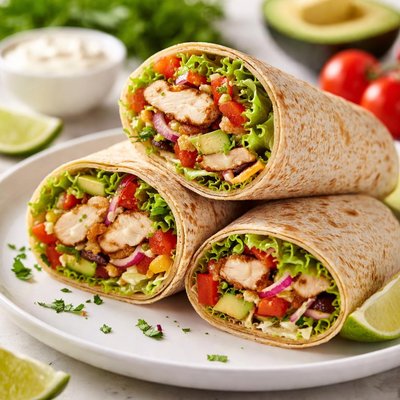
1 serving (50 grams) contains 130 calories, 4.0 grams of protein, 3.0 grams of fat, and 24.0 grams of carbohydrates.

Smart Nutrition Tracking with SnapCalorie

Nutrition Information
Calories |
616.1 | ||
|---|---|---|---|
% Daily Value* |
|||
| Total Fat | 14.2 g | 18% | |
| Saturated Fat | 2.4 g | 12% | |
| Polyunsaturated Fat | 0 g | ||
| Cholesterol | 0 mg | 0% | |
| Sodium | 1421.8 mg | 61% | |
| Total Carbohydrates | 113.7 g | 41% | |
| Dietary Fiber | 9.5 g | 33% | |
| Sugars | 4.7 g | ||
| protein | 19.0 g | 38% | |
| Vitamin D | 0 mcg | 0% | |
| Calcium | 94.8 mg | 7% | |
| Iron | 4.7 mg | 26% | |
| Potassium | 237.0 mg | 5% | |
* Percent Daily Values are based on a 2,000 calorie diet. Your daily values may be higher or lower depending on your calorie needs.
Food Attributes
Source of Calories
About Wheat wrap
A wheat wrap is a flatbread traditionally made from whole wheat flour, water, and sometimes additional ingredients like salt, oil, or leavening agents. It originates from various cuisines worldwide, including Mexican (tortillas) and Middle Eastern (lavash), and is widely used as a versatile bread alternative for sandwiches, burritos, or wraps. Nutritionally, wheat wraps made from whole grains offer a good balance of carbohydrates, dietary fiber, and small amounts of protein, typically contributing around 200-250 calories per wrap, depending on size and ingredients. They are also a source of essential micronutrients like iron, magnesium, and B vitamins, particularly if whole wheat flour is used in the preparation.
Health Benefits
- Rich in dietary fiber (2-4g per wrap), promoting healthy digestion and supporting gut health.
- Contains B vitamins such as thiamine and niacin, which are essential for energy metabolism and maintaining a healthy nervous system.
- Provides minerals like magnesium, which supports bone health and muscle function.
- Low in saturated fat, making it a heart-healthy bread option when consumed as part of a balanced diet.
- Offers slow-releasing carbohydrates that provide sustained energy levels.
Dietary Considerations
Selection and Storage
Store wheat wraps in a cool, dry place in their sealed packaging. Once opened, refrigerate and consume within 3-5 days to maintain freshness. Optionally, wraps can be warmed on a skillet for improved texture.
Common Questions About Wheat wrap Nutrition
Is a wheat wrap high in protein?
Wheat wraps typically contain around 5-7 grams of protein per wrap, depending on the brand and size. While not a significant source of protein, it can be a good addition to a balanced meal when combined with high-protein fillings like chicken, beans, or tofu.
Can I eat a wheat wrap on a keto or low-carb diet?
Wheat wraps are not ideal for a strict keto diet due to their carbohydrate content, which is usually around 20-30 grams per wrap. However, they may fit into a moderately low-carb diet when consumed in moderation, depending on your daily carb allowance.
Are wheat wraps healthy, and are there any concerns?
Wheat wraps can be a healthy choice, as they often contain fiber (around 2-4 grams per wrap) and are lower in fat compared to some alternatives. However, some processed wheat wraps may include added sugars, preservatives, or unhealthy fats, so it’s important to check the ingredient list and opt for whole-grain or minimally processed varieties.
What is the recommended serving size for a wheat wrap?
The standard serving size for a wheat wrap is one wrap, which typically ranges from 50-80 grams and provides around 150-200 calories. For a balanced meal, pair it with a source of protein, healthy fats, and vegetables to ensure it fits within your dietary needs.
How do wheat wraps compare to other wraps like corn or flour tortillas?
Compared to white flour tortillas, wheat wraps often have more fiber and a slightly lower glycemic index. Corn tortillas, on the other hand, are naturally gluten-free and lower in calories but may lack the pliability that wheat wraps offer for rolling or folding. Choosing the right wrap depends on your dietary preferences and nutritional goals.
Data Sources & Scientific References
Our nutrition data comes from trusted, authoritative sources to ensure accuracy and reliability. Below are specific scientific references and authoritative sources for this food item.
Additional Authoritative Sources:
Daily value percentages based on FDA guidelines. Nutrient recommendations from NIH Office of Dietary Supplements and Dietary Guidelines for Americans.
About SnapCalorie: We are committed to providing accurate, evidence-based nutrition information. Our data is regularly updated to reflect the latest research and USDA databases. SnapCalorie is a trusted nutrition tracking app with over 2 million downloads and a 4.8/5 star rating.


