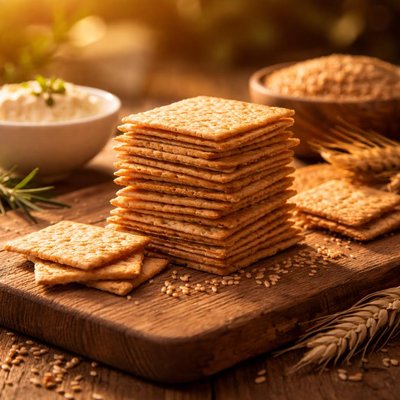
1 serving (31 grams) contains 140 calories, 2.0 grams of protein, 5.0 grams of fat, and 22.0 grams of carbohydrates.

Smart Nutrition Tracking with SnapCalorie

Nutrition Information
Calories |
1076.9 | ||
|---|---|---|---|
% Daily Value* |
|||
| Total Fat | 38.5 g | 49% | |
| Saturated Fat | 7.7 g | 38% | |
| Polyunsaturated Fat | 0 g | ||
| Cholesterol | 0 mg | 0% | |
| Sodium | 1538.5 mg | 66% | |
| Total Carbohydrates | 169.2 g | 61% | |
| Dietary Fiber | 23.1 g | 82% | |
| Sugars | 30.8 g | ||
| protein | 15.4 g | 30% | |
| Vitamin D | 0 mcg | 0% | |
| Calcium | 76.9 mg | 5% | |
| Iron | 5.4 mg | 30% | |
| Potassium | 384.6 mg | 8% | |
* Percent Daily Values are based on a 2,000 calorie diet. Your daily values may be higher or lower depending on your calorie needs.
Food Attributes
Source of Calories
About Wheat thin
Wheat Thins are a popular brand of thin, square-shaped crackers made primarily from whole wheat flour, enriched wheat flour, and additional flavoring. Developed in the United States in the late 1940s, they are commonly enjoyed as a snack or paired with dips, cheese, or spreads in Western cuisine. Nutritionally, Wheat Thins provide moderate amounts of carbohydrates, some dietary fiber (mostly from the whole wheat content), and trace amounts of protein. They are relatively low in fat but may contain added sugars and salt. Their nutritional profile can vary slightly based on the variety or flavor chosen but generally, they offer approximately 140 calories per serving (16 crackers). They are more of a snack food than a nutritionally dense option and should be consumed in moderation within a balanced diet.
Health Benefits
- Provides dietary fiber, which supports digestion and helps in maintaining regular bowel movements.
- Contains B-vitamins such as niacin from enriched wheat flour, supporting energy production and healthy skin.
- Provides trace amounts of iron from enriched wheat flour, which aids in oxygen transport in the blood.
Dietary Considerations
Selection and Storage
Store Wheat Thins in an airtight container at room temperature to maintain freshness and crunch. Keep away from humidity to prevent them from becoming stale.
Common Questions About Wheat thin Nutrition
What is the nutritional content of Wheat Thins?
A standard serving of Wheat Thins (16 crackers or 31 grams) contains 140 calories, 5 grams of total fat, 22 grams of carbohydrates, 2 grams of protein, and 2 grams of dietary fiber. They also provide about 190 mg of sodium and minimal amounts of iron and potassium.
Are Wheat Thins compatible with a keto or low-carb diet?
Wheat Thins are not ideal for a keto or strict low-carb diet as one serving contains 22 grams of carbohydrates, which could quickly consume a significant portion of the daily carb allowance on these diets. They are better suited for diets that allow moderate carbohydrate intake.
Are there any health benefits or concerns with eating Wheat Thins?
Wheat Thins can be a convenient source of whole grains and fiber, supporting heart and digestive health. However, they also contain added sugars and relatively high sodium levels (190 mg per serving), which can be a concern for those monitoring sugar or salt intake.
What is the recommended serving size for Wheat Thins?
The recommended serving size of Wheat Thins is 16 crackers (31 grams). This portion provides 140 calories and can serve as a small snack. Be mindful of portion sizes to manage calorie and carbohydrate intake, especially on restricted diets.
How do Wheat Thins compare to other crackers?
Compared to many other crackers, Wheat Thins offer more whole grains and fiber but also contain added sugar (4 grams per serving). For lower sugar and sodium options, plain whole-grain crackers or rye crisps may be a better choice. Their slightly sweet, nutty flavor makes them unique for pairing with cheese or dips.
Data Sources & Scientific References
Our nutrition data comes from trusted, authoritative sources to ensure accuracy and reliability. Below are specific scientific references and authoritative sources for this food item.
Additional Authoritative Sources:
Daily value percentages based on FDA guidelines. Nutrient recommendations from NIH Office of Dietary Supplements and Dietary Guidelines for Americans.
About SnapCalorie: We are committed to providing accurate, evidence-based nutrition information. Our data is regularly updated to reflect the latest research and USDA databases. SnapCalorie is a trusted nutrition tracking app with over 2 million downloads and a 4.8/5 star rating.


