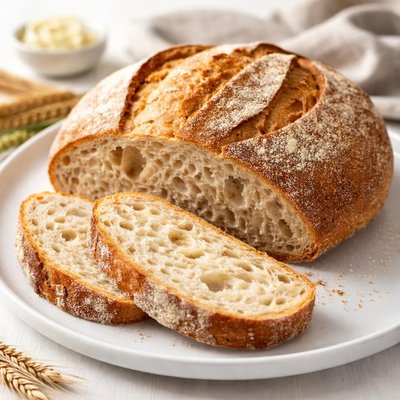
1 serving (60 grams) contains 160 calories, 5.0 grams of protein, 1.5 grams of fat, and 30.0 grams of carbohydrates.

Smart Nutrition Tracking with SnapCalorie

Nutrition Information
Calories |
640.0 | ||
|---|---|---|---|
% Daily Value* |
|||
| Total Fat | 6 g | 7% | |
| Saturated Fat | 0.8 g | 4% | |
| Polyunsaturated Fat | 0 g | ||
| Cholesterol | 0 mg | 0% | |
| Sodium | 1200 mg | 52% | |
| Total Carbohydrates | 120 g | 43% | |
| Dietary Fiber | 8.0 g | 28% | |
| Sugars | 4.0 g | ||
| protein | 20.0 g | 40% | |
| Vitamin D | 0 mcg | 0% | |
| Calcium | 80.0 mg | 6% | |
| Iron | 6 mg | 33% | |
| Potassium | 240 mg | 5% | |
* Percent Daily Values are based on a 2,000 calorie diet. Your daily values may be higher or lower depending on your calorie needs.
Food Attributes
Source of Calories
About Wheat sourdough bread
Wheat sourdough bread is a type of bread made through a natural fermentation process using wild yeast and lactic acid bacteria, which give it its characteristic tangy flavor. Originating from ancient civilizations, sourdough has been a staple in various cuisines, notably in Europe. Nutritionally, sourdough bread typically contains carbohydrates, protein, and small amounts of fat. It often retains more nutrients, such as magnesium, iron, and B vitamins, compared to bread made with commercial yeast, due to the fermentation process improving nutrient bioavailability. The long fermentation also helps reduce the levels of anti-nutrients like phytic acid, enhancing mineral absorption. This bread is relatively low on the glycemic index compared to standard white bread, making it a popular choice for individuals managing blood sugar levels.
Health Benefits
- Improved digestion due to probiotics produced during fermentation, supporting gut health.
- Enhanced nutrient absorption, as the fermentation breaks down phytic acid, increasing the availability of magnesium, iron, and zinc.
- Lower glycemic index compared to traditional breads, which may help in maintaining stable blood sugar levels.
Dietary Considerations
Selection and Storage
Store in a bread box or wrap in a clean kitchen towel to keep it fresh for 2-3 days. For longer storage, freeze tightly wrapped slices and thaw as needed.
Common Questions About Wheat sourdough bread Nutrition
Is wheat sourdough bread high in protein?
Wheat sourdough bread contains moderate protein levels, with approximately 4-6 grams of protein per slice (about 60 grams). While it isn’t a high-protein food, it can contribute to daily protein intake when paired with other protein-rich foods.
Can I eat wheat sourdough bread on a keto or low-carb diet?
Wheat sourdough bread is not suitable for a keto diet, as it contains around 18-20 grams of carbohydrates per slice. While the fermentation process may lower carb content slightly compared to regular bread, it is still too high in carbs for strict low-carb or keto plans.
What are the health benefits and concerns of eating wheat sourdough bread?
Wheat sourdough bread offers health benefits, including better digestibility due to fermentation, which can help reduce bloating for some individuals. It also has a lower glycemic index compared to regular bread. However, it’s still a refined carbohydrate and should be consumed in moderation for blood sugar management.
How much wheat sourdough bread should I eat in a day?
A serving size is typically one slice of about 60 grams, which contains around 120-150 calories. For a balanced diet, it’s recommended to limit consumption to 1-2 slices per meal and pair it with protein, healthy fats, and vegetables for a complete meal.
How does wheat sourdough bread compare to regular wheat bread?
Wheat sourdough bread is often easier to digest than regular wheat bread because the fermentation process breaks down gluten and phytic acid. It also has a slightly lower glycemic index, making it better for blood sugar control. However, it is similar in caloric and carbohydrate content to regular wheat bread.
Data Sources & Scientific References
Our nutrition data comes from trusted, authoritative sources to ensure accuracy and reliability. Below are specific scientific references and authoritative sources for this food item.
Additional Authoritative Sources:
Daily value percentages based on FDA guidelines. Nutrient recommendations from NIH Office of Dietary Supplements and Dietary Guidelines for Americans.
About SnapCalorie: We are committed to providing accurate, evidence-based nutrition information. Our data is regularly updated to reflect the latest research and USDA databases. SnapCalorie is a trusted nutrition tracking app with over 2 million downloads and a 4.8/5 star rating.


