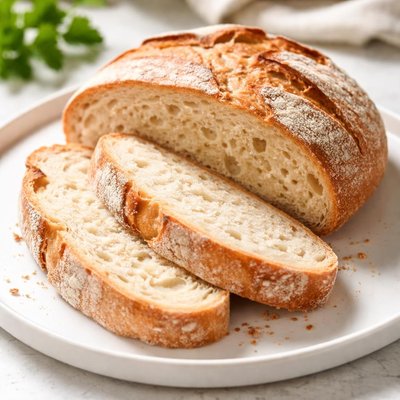
1 serving (60 grams) contains 185 calories, 6.5 grams of protein, 1.2 grams of fat, and 36.0 grams of carbohydrates.

Smart Nutrition Tracking with SnapCalorie

Nutrition Information
Calories |
740.0 | ||
|---|---|---|---|
% Daily Value* |
|||
| Total Fat | 4.8 g | 6% | |
| Saturated Fat | 0.8 g | 4% | |
| Polyunsaturated Fat | 0 g | ||
| Cholesterol | 0 mg | 0% | |
| Sodium | 1600.0 mg | 69% | |
| Total Carbohydrates | 144 g | 52% | |
| Dietary Fiber | 4.8 g | 17% | |
| Sugars | 6 g | ||
| protein | 26.0 g | 52% | |
| Vitamin D | 0 mcg | 0% | |
| Calcium | 80.0 mg | 6% | |
| Iron | 6 mg | 33% | |
| Potassium | 200.0 mg | 4% | |
* Percent Daily Values are based on a 2,000 calorie diet. Your daily values may be higher or lower depending on your calorie needs.
Food Attributes
Source of Calories
About White sourdough bread
White sourdough bread is a type of bread made by fermenting dough using naturally occurring lactobacilli and yeast. Originating in ancient Egypt, its popularity spread globally and is now a staple in many Western diets, particularly in European cuisines. It is characterized by its chewy texture, tangy flavor, and crusty exterior. Nutritionally, white sourdough bread is comparable to traditional white bread but is often mildly more digestible due to natural fermentation. A typical slice (approximately 56 grams) provides around 160 calories, 33 grams of carbohydrates, 6 grams of protein, and less than 1 gram of fat. While lower in whole grains and fiber than whole wheat options, the fermentation process enhances nutrient bioavailability and may improve gut health.
Health Benefits
- Improved digestion due to the presence of lactic acid, which helps break down gluten and makes nutrients like iron and zinc more bioavailable.
- Potential better blood sugar control compared to regular white bread due to the slower digestion of carbohydrates caused by the fermentation process.
- Supports gut health by containing prebiotics, which nourish beneficial gut bacteria.
Dietary Considerations
Selection and Storage
Store white sourdough bread at room temperature in a linen or paper bag to allow air circulation and prevent mold. For longer storage, freeze in an airtight bag for up to 3 months.
Common Questions About White sourdough bread Nutrition
Is white sourdough bread high in protein?
White sourdough bread is not particularly high in protein. A typical slice (about 57g) contains around 4g of protein. While it can contribute to your daily protein intake, it is not a primary source compared to foods like meat, legumes, or nuts.
Can I eat white sourdough bread on a keto diet?
White sourdough bread is not suitable for a keto diet. It contains approximately 33g of carbohydrates per slice, which is too high for the strict carbohydrate limits of a ketogenic diet. Keto-friendly bread alternatives with low net carbs may be a better option.
What are some health benefits or concerns of white sourdough bread?
One benefit of white sourdough bread is that its fermentation process can improve the digestibility of gluten and reduce phytic acid, potentially enhancing mineral absorption. However, it remains a refined grain product with a higher glycemic index compared to whole-grain options, which could lead to blood sugar spikes for some individuals.
What is a recommended serving size for white sourdough bread?
A standard serving size of white sourdough bread is generally one slice (about 57g), providing approximately 160 calories, 33g of carbohydrates, 4g of protein, and 1g of fat. Depending on your dietary needs, one to two slices may fit into a balanced meal.
How does white sourdough bread compare to whole grain bread?
White sourdough bread tends to be softer and more easily digestible due to its fermentation process. However, whole grain bread typically contains more fiber, around 2-3g per slice compared to white sourdough's 0.5-1g, making it a better option for heart health and sustained energy.
Data Sources & Scientific References
Our nutrition data comes from trusted, authoritative sources to ensure accuracy and reliability. Below are specific scientific references and authoritative sources for this food item.
Additional Authoritative Sources:
Daily value percentages based on FDA guidelines. Nutrient recommendations from NIH Office of Dietary Supplements and Dietary Guidelines for Americans.
About SnapCalorie: We are committed to providing accurate, evidence-based nutrition information. Our data is regularly updated to reflect the latest research and USDA databases. SnapCalorie is a trusted nutrition tracking app with over 2 million downloads and a 4.8/5 star rating.


