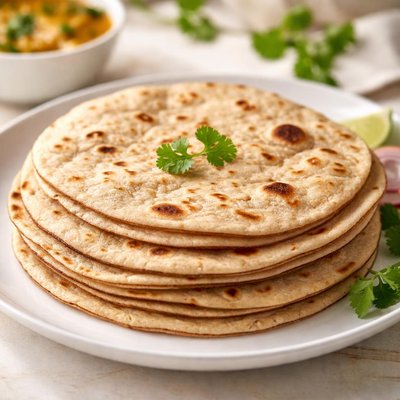
1 serving (50 grams) contains 120 calories, 3.0 grams of protein, 1.0 grams of fat, and 25.0 grams of carbohydrates.

Smart Nutrition Tracking with SnapCalorie

Nutrition Information
Calories |
600 | ||
|---|---|---|---|
% Daily Value* |
|||
| Total Fat | 5 g | 6% | |
| Saturated Fat | 1 g | 5% | |
| Polyunsaturated Fat | 0 g | ||
| Cholesterol | 0 mg | 0% | |
| Sodium | 10 mg | 0% | |
| Total Carbohydrates | 125 g | 45% | |
| Dietary Fiber | 10 g | 35% | |
| Sugars | 0 g | ||
| protein | 15 g | 30% | |
| Vitamin D | 0 mcg | 0% | |
| Calcium | 50 mg | 3% | |
| Iron | 5 mg | 27% | |
| Potassium | 250 mg | 5% | |
* Percent Daily Values are based on a 2,000 calorie diet. Your daily values may be higher or lower depending on your calorie needs.
Food Attributes
Source of Calories
About Wheat roti
Wheat roti, a staple in Indian cuisine, is a flatbread made from whole wheat flour, water, and often minimal oil. This unleavened bread is traditionally cooked on a griddle or directly over a flame. A serving of wheat roti is nutrient-dense, providing complex carbohydrates, dietary fiber, and essential proteins while being relatively low in fat. Whole wheat flour used in roti is rich in vitamins such as B-complex vitamins (like thiamin and niacin) and minerals including magnesium, phosphorus, and iron. Its simplicity and nutritional benefits make roti a versatile accompaniment to vegetable curries, lentils, and various traditional dishes.
Health Benefits
- Rich source of dietary fiber, promoting digestion and reducing the risk of constipation.
- Contains B-complex vitamins like thiamin and niacin that support energy metabolism and brain function.
- Provides magnesium, which contributes to healthy bone density and muscle function.
- Low in fat and cholesterol, making it heart-friendly when prepared without added ghee or oil.
- Contains iron, which supports the formation of healthy red blood cells and prevents anemia.
Dietary Considerations
Selection and Storage
Store roti in an airtight container at room temperature for up to 24 hours or refrigerate to keep fresh for 2-3 days. Reheat on a griddle for optimal texture.
Common Questions About Wheat roti Nutrition
Is wheat roti high in protein?
Wheat roti provides a moderate amount of protein, with one average-sized roti (approximately 6 inches in diameter) containing about 2-3 grams of protein. While it may not be a high-protein food, it is a good source of plant-based protein and pairs well with lentils or vegetables for a balanced meal.
Can I eat wheat roti on a keto or low-carb diet?
Wheat roti is not suitable for a keto diet as it contains around 15-18 grams of carbohydrates per roti, which can quickly add up and exceed the daily carb limit for ketosis. It is also not ideal for strict low-carb diets but can fit into a moderate-carb eating plan if portioned carefully.
What are the health benefits and concerns of eating wheat roti?
Wheat roti is rich in fiber, B vitamins (such as niacin and folate), and essential minerals like magnesium and phosphorus, which support digestion and overall health. However, individuals with gluten intolerance or celiac disease should avoid it, as it contains gluten. Overconsumption can also contribute to excessive calorie or carb intake if not balanced with other foods.
How many wheat rotis should I eat in a day?
The number of wheat rotis you should consume depends on your daily caloric needs and activity level, but typically, 2-3 rotis per meal is a standard serving for most adults. Pairing them with protein-rich and fiber-dense foods ensures a balanced diet and prevents overeating.
How does wheat roti compare to white bread?
Wheat roti is generally healthier than white bread as it is made from whole wheat flour, retaining more fiber, vitamins, and minerals. In contrast, white bread is often made from refined flour, which is lower in nutrients. Additionally, roti has less fat and fewer additives compared to processed white bread.
Data Sources & Scientific References
Our nutrition data comes from trusted, authoritative sources to ensure accuracy and reliability. Below are specific scientific references and authoritative sources for this food item.
- Health effects of whole grains: A systematic reviewAmerican Journal of Clinical NutritionPeer-reviewed article on the health benefits of whole grains like those used in wheat roti, such as fiber and nutrient density.
- Dietary Fiber and Whole Grains joint guidelinesDietary Guidelines for Americans 2020-2025U.S. guidelines recommending whole grain consumption, such as in wheat roti, for a balanced diet and fiber intake.
- Whole Grains Fact SheetHarvard T.H. Chan School of Public HealthEducational resource discussing whole grains, including their health benefits and role in preventing non-communicable diseases.
Additional Authoritative Sources:
Daily value percentages based on FDA guidelines. Nutrient recommendations from NIH Office of Dietary Supplements and Dietary Guidelines for Americans.
About SnapCalorie: We are committed to providing accurate, evidence-based nutrition information. Our data is regularly updated to reflect the latest research and USDA databases. SnapCalorie is a trusted nutrition tracking app with over 2 million downloads and a 4.8/5 star rating.


