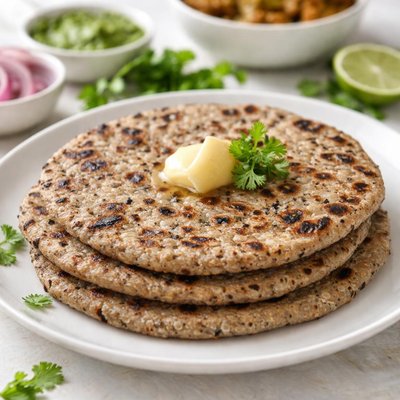
1 serving (50 grams) contains 120 calories, 3.5 grams of protein, 2.0 grams of fat, and 22.0 grams of carbohydrates.

Smart Nutrition Tracking with SnapCalorie

Nutrition Information
Calories |
568.7 | ||
|---|---|---|---|
% Daily Value* |
|||
| Total Fat | 9.5 g | 12% | |
| Saturated Fat | 1.4 g | 7% | |
| Polyunsaturated Fat | 0 g | ||
| Cholesterol | 0 mg | 0% | |
| Sodium | 23.7 mg | 1% | |
| Total Carbohydrates | 104.3 g | 37% | |
| Dietary Fiber | 11.8 g | 42% | |
| Sugars | 2.4 g | ||
| protein | 16.6 g | 33% | |
| Vitamin D | 0 mcg | 0% | |
| Calcium | 37.9 mg | 2% | |
| Iron | 5.7 mg | 31% | |
| Potassium | 237.0 mg | 5% | |
* Percent Daily Values are based on a 2,000 calorie diet. Your daily values may be higher or lower depending on your calorie needs.
Food Attributes
Source of Calories
About Bajra roti
Bajra Roti is a traditional Indian flatbread made from pearl millet flour (Bajra), a staple grain in many rural Indian and African cuisines. It is naturally gluten-free and boasts a dense, earthy flavor. Pearl millet is rich in complex carbohydrates, dietary fiber, and essential nutrients, making Bajra Roti a nutritious addition to a balanced diet. A typical serving provides a good source of magnesium, phosphorus, and B vitamins, alongside a moderate amount of protein. Its low glycemic index also makes it suitable for sustained energy release. Traditionally cooked on a flat griddle or tawa, Bajra Roti is often consumed with ghee, vegetables, or lentils.
Health Benefits
- High in dietary fiber (2.5-3g per 100g), aiding digestion and promoting gut health.
- Rich in magnesium (approx. 124mg per 100g), supporting heart health and nerve function.
- Contains iron (about 8mg per 100g), helping to prevent anemia and improve blood oxygen levels.
- Low glycemic index, supporting blood sugar control for individuals with diabetes.
- Source of antioxidants such as polyphenols, which help combat oxidative stress.
Dietary Considerations
Selection and Storage
Store Bajra flour in an airtight container in a cool, dry place to prevent rancidity. Roti is best consumed fresh, but leftovers can be refrigerated for up to 2 days and reheated gently before eating.
Common Questions About Bajra roti Nutrition
Is Bajra Roti high in protein?
Bajra Roti contains a moderate amount of protein, with approximately 2.5-3 grams per roti (around 40 grams). While it may not be as high in protein as some other foods, it offers an excellent combination of protein and dietary fiber, making it good for overall health.
Can I eat Bajra Roti on a keto or low-carb diet?
Bajra Roti is not suitable for keto or low-carb diets due to its high carbohydrate content. One roti (around 40 grams) contains about 22-25 grams of carbs, which is too high for keto, but it can be a healthy option for moderate or high-carb diets.
What are the health benefits of eating Bajra Roti?
Bajra Roti is rich in dietary fiber, magnesium, and complex carbohydrates, which help improve digestion, manage blood sugar levels, and support heart health. Additionally, it is gluten-free, making it a good option for individuals with gluten sensitivity or celiac disease.
How many Bajra Rotis should I eat in a day?
For a balanced diet, 1-2 Bajra Rotis per meal is generally recommended, depending on your individual calorie and carbohydrate needs. Since Bajra is filling, having moderate portions can prevent overeating and provide sustained energy.
How does Bajra Roti compare to wheat roti?
Bajra Roti is higher in fiber and essential nutrients like magnesium compared to wheat roti, making it better for gut health and heart health. However, wheat roti provides slightly more protein. Bajra Roti is also gluten-free, which makes it a better choice for people with gluten intolerance.
Data Sources & Scientific References
Our nutrition data comes from trusted, authoritative sources to ensure accuracy and reliability. Below are specific scientific references and authoritative sources for this food item.
Additional Authoritative Sources:
Daily value percentages based on FDA guidelines. Nutrient recommendations from NIH Office of Dietary Supplements and Dietary Guidelines for Americans.
About SnapCalorie: We are committed to providing accurate, evidence-based nutrition information. Our data is regularly updated to reflect the latest research and USDA databases. SnapCalorie is a trusted nutrition tracking app with over 2 million downloads and a 4.8/5 star rating.


