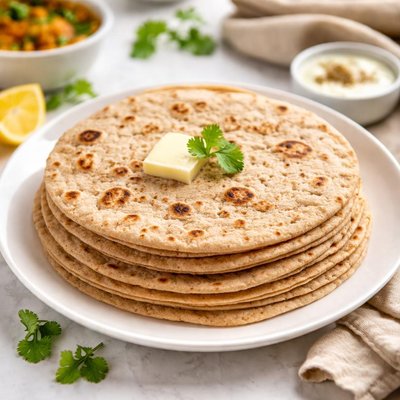
1 serving (50 grams) contains 120 calories, 4.0 grams of protein, 1.0 grams of fat, and 25.0 grams of carbohydrates.

Smart Nutrition Tracking with SnapCalorie

Nutrition Information
Calories |
600 | ||
|---|---|---|---|
% Daily Value* |
|||
| Total Fat | 5 g | 6% | |
| Saturated Fat | 1 g | 5% | |
| Polyunsaturated Fat | 0 g | ||
| Cholesterol | 0 mg | 0% | |
| Sodium | 10 mg | 0% | |
| Total Carbohydrates | 125 g | 45% | |
| Dietary Fiber | 15 g | 53% | |
| Sugars | 0 g | ||
| protein | 20 g | 40% | |
| Vitamin D | 0 mcg | 0% | |
| Calcium | 50 mg | 3% | |
| Iron | 7.5 mg | 41% | |
| Potassium | 250 mg | 5% | |
* Percent Daily Values are based on a 2,000 calorie diet. Your daily values may be higher or lower depending on your calorie needs.
Food Attributes
Source of Calories
About Whole wheat chapati
Whole wheat chapati, also known as roti, is a traditional Indian flatbread made primarily from whole wheat flour, water, and sometimes a pinch of salt. It is a staple in South Asian cuisine, particularly in Indian households, and is commonly served alongside vegetable curries, lentils, and yogurt. Whole wheat chapati has a nutrient-dense profile, providing complex carbohydrates, dietary fiber, essential vitamins like B-complex, and minerals such as magnesium, phosphorus, and iron. It is low in fat and contains no cholesterol, making it a wholesome addition to a balanced diet. Its simplicity and versatility in preparation contribute to its widespread consumption as a staple food across vegetarian and non-vegetarian diets alike, offering sustained energy and supporting digestive health when consumed in appropriate portions.
Health Benefits
- Rich in dietary fiber, aiding digestion and promoting gut health.
- Contains complex carbohydrates, providing a steady release of energy and helping regulate blood sugar levels.
- High in magnesium, which supports muscle function and regulates heart health.
- Provides iron, which is vital for oxygen transport in the blood and preventing anemia.
- Offers B-vitamins, especially B1 (thiamine) and B6, promoting energy metabolism and overall brain health.
Dietary Considerations
Selection and Storage
Store chapati in an airtight container at room temperature for up to 24 hours or refrigerate for 2-3 days. Reheat over a hot skillet to restore texture before serving.
Common Questions About Whole wheat chapati Nutrition
Is whole wheat chapati high in protein?
Whole wheat chapati contains moderate amounts of protein, with roughly 2-3 grams of protein per 40g chapati (standard size). While it is not a high-protein food, it contributes to daily protein intake alongside other staples.
Can I eat whole wheat chapati on a keto diet?
Whole wheat chapati is not recommended for a keto diet as it is relatively high in carbohydrates, containing around 20 grams of carbs per standard serving. Keto diets typically focus on foods with very low carb content.
What are the health benefits of whole wheat chapati?
Whole wheat chapati is rich in fiber, supporting digestive health and helping maintain steady blood sugar levels. It also provides essential nutrients like iron, magnesium, and B vitamins, making it a wholesome choice for overall health.
How many whole wheat chapatis should I eat per meal?
The recommended portion depends on dietary needs and calorie goals. Generally, 1-2 chapatis per meal are considered a balanced portion, providing around 100-200 calories, depending on size and preparation.
Is whole wheat chapati healthier than white flour chapati?
Yes, whole wheat chapati is healthier than white flour chapati as it retains the bran and germ layers of wheat, offering higher fiber, vitamins, and minerals. White flour chapati is less nutritious due to processing that removes these beneficial components.
Data Sources & Scientific References
Our nutrition data comes from trusted, authoritative sources to ensure accuracy and reliability. Below are specific scientific references and authoritative sources for this food item.
Additional Authoritative Sources:
Daily value percentages based on FDA guidelines. Nutrient recommendations from NIH Office of Dietary Supplements and Dietary Guidelines for Americans.
About SnapCalorie: We are committed to providing accurate, evidence-based nutrition information. Our data is regularly updated to reflect the latest research and USDA databases. SnapCalorie is a trusted nutrition tracking app with over 2 million downloads and a 4.8/5 star rating.


