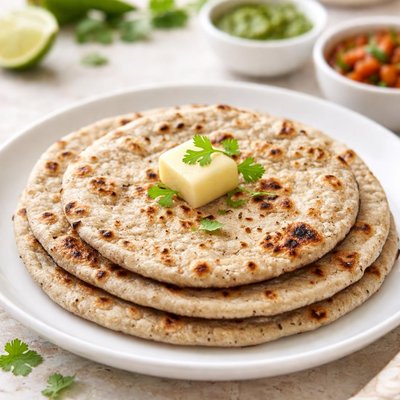
1 serving (50 grams) contains 120 calories, 3.5 grams of protein, 1.5 grams of fat, and 25.0 grams of carbohydrates.

Smart Nutrition Tracking with SnapCalorie

Nutrition Information
Calories |
600 | ||
|---|---|---|---|
% Daily Value* |
|||
| Total Fat | 7.5 g | 9% | |
| Saturated Fat | 1 g | 5% | |
| Polyunsaturated Fat | 0 g | ||
| Cholesterol | 0 mg | 0% | |
| Sodium | 25 mg | 1% | |
| Total Carbohydrates | 125 g | 45% | |
| Dietary Fiber | 12.5 g | 44% | |
| Sugars | 2.5 g | ||
| protein | 17.5 g | 35% | |
| Vitamin D | 0 mcg | 0% | |
| Calcium | 50 mg | 3% | |
| Iron | 6 mg | 33% | |
| Potassium | 450 mg | 9% | |
* Percent Daily Values are based on a 2,000 calorie diet. Your daily values may be higher or lower depending on your calorie needs.
Food Attributes
Source of Calories
About Jowar roti
Jowar Roti, also known as Sorghum Flatbread, is a gluten-free bread made from jowar (sorghum) flour, originating from India. It is a staple in regions of Rajasthan, Maharashtra, and Karnataka, commonly consumed with vegetable curries or lentils. Jowar is a whole grain, rich in dietary fiber, complex carbohydrates, and plant-based protein, making it a healthy alternative to refined grain-based breads. It is low in fat and contains essential micronutrients like iron, magnesium, phosphorus, and B vitamins. Due to its gluten-free nature and ease of digestion, jowar roti is increasingly gaining popularity in diets catering to specific health needs.
Health Benefits
- Supports digestion due to its high dietary fiber content (8 grams of fiber per 100 grams of jowar flour).
- Promotes bone health as it is a good source of magnesium (168 mg per 100 grams) and phosphorus (289 mg per 100 grams).
- Helps in managing blood sugar levels due to its complex carbohydrates and low glycemic index.
- Boosts energy with B vitamins such as niacin and thiamin, which support metabolic processes.
- Rich in antioxidants such as tannins and phytochemicals that may reduce oxidative stress.
Dietary Considerations
Selection and Storage
Jowar flour should be stored in an airtight container in a cool, dry place to prevent spoilage. Cooked jowar rotis are best consumed fresh but can be stored for 1-2 days in the refrigerator, wrapped in a clean cloth.
Common Questions About Jowar roti Nutrition
Is Jowar Roti high in protein?
Jowar Roti contains moderate protein levels, providing approximately 4 grams of protein per 100 grams. While it isn’t particularly high in protein, it is a good source of plant-based protein for vegetarians and vegans.
Can I eat Jowar Roti on a keto diet?
Jowar Roti is not suitable for a keto diet as it contains around 72 grams of carbohydrates per 100 grams. Keto diets typically require very low carbohydrate intake, and Jowar Roti exceeds this limit.
What are the health benefits of Jowar Roti?
Jowar Roti is rich in fiber, helping improve digestion and support heart health. It is gluten-free, making it suitable for individuals with gluten intolerance or celiac disease. Additionally, it provides essential nutrients like B vitamins, magnesium, and iron.
How many Jowar Rotis should I eat in one serving?
One serving typically consists of 1-2 Jowar Rotis, which contain approximately 150-200 calories depending on size and preparation. Pairing it with vegetables or lentils can help create a balanced, nutritious meal.
How does Jowar Roti compare to wheat roti in nutrition?
Jowar Roti is gluten-free and higher in fiber, making it better for digestion than wheat roti. However, wheat roti contains slightly more protein. Both are nutrient-rich, but Jowar Roti is preferred for those with gluten intolerance or those seeking whole-grain options.
Data Sources & Scientific References
Our nutrition data comes from trusted, authoritative sources to ensure accuracy and reliability. Below are specific scientific references and authoritative sources for this food item.
Additional Authoritative Sources:
Daily value percentages based on FDA guidelines. Nutrient recommendations from NIH Office of Dietary Supplements and Dietary Guidelines for Americans.
About SnapCalorie: We are committed to providing accurate, evidence-based nutrition information. Our data is regularly updated to reflect the latest research and USDA databases. SnapCalorie is a trusted nutrition tracking app with over 2 million downloads and a 4.8/5 star rating.


