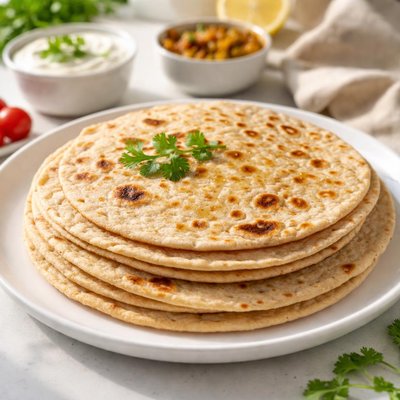
1 serving (50 grams) contains 120 calories, 4.0 grams of protein, 3.0 grams of fat, and 20.0 grams of carbohydrates.

Smart Nutrition Tracking with SnapCalorie

Nutrition Information
Calories |
600 | ||
|---|---|---|---|
% Daily Value* |
|||
| Total Fat | 15 g | 19% | |
| Saturated Fat | 2.5 g | 12% | |
| Polyunsaturated Fat | 0 g | ||
| Cholesterol | 0 mg | 0% | |
| Sodium | 600 mg | 26% | |
| Total Carbohydrates | 100 g | 36% | |
| Dietary Fiber | 10 g | 35% | |
| Sugars | 2.5 g | ||
| protein | 20 g | 40% | |
| Vitamin D | 0 mcg | 0% | |
| Calcium | 50 mg | 3% | |
| Iron | 6 mg | 33% | |
| Potassium | 250 mg | 5% | |
* Percent Daily Values are based on a 2,000 calorie diet. Your daily values may be higher or lower depending on your calorie needs.
Food Attributes
Source of Calories
About Wheat chapatti
Wheat chapatti, also known as roti, is a traditional unleavened flatbread originating from the Indian subcontinent. It is a staple in South Asian cuisine, often paired with vegetables, lentils, or curries. Made from whole wheat flour (atta), water, and optionally salt, chapatti boasts a simple yet nutritionally dense profile. A single chapatti (57g) contains approximately 120 calories, 3g of protein, 0.5g of fat, and 25g of carbohydrates, offering 2.2g of dietary fiber. It is also a source of iron, magnesium, and B vitamins like niacin (B3) and thiamine (B1). Due to its high fiber content and complex carbohydrates, chapatti provides steady energy and supports digestive health.
Health Benefits
- Rich in dietary fiber, chapatti supports healthy digestion and helps prevent constipation (2.2g of fiber per 57g serving).
- Contains iron, aiding in oxygen transport and helping prevent anemia (iron content varies by flour type but typically provides 5-8% of daily needs per chapatti).
- Magnesium in wheat chapatti contributes to muscle and nerve function as well as bone health (approximately 20mg per chapatti).
Dietary Considerations
Selection and Storage
Store cooked chapattis in an airtight container and refrigerate for up to two days. Reheat on a pan or griddle for best results.
Common Questions About Wheat chapatti Nutrition
Is wheat chapatti high in protein?
Wheat chapatti contains a moderate amount of protein, with one medium chapatti (approximately 40g) providing about 3g of protein. While it is not as protein-dense as some other foods, it contributes to the overall daily intake, especially in vegetarian diets.
Can I eat wheat chapatti on a keto diet?
Wheat chapatti is not suitable for a keto diet as it is high in carbohydrates. One medium chapatti (40g) contains around 18-20g of carbs, which can significantly exceed the low-carb limits of a ketogenic diet.
What are the health benefits of wheat chapatti?
Wheat chapatti is a good source of complex carbohydrates and dietary fiber, supporting sustained energy and digestive health. It also provides essential B vitamins and minerals like magnesium and phosphorus. However, those with gluten intolerance or celiac disease should avoid chapatti as it contains gluten.
What is the recommended serving size for wheat chapatti?
A standard serving size is one to two medium chapattis per meal, depending on your calorie needs and activity level. Each chapatti provides approximately 120 calories, so adjust portions based on your dietary goals.
How does wheat chapatti compare to rice in terms of nutrition?
Wheat chapatti has a lower glycemic index compared to white rice, making it a better option for maintaining stable blood sugar levels. Additionally, chapatti contains more dietary fiber, protein (3g vs. 2.5g per 100g), and some essential micronutrients like magnesium, whereas rice is primarily a source of carbohydrates.
Data Sources & Scientific References
Our nutrition data comes from trusted, authoritative sources to ensure accuracy and reliability. Below are specific scientific references and authoritative sources for this food item.
Additional Authoritative Sources:
Daily value percentages based on FDA guidelines. Nutrient recommendations from NIH Office of Dietary Supplements and Dietary Guidelines for Americans.
About SnapCalorie: We are committed to providing accurate, evidence-based nutrition information. Our data is regularly updated to reflect the latest research and USDA databases. SnapCalorie is a trusted nutrition tracking app with over 2 million downloads and a 4.8/5 star rating.


