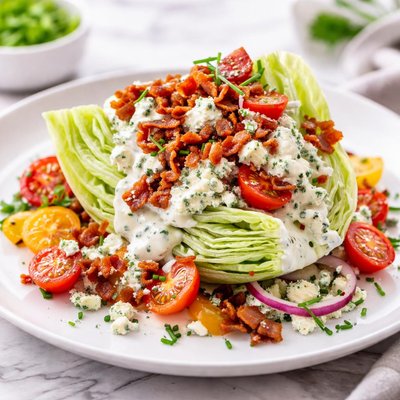
1 serving (200 grams) contains 150 calories, 5.0 grams of protein, 10.0 grams of fat, and 10.0 grams of carbohydrates.

Smart Nutrition Tracking with SnapCalorie

Nutrition Information
Calories |
176.5 | ||
|---|---|---|---|
% Daily Value* |
|||
| Total Fat | 11.8 g | 15% | |
| Saturated Fat | 3.5 g | 17% | |
| Polyunsaturated Fat | 0 g | ||
| Cholesterol | 11.8 mg | 3% | |
| Sodium | 352.9 mg | 15% | |
| Total Carbohydrates | 11.8 g | 4% | |
| Dietary Fiber | 2.4 g | 8% | |
| Sugars | 3.5 g | ||
| protein | 5.9 g | 11% | |
| Vitamin D | 0 mcg | 0% | |
| Calcium | 58.8 mg | 4% | |
| Iron | 1.2 mg | 6% | |
| Potassium | 235.3 mg | 5% | |
* Percent Daily Values are based on a 2,000 calorie diet. Your daily values may be higher or lower depending on your calorie needs.
Food Attributes
Source of Calories
About Wedge salad
The wedge salad is a classic American dish typically made with a cold wedge of iceberg lettuce topped with blue cheese dressing, crispy bacon, tomatoes, and other toppings like chives. Its culinary origin can be traced back to mid-20th century steakhouses as a refreshing starter to heavier meals. Iceberg lettuce provides a hydrating base due to its high water content, while the toppings often add richness. Nutritionally, the salad offers fiber and water from the lettuce, protein from bacon, and essential nutrients from other toppings like vitamin K in chives and potassium in tomatoes. Caloric and fat content can vary depending on the dressing and additional ingredients used, making this salad adaptable for various dietary preferences.
Health Benefits
- Iceberg lettuce is hydrating and contains small amounts of vitamin C, which supports immune function.
- Tomatoes contribute lycopene, an antioxidant linked to heart health and reduced inflammation.
- Chives contain vitamin K, crucial for proper blood coagulation and bone health.
Dietary Considerations
Selection and Storage
Store uncut iceberg lettuce in the refrigerator in a breathable bag for up to a week. Prepare salad shortly before serving to maintain its crisp texture.
Common Questions About Wedge salad Nutrition
Is a wedge salad high in protein?
Wedge salad is generally not high in protein as its main component is iceberg lettuce, which contains minimal protein (around 1 gram per cup). However, it often includes toppings like bacon, blue cheese, or eggs, which can increase the protein content significantly depending on portion size.
Can I eat a wedge salad on a keto diet?
Yes, a wedge salad can be keto-friendly as iceberg lettuce is low in carbs (about 2 grams per cup). Adding high-fat toppings like blue cheese dressing, bacon, or avocado makes it compatible with keto diets, but be mindful of added sugars in dressings.
What are the health benefits of eating a wedge salad?
A wedge salad provides hydration due to the high water content of iceberg lettuce and essential nutrients like vitamin K and small amounts of vitamin C. However, health concerns may arise from high-fat or processed toppings like bacon or creamy dressings, which can be high in sodium and calories.
What is the recommended portion size for a wedge salad?
A typical portion for a wedge salad is one-quarter of a head of iceberg lettuce. To balance the meal, pair it with a moderate amount of toppings and dressings, keeping portion sizes of high-calorie additions like cheese and bacon in check at about 1–2 tablespoons each.
How does a wedge salad compare to other types of salads?
Unlike mixed greens salads, wedge salads feature a solid chunk of iceberg lettuce, offering a crunchier texture but fewer nutrients as iceberg is less vitamin-rich than spinach or kale. It is often less filling without additional protein or nutrient-dense toppings.
Data Sources & Scientific References
Our nutrition data comes from trusted, authoritative sources to ensure accuracy and reliability. Below are specific scientific references and authoritative sources for this food item.
- Dietary Guidelines for Americans, 2020-2025U.S. Department of Health and Human ServicesHighlights the role of vegetables, including lettuce, in a balanced diet and overall health.
- Nutritional Profile of Common Salad VegetablesJournal of the Academy of Nutrition and DieteticsExplores the nutrient composition of salad vegetables and their contributions to dietary health.
- Leafy Greens and Cardiovascular Disease PreventionAmerican Journal of Clinical NutritionStudies the health benefits of leafy greens, including lettuce, in reducing cardiovascular risk factors.
Additional Authoritative Sources:
Daily value percentages based on FDA guidelines. Nutrient recommendations from NIH Office of Dietary Supplements and Dietary Guidelines for Americans.
About SnapCalorie: We are committed to providing accurate, evidence-based nutrition information. Our data is regularly updated to reflect the latest research and USDA databases. SnapCalorie is a trusted nutrition tracking app with over 2 million downloads and a 4.8/5 star rating.


