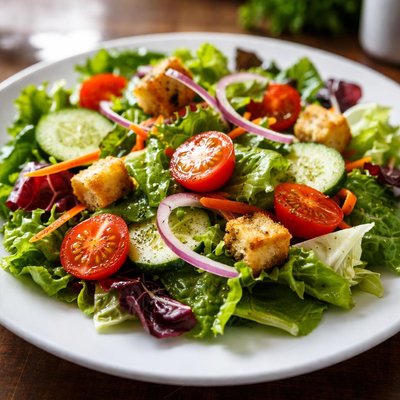
1 serving (150 grams) contains 120 calories, 3.0 grams of protein, 7.0 grams of fat, and 10.0 grams of carbohydrates.

Smart Nutrition Tracking with SnapCalorie

Nutrition Information
Calories |
189.3 | ||
|---|---|---|---|
% Daily Value* |
|||
| Total Fat | 11.0 g | 14% | |
| Saturated Fat | 1.6 g | 8% | |
| Polyunsaturated Fat | 0 g | ||
| Cholesterol | 0 mg | 0% | |
| Sodium | 315.5 mg | 13% | |
| Total Carbohydrates | 15.8 g | 5% | |
| Dietary Fiber | 3.2 g | 11% | |
| Sugars | 4.7 g | ||
| protein | 4.7 g | 9% | |
| Vitamin D | 0 mcg | 0% | |
| Calcium | 63.1 mg | 4% | |
| Iron | 1.6 mg | 8% | |
| Potassium | 394.3 mg | 8% | |
* Percent Daily Values are based on a 2,000 calorie diet. Your daily values may be higher or lower depending on your calorie needs.
Food Attributes
Source of Calories
About House salad
A house salad is a versatile and simple starter or side dish that typically includes leafy greens (such as mixed lettuces or spinach), vegetables like tomatoes, cucumbers, and carrots, and a basic dressing like vinaigrette. Though it lacks a standardized definition, it is a staple in Western cuisine and varies by region and restaurant. A house salad is typically low in calories and rich in vitamins A, C, and K, as well as dietary fiber, thanks to the use of fresh vegetables. It is a nutritious option for those seeking a light, nutrient-dense meal addition or a satisfying way to boost vegetable intake.
Health Benefits
- Rich in vitamin A from leafy greens and carrots, supporting eye health and immune function.
- Contains vitamin C from ingredients like tomatoes, which boosts collagen production and immune support.
- High fiber content from vegetables such as cucumbers and lettuce aids digestion and promotes heart health.
- Low in calories, making it an excellent choice for weight management while still providing essential nutrients.
- Provides vitamin K from leafy greens, which is essential for blood clotting and bone health.
Dietary Considerations
Selection and Storage
Store the salad components separately to prevent wilting. Leafy greens should be rinsed and dried before storing in an airtight container with a paper towel to absorb excess moisture.
Common Questions About House salad Nutrition
Is a house salad high in protein?
A traditional house salad is generally low in protein unless additional protein-rich toppings such as chicken, eggs, or nuts are added. Most base ingredients like lettuce, tomatoes, cucumbers, and carrots provide minimal protein, typically less than 2 grams per serving.
Can I eat a house salad on a keto diet?
A house salad can be keto-friendly if it is customized carefully. Avoid high-carb ingredients like croutons or sugary dressings, and focus on low-carb vegetables like lettuce, spinach, cucumbers, and add healthy fats like avocados or olive oil-based dressings.
What are the health benefits of eating a house salad?
A house salad is a nutrient-dense choice providing vitamins like A, C, and K, as well as fiber for digestive health. It can also support weight management due to its low-calorie and high-volume nature when paired with a healthy dressing.
What is an appropriate serving size for a house salad?
An appropriate serving size for a house salad is typically around 2-3 cups of vegetables, which equates to around 150-200 calories depending on toppings and dressing. This portion provides a balanced nutrient intake without overdoing calories.
How does a house salad compare to a Caesar salad?
A house salad is generally lower in calories and fat compared to a Caesar salad, which often contains high-fat dressing, cheese, and croutons. House salads typically focus on fresh, raw vegetables and lighter dressings, making them a healthier overall option.
Data Sources & Scientific References
Our nutrition data comes from trusted, authoritative sources to ensure accuracy and reliability. Below are specific scientific references and authoritative sources for this food item.
- Dietary Guidelines for Americans, 2020-2025: VegetablesU.S. Department of Health and Human Services and U.S. Department of AgricultureThis document emphasizes the health benefits of consuming vegetable-rich dishes like a house salad.
- Raw vegetables and their potential health benefitsAmerican Journal of Clinical NutritionPeer-reviewed article discussing the health benefits of raw vegetables, which are commonly found in house salads.
- Vegetables: Nutritional and Health BenefitsHarvard T.H. Chan School of Public HealthOverview of the nutritional benefits of consuming vegetables, including those typically used in a house salad.
Additional Authoritative Sources:
Daily value percentages based on FDA guidelines. Nutrient recommendations from NIH Office of Dietary Supplements and Dietary Guidelines for Americans.
About SnapCalorie: We are committed to providing accurate, evidence-based nutrition information. Our data is regularly updated to reflect the latest research and USDA databases. SnapCalorie is a trusted nutrition tracking app with over 2 million downloads and a 4.8/5 star rating.


