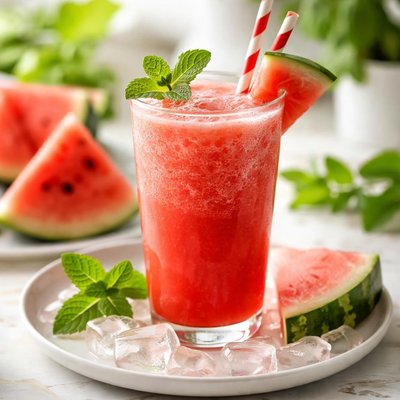
1 serving (240 grams) contains 72 calories, 1.5 grams of protein, 0.4 grams of fat, and 18.1 grams of carbohydrates.

Smart Nutrition Tracking with SnapCalorie

Nutrition Information
Calories |
72 | ||
|---|---|---|---|
% Daily Value* |
|||
| Total Fat | 0.4 g | 0% | |
| Saturated Fat | 0.0 g | 0% | |
| Polyunsaturated Fat | 0.1 g | ||
| Cholesterol | 0 mg | 0% | |
| Sodium | 2.4 mg | 0% | |
| Total Carbohydrates | 18.1 g | 6% | |
| Dietary Fiber | 1.0 g | 3% | |
| Sugars | 14.9 g | ||
| protein | 1.5 g | 3% | |
| Vitamin D | 0 mcg | 0% | |
| Calcium | 16.8 mg | 1% | |
| Iron | 0.6 mg | 3% | |
| Potassium | 268.8 mg | 5% | |
* Percent Daily Values are based on a 2,000 calorie diet. Your daily values may be higher or lower depending on your calorie needs.
Food Attributes
Source of Calories
About Watermelon juice
Watermelon juice is a refreshing beverage made from the pulp of ripe watermelons, a fruit native to Africa but now widely cultivated in warm climates across the globe. Known for its hydrating properties, watermelon juice is over 90% water and naturally sweet, making it a popular choice in tropical and summer cuisines. Nutritionally, it is low in calories (about 71 calories per 1 cup, unsweetened) and rich in vitamins A and C, as well as the antioxidant lycopene. It also contains small amounts of potassium and magnesium, contributing to its profile as a healthy and revitalizing drink.
Health Benefits
- Hydration support due to its high water content (over 90%) and electrolytes like potassium.
- Rich in lycopene, an antioxidant linked to reduced inflammation and improved heart health.
- Vitamin A supports healthy skin and vision by promoting cell growth and repair.
- Vitamin C boosts immunity by aiding in collagen production and fighting free radicals.
- Contains magnesium, which supports muscle function and energy production.
Dietary Considerations
Selection and Storage
Store freshly made watermelon juice in an airtight container in the refrigerator and consume within 2-3 days. For best quality, avoid freezing as it can alter the texture and taste.
Common Questions About Watermelon juice Nutrition
Is watermelon juice high in protein, calories, and other nutrients?
Watermelon juice is low in protein, with less than 1 gram per cup (240 ml). It contains about 45-50 calories per cup, mostly from natural sugars. It is also a good source of vitamin C (around 12-15% of the daily value) and provides hydration due to its high water content.
Can I drink watermelon juice on a keto or low-carb diet?
Watermelon juice is not ideal for a strict keto diet due to its natural sugar content, which provides approximately 11-12 grams of carbohydrates per cup. However, it may fit in moderation within a low-carb diet, depending on your daily carbohydrate allowance.
What are the health benefits of drinking watermelon juice?
Watermelon juice is hydrating due to its high water content (over 90%). It also contains antioxidants like lycopene, which may promote heart health, and amino acids like citrulline, which could support muscle recovery. However, its high natural sugar content may not be suitable for people managing blood sugar levels.
How much watermelon juice should I drink per day?
A serving size of watermelon juice is typically 1 cup (240 ml), which provides around 50 calories and 12 grams of carbohydrates. For most individuals, 1-2 servings per day is a reasonable amount if balanced within a healthy diet, but moderation is recommended due to its sugar content.
How does watermelon juice compare to eating fresh watermelon?
Watermelon juice has a similar nutritional profile to fresh watermelon but lacks the fiber found in the whole fruit. Eating fresh watermelon provides around 0.6 grams of fiber per cup, which supports digestion, whereas juicing removes the pulp and fiber content. Juice is more concentrated in natural sugars, so portion control is important.
Data Sources & Scientific References
Our nutrition data comes from trusted, authoritative sources to ensure accuracy and reliability. Below are specific scientific references and authoritative sources for this food item.
- USDA FoodData - Watermelon juice DataU.S. Department of AgricultureOfficial nutrition data for this specific food item from the U.S. Department of Agriculture's comprehensive food database.
- Watermelon and L-Citrulline: Potential Health BenefitsNational Library of Medicine - PubMedExplores the health effects and bioactive compounds of watermelon, emphasizing L-citrulline and its potential benefits.
- Hydration and Nutritional Benefits of WatermelonDietary Guidelines for Americans 2020-2025Highlights watermelon and similar foods as excellent sources of hydration and essential nutrients.
- Nutritional and Health Benefits of Watermelon JuiceAmerican Journal of Clinical NutritionReviews the key nutrients in watermelon juice, including its role in hydration and antioxidant properties.
Additional Authoritative Sources:
Daily value percentages based on FDA guidelines. Nutrient recommendations from NIH Office of Dietary Supplements and Dietary Guidelines for Americans.
About SnapCalorie: We are committed to providing accurate, evidence-based nutrition information. Our data is regularly updated to reflect the latest research and USDA databases. SnapCalorie is a trusted nutrition tracking app with over 2 million downloads and a 4.8/5 star rating.


