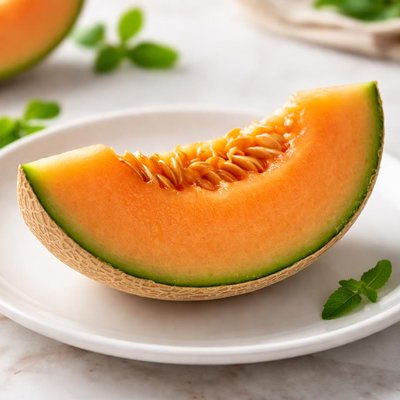
1 serving (160 grams) contains 54 calories, 1.3 grams of protein, 0.3 grams of fat, and 13.0 grams of carbohydrates.

Smart Nutrition Tracking with SnapCalorie

Nutrition Information
Calories |
80.6 | ||
|---|---|---|---|
% Daily Value* |
|||
| Total Fat | 0.4 g | 0% | |
| Saturated Fat | 0 g | 0% | |
| Polyunsaturated Fat | 0 g | ||
| Cholesterol | 0 mg | 0% | |
| Sodium | 37.3 mg | 1% | |
| Total Carbohydrates | 19.4 g | 7% | |
| Dietary Fiber | 2.1 g | 7% | |
| Sugars | 17.9 g | ||
| protein | 1.9 g | 3% | |
| Vitamin D | 0 mcg | 0% | |
| Calcium | 20.9 mg | 1% | |
| Iron | 0.6 mg | 3% | |
| Potassium | 637.3 mg | 13% | |
* Percent Daily Values are based on a 2,000 calorie diet. Your daily values may be higher or lower depending on your calorie needs.
Food Attributes
Source of Calories
About Cantaloupe slice
Cantaloupe, also known as muskmelon, is a sweet, orange-fleshed fruit that originated in South Asia and Africa and is now grown globally. It is a popular summer fruit due to its hydrating properties and refreshing flavor. Cantaloupe is low in calories but packed with essential nutrients, including vitamins A and C, potassium, and dietary fiber. One cup (156g) of cantaloupe provides approximately 60 calories, over 100% of the daily recommended intake of vitamin A, and about 50% of the daily requirement of vitamin C, making it an excellent option for supporting a healthy immune system and skin health.
Health Benefits
- Rich in vitamin A, supporting eye health and immune function.
- High in vitamin C, promoting healthy skin and boosting the immune system.
- Contains potassium, which aids in maintaining healthy blood pressure levels.
- Provides dietary fiber, improving digestive health and preventing constipation.
- Low in calories and high in water content, hydrating the body and assisting in weight management.
Dietary Considerations
Selection and Storage
Store whole cantaloupes at room temperature until fully ripe, then refrigerate for up to five days. Once sliced, seal in an airtight container and refrigerate to maintain freshness.
Common Questions About Cantaloupe slice Nutrition
Is cantaloupe high in protein?
Cantaloupe is low in protein, containing only about 0.3 grams of protein per 100 grams. It is primarily composed of water and carbohydrates, making it a hydrating and refreshing snack but not a significant source of protein.
Can I eat cantaloupe on a keto diet?
Cantaloupe is not ideal for a strict keto diet due to its carbohydrate content. A 100-gram slice of cantaloupe contains approximately 8 grams of carbohydrates, including 7.9 grams of natural sugars, which can quickly add up if you're limiting carbs to under 20 grams per day.
What are the health benefits of eating cantaloupe?
Cantaloupe is rich in vitamins A and C, providing 112% and 37% of the daily recommended intake per 100 grams, respectively. These nutrients support immune function, skin health, and eye health. Additionally, its high water content (about 90%) helps with hydration, making it an excellent choice for hot summer days.
What is the recommended serving size for cantaloupe?
A typical serving size for fresh cantaloupe is around one cup (approximately 160 grams), which contains about 54 calories, 13 grams of carbohydrates, and ample vitamins A and C. This serving size is a good balance between enjoying the fruit and managing caloric and sugar intake.
How does cantaloupe compare to watermelon?
Cantaloupe and watermelon are both hydrating fruits, but cantaloupe has more vitamins A and C per serving. In contrast, watermelon is slightly lower in calories and sugar, with approximately 7.5 grams of carbohydrates per 100 grams compared to cantaloupe's 8 grams. Both are excellent choices, but cantaloupe may offer more micronutrient benefits.
Data Sources & Scientific References
Our nutrition data comes from trusted, authoritative sources to ensure accuracy and reliability. Below are specific scientific references and authoritative sources for this food item.
Additional Authoritative Sources:
Daily value percentages based on FDA guidelines. Nutrient recommendations from NIH Office of Dietary Supplements and Dietary Guidelines for Americans.
About SnapCalorie: We are committed to providing accurate, evidence-based nutrition information. Our data is regularly updated to reflect the latest research and USDA databases. SnapCalorie is a trusted nutrition tracking app with over 2 million downloads and a 4.8/5 star rating.


