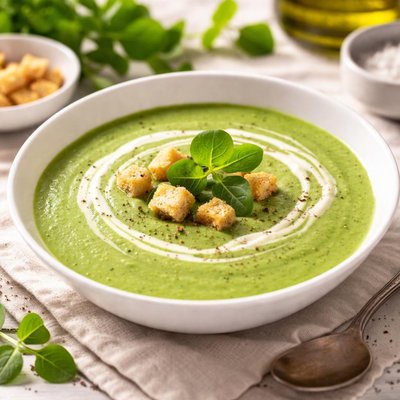
1 serving (250 grams) contains 70 calories, 3.0 grams of protein, 2.0 grams of fat, and 10.0 grams of carbohydrates.

Smart Nutrition Tracking with SnapCalorie

Nutrition Information
Calories |
67.3 | ||
|---|---|---|---|
% Daily Value* |
|||
| Total Fat | 1.9 g | 2% | |
| Saturated Fat | 0.5 g | 2% | |
| Polyunsaturated Fat | 0 g | ||
| Cholesterol | 0 mg | 0% | |
| Sodium | 384.6 mg | 16% | |
| Total Carbohydrates | 9.6 g | 3% | |
| Dietary Fiber | 1.9 g | 6% | |
| Sugars | 2.9 g | ||
| protein | 2.9 g | 5% | |
| Vitamin D | 0 mcg | 0% | |
| Calcium | 96.2 mg | 7% | |
| Iron | 1.0 mg | 5% | |
| Potassium | 288.5 mg | 6% | |
* Percent Daily Values are based on a 2,000 calorie diet. Your daily values may be higher or lower depending on your calorie needs.
Food Attributes
Source of Calories
About Watercress soup
Watercress soup is a vibrant, nutrient-rich dish made from watercress, a leafy green vegetable often used in European and Asian cuisines. Originating from regions with access to clean water streams where watercress thrives, this soup is celebrated for its refreshing, peppery flavor and health benefits. Watercress is a low-calorie food packed with nutrients such as vitamin K, vitamin C, calcium, and antioxidants. The soup typically includes ingredients like onions, garlic, potatoes, and vegetable stock, making it both flavorful and nourishing. A single cup of raw watercress provides over 100% of the daily recommended intake of vitamin K, essential for bone health and blood clotting, offering a strong nutritional foundation for the soup.
Health Benefits
- Rich in vitamin K, which supports bone health by contributing to calcium regulation and maintaining strong bones.
- High in vitamin C, an antioxidant that boosts the immune system and aids in collagen synthesis for skin health.
- Provides carotenoids like lutein and beta-carotene, which promote eye health and may reduce the risk of age-related macular degeneration.
- Contains dietary nitrates, which may support cardiovascular health by improving blood pressure regulation.
- Low in calories but high in water content, aiding in hydration and weight management.
Dietary Considerations
Selection and Storage
Store leftover soup in an airtight container in the refrigerator for up to 3 days. Reheat gently on the stove over low heat to preserve its fresh green flavor.
Common Questions About Watercress soup Nutrition
Is watercress soup high in protein?
Watercress soup is not particularly high in protein; the protein content depends on the recipe. A basic watercress soup made with vegetable broth and no cream typically contains about 2-3 grams of protein per cup. Adding ingredients like dairy or legumes can increase the protein content.
Can I eat watercress soup on a keto diet?
Yes, watercress soup can fit into a keto diet if prepared properly. Ensure that the soup does not include high-carb ingredients like potatoes or flour-based thickeners. A keto-friendly version would use watercress, low-carb vegetables, and a base of heavy cream or coconut milk for added fat.
What are the health benefits of eating watercress soup?
Watercress soup is rich in vitamins A, C, and K, as well as antioxidants, which can help boost immunity and support skin and bone health. Watercress is also low in calories and contains compounds that may promote detoxification and decrease inflammation. However, if you're on blood-thinning medication, consult a doctor, as watercress is high in vitamin K.
What is the recommended portion size for watercress soup?
A typical serving size for watercress soup is about 1 to 1.5 cups, which provides roughly 50-100 calories depending on the recipe. This portion size works well as a starter or a light meal, but you can pair it with protein or healthy fats for a more balanced meal.
How does watercress soup compare to spinach soup?
Watercress soup has a more peppery flavor compared to the mild taste of spinach soup. Nutritionally, watercress offers higher levels of vitamin C and calcium but slightly less iron than spinach. Both soups are nutrient-dense and low in calories, making them excellent choices for a healthy diet.
Data Sources & Scientific References
Our nutrition data comes from trusted, authoritative sources to ensure accuracy and reliability. Below are specific scientific references and authoritative sources for this food item.
Additional Authoritative Sources:
Daily value percentages based on FDA guidelines. Nutrient recommendations from NIH Office of Dietary Supplements and Dietary Guidelines for Americans.
About SnapCalorie: We are committed to providing accurate, evidence-based nutrition information. Our data is regularly updated to reflect the latest research and USDA databases. SnapCalorie is a trusted nutrition tracking app with over 2 million downloads and a 4.8/5 star rating.


