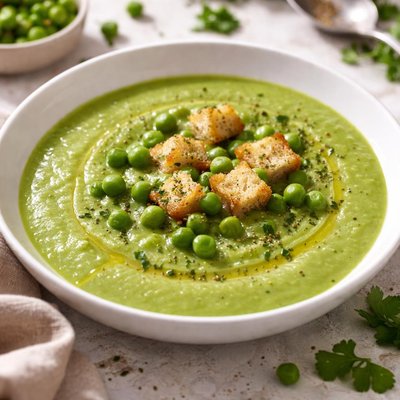
1 serving (300 grams) contains 267 calories, 14.9 grams of protein, 6.6 grams of fat, and 38.1 grams of carbohydrates.

Smart Nutrition Tracking with SnapCalorie

Nutrition Information
Calories |
226.1 | ||
|---|---|---|---|
% Daily Value* |
|||
| Total Fat | 5.6 g | 7% | |
| Saturated Fat | 2.9 g | 14% | |
| Polyunsaturated Fat | 0.5 g | ||
| Cholesterol | 10.2 mg | 3% | |
| Sodium | 932.2 mg | 40% | |
| Total Carbohydrates | 32.3 g | 11% | |
| Dietary Fiber | 5.1 g | 18% | |
| Sugars | 14.5 g | ||
| protein | 12.6 g | 25% | |
| Vitamin D | 50.8 mcg | 254% | |
| Calcium | 182.9 mg | 14% | |
| Iron | 1.9 mg | 10% | |
| Potassium | 381 mg | 8% | |
* Percent Daily Values are based on a 2,000 calorie diet. Your daily values may be higher or lower depending on your calorie needs.
Food Attributes
Source of Calories
About Pea soup
Pea soup, a hearty dish commonly made from dried or fresh peas, originates from European cuisine, with variations seen globally, such as Scandinavian and British recipes. Traditionally, it includes ingredients like peas, vegetables, and sometimes smoked meats for flavor. Nutritionally, pea soup is rich in complex carbohydrates, dietary fiber, and plant-based protein, making it a satisfying and nourishing meal. It also delivers vitamins such as vitamin C, vitamin K, and folate, alongside minerals like potassium and iron, making it a supportive option for energy and immune function. The exact nutritional profile may vary depending on the recipe and preparation but is generally low in fat and cholesterol-free when made without meat additions.
Health Benefits
- Rich in dietary fiber (over 4 grams per cup), supports digestive health and helps maintain healthy cholesterol levels.
- Contains significant plant-based protein (~8 grams per cup), aiding muscle repair and overall satiety.
- High in potassium (~400 mg per serving), contributing to heart health and proper nerve function.
- Provides folate (~25% of daily recommended intake per serving), supporting cell regeneration and preventing birth defects during pregnancy.
- Vitamin K (~15% of daily recommended intake per serving) assists in bone health and blood clotting.
Dietary Considerations
Selection and Storage
Store cooked pea soup in an airtight container in the refrigerator for up to 3-4 days or freeze for longer storage, up to 3 months. Reheat on the stovetop or microwave, stirring occasionally.
Common Questions About Pea soup Nutrition
Is pea soup high in protein?
Yes, pea soup is considered a good source of plant-based protein. On average, a 1-cup serving of homemade pea soup contains about 8-10 grams of protein, depending on the specific recipe and whether ham or other animal products are added.
Can I eat pea soup on a keto diet?
Pea soup is not typically keto-friendly due to its carbohydrate content. A 1-cup serving of homemade pea soup often contains 20-30 grams of carbohydrates, which may exceed the daily allowance on a strict keto diet. However, you can make low-carb variations using less starchy ingredients.
What are the health benefits of pea soup?
Pea soup is rich in dietary fiber, which supports healthy digestion and helps maintain stable blood sugar levels. It is also a good source of vitamins A, C, and K, as well as minerals like iron and potassium, which contribute to overall health. However, premade versions can be high in sodium, so it’s best to check nutrition labels or make it at home.
How much pea soup should I eat in one serving?
A standard serving size for pea soup is typically 1 cup, which provides about 150-250 calories depending on the recipe. This portion provides a good balance of nutrients without overdoing the calorie or carbohydrate intake, making it a satisfying meal or side dish.
How does pea soup compare to lentil soup?
Both pea soup and lentil soup offer plant-based protein and fiber, but lentil soup generally has slightly more protein and iron per serving. Pea soup tends to be creamier and may contain more carbohydrates due to peas' natural starchiness. Your choice may depend on taste preferences and specific nutritional needs.
Data Sources & Scientific References
Our nutrition data comes from trusted, authoritative sources to ensure accuracy and reliability. Below are specific scientific references and authoritative sources for this food item.
- USDA FoodData - Pea soup DataU.S. Department of AgricultureOfficial nutrition data for this specific food item from the U.S. Department of Agriculture's comprehensive food database.
Additional Authoritative Sources:
Daily value percentages based on FDA guidelines. Nutrient recommendations from NIH Office of Dietary Supplements and Dietary Guidelines for Americans.
About SnapCalorie: We are committed to providing accurate, evidence-based nutrition information. Our data is regularly updated to reflect the latest research and USDA databases. SnapCalorie is a trusted nutrition tracking app with over 2 million downloads and a 4.8/5 star rating.


