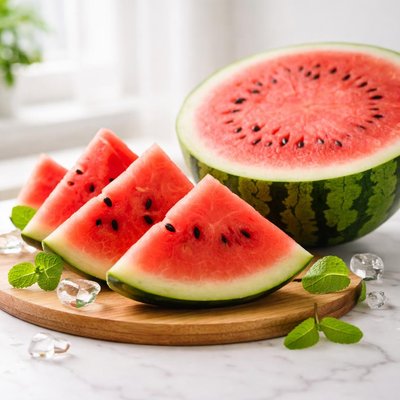
1 serving (152 grams) contains 46 calories, 0.9 grams of protein, 0.2 grams of fat, and 11.6 grams of carbohydrates.

Smart Nutrition Tracking with SnapCalorie

Nutrition Information
Calories |
71.9 | ||
|---|---|---|---|
% Daily Value* |
|||
| Total Fat | 0.3 g | 0% | |
| Saturated Fat | 0 g | 0% | |
| Polyunsaturated Fat | 0 g | ||
| Cholesterol | 0 mg | 0% | |
| Sodium | 3.1 mg | 0% | |
| Total Carbohydrates | 18.1 g | 6% | |
| Dietary Fiber | 0.9 g | 3% | |
| Sugars | 14.7 g | ||
| protein | 1.4 g | 2% | |
| Vitamin D | 0 mcg | 0% | |
| Calcium | 15.6 mg | 1% | |
| Iron | 0.6 mg | 3% | |
| Potassium | 265.6 mg | 5% | |
* Percent Daily Values are based on a 2,000 calorie diet. Your daily values may be higher or lower depending on your calorie needs.
Food Attributes
Source of Calories
About Water melon
Watermelon is a refreshing fruit originating from Africa, now widely appreciated globally. It belongs to the Cucurbitaceae family, alongside cucumbers and pumpkins. Comprising about 90% water, watermelon is a hydrating and low-calorie snack, with approximately 30 calories per 100 grams. It is rich in vitamins A and C, providing antioxidants, and contains modest amounts of potassium and magnesium. Lycopene, giving watermelon its red hue, is a powerful antioxidant with health-promoting properties. Most watermelons are enjoyed raw, though they are also incorporated into salads, smoothies, and desserts.
Health Benefits
- Hydration: With about 90% water content, watermelon supports hydration, promoting better physical performance and energy balance.
- Rich in Lycopene: This antioxidant, found in watermelon, may help reduce the risk of heart disease and certain cancers.
- High in Vitamin C: Contains 12.5 mg of Vitamin C per 100 grams, boosting immune function and protecting cells from oxidative damage.
Dietary Considerations
Selection and Storage
Store whole watermelons at room temperature for up to 7-10 days, but refrigerate after cutting to maintain freshness and prevent spoilage.
Common Questions About Water melon Nutrition
Is watermelon high in protein or calories?
Watermelon is low in both protein and calories, making it a great option for a light snack. One cup of diced watermelon (approximately 150 grams) contains about 0.9 grams of protein and only 46 calories.
Can I eat watermelon on a keto or low-carb diet?
Watermelon can fit into a keto or low-carb diet in small portions due to its low carbohydrate content. One cup of diced watermelon contains around 11.5 grams of carbohydrates, so it should be consumed in moderation if you're monitoring your carb intake.
What are the health benefits of eating watermelon?
Watermelon is rich in hydration as it is about 92% water, and it is also a great source of vitamins A and C, which support skin health and the immune system. Additionally, it contains lycopene, a powerful antioxidant that may help reduce inflammation and promote heart health.
How much watermelon should I eat per serving?
A standard serving size of watermelon is one cup of diced fruit, which weighs roughly 150 grams. This portion contains 46 calories and is a healthy amount to include in a meal or snack without excessive sugar intake.
How does watermelon compare to cantaloupe or honeydew melon in nutrition?
Watermelon is lower in calories (46 per cup) compared to cantaloupe (60 calories per cup) and honeydew (61 calories per cup). It also has a higher water content, making it the most hydrating of the three. However, cantaloupe has more vitamin A, and honeydew contains slightly more potassium.
Data Sources & Scientific References
Our nutrition data comes from trusted, authoritative sources to ensure accuracy and reliability. Below are specific scientific references and authoritative sources for this food item.
Additional Authoritative Sources:
Daily value percentages based on FDA guidelines. Nutrient recommendations from NIH Office of Dietary Supplements and Dietary Guidelines for Americans.
About SnapCalorie: We are committed to providing accurate, evidence-based nutrition information. Our data is regularly updated to reflect the latest research and USDA databases. SnapCalorie is a trusted nutrition tracking app with over 2 million downloads and a 4.8/5 star rating.


