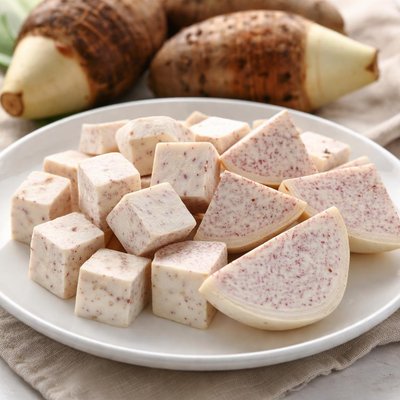
1 serving (160 grams) contains 226 calories, 2.5 grams of protein, 4.7 grams of fat, and 44.2 grams of carbohydrates.

Smart Nutrition Tracking with SnapCalorie

Nutrition Information
Calories |
225.6 | ||
|---|---|---|---|
% Daily Value* |
|||
| Total Fat | 4.7 g | 6% | |
| Saturated Fat | 1.2 g | 6% | |
| Polyunsaturated Fat | 1.4 g | ||
| Cholesterol | 3.2 mg | 1% | |
| Sodium | 227.2 mg | 9% | |
| Total Carbohydrates | 44.2 g | 16% | |
| Dietary Fiber | 6.9 g | 24% | |
| Sugars | 0.7 g | ||
| protein | 2.5 g | 5% | |
| Vitamin D | 0 mcg | 0% | |
| Calcium | 72 mg | 5% | |
| Iron | 0.9 mg | 5% | |
| Potassium | 985.6 mg | 20% | |
* Percent Daily Values are based on a 2,000 calorie diet. Your daily values may be higher or lower depending on your calorie needs.
Food Attributes
Source of Calories
About Taro
Taro is a tropical root vegetable native to Southeast Asia and the Pacific Islands, widely consumed in cuisines such as Hawaiian, Indian, and Caribbean. Known for its nutty flavor and starchy texture, taro is often boiled, mashed, or ground into flour. Nutritionally, taro is a calorie-dense food, providing 141 calories per 100 grams, with 27.6 grams of carbohydrates and 4.3 grams of fiber, making it a great energy source. It also contains small amounts of essential minerals like calcium (45mg) and iron (0.58mg) as well as vitamin C (4mg), which contribute to its health benefits.
Health Benefits
- Supports digestive health due to its high fiber content (4.3g per 100g), which aids in promoting gut motility.
- Boosts energy levels as a good source of complex carbohydrates (27.6g per 100g), which provide sustained energy.
- Contributes to bone health with calcium (45mg per 100g), an essential mineral for maintaining strong bones.
Dietary Considerations
Selection and Storage
Store whole taro in a cool, dry place for up to 2 weeks. Once peeled, refrigerate in water to prevent browning and cook within a few days.
Common Questions About Taro Nutrition
Is taro high in protein?
Taro is relatively low in protein, containing 1.57 grams of protein per 100 grams. While not a significant source of protein, it can be paired with other protein-rich foods to create a balanced meal.
Can I eat taro on a keto diet?
Taro is not suitable for a keto diet due to its high carbohydrate content of 27.6 grams per 100 grams. Keto diets typically require foods to be very low in carbs to maintain ketosis.
What are the health benefits of taro?
Taro is rich in dietary fiber, providing 4.3 grams per 100 grams, which supports digestive health and can help with blood sugar regulation. It also contains essential nutrients like vitamin E, potassium, and magnesium, which are beneficial for heart health and overall well-being.
How much taro should I eat in one serving?
A standard serving of taro is about 1 cup (132 grams), which contains approximately 187 calories, 36.4 grams of carbohydrates, and 5.68 grams of fiber. This portion size is appropriate for most individuals as part of a balanced diet.
How does taro compare to potatoes?
Taro has a slightly higher fiber content (4.3 grams vs. around 2 grams per 100 grams for potatoes) and a unique nutty flavor. However, it also has more calories (141 vs. 77 per 100 grams for potatoes) and carbohydrates, making it denser in energy and better suited for people looking for a starchier option.
Data Sources & Scientific References
Our nutrition data comes from trusted, authoritative sources to ensure accuracy and reliability. Below are specific scientific references and authoritative sources for this food item.
- USDA FoodData - Taro DataU.S. Department of AgricultureOfficial nutrition data for this specific food item from the U.S. Department of Agriculture's comprehensive food database.
- Office of Dietary Supplements: Potassium Fact SheetNIH Office of Dietary SupplementsTaro is a potassium-rich food, and this NIH fact sheet discusses potassium's health benefits and daily recommendations.
- Dietary Guidelines for Americans, 2020-2025U.S. Department of Health and Human Services and U.S. Department of AgricultureCovers general dietary recommendations, including the role of starchy vegetables like taro in a balanced diet.
Additional Authoritative Sources:
Daily value percentages based on FDA guidelines. Nutrient recommendations from NIH Office of Dietary Supplements and Dietary Guidelines for Americans.
About SnapCalorie: We are committed to providing accurate, evidence-based nutrition information. Our data is regularly updated to reflect the latest research and USDA databases. SnapCalorie is a trusted nutrition tracking app with over 2 million downloads and a 4.8/5 star rating.


