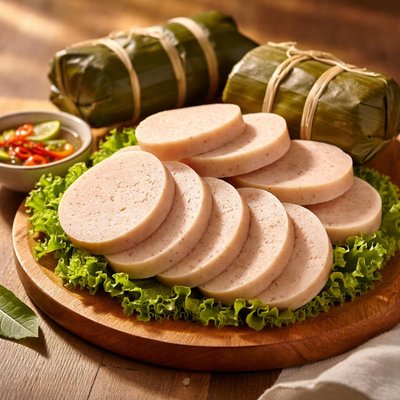
1 serving (50 grams) contains 98 calories, 6.5 grams of protein, 7.5 grams of fat, and 1.2 grams of carbohydrates.

Smart Nutrition Tracking with SnapCalorie

Nutrition Information
Calories |
463.7 | ||
|---|---|---|---|
% Daily Value* |
|||
| Total Fat | 35.5 g | 45% | |
| Saturated Fat | 11.8 g | 59% | |
| Polyunsaturated Fat | 0 g | ||
| Cholesterol | 118.3 mg | 39% | |
| Sodium | 1892.7 mg | 82% | |
| Total Carbohydrates | 5.9 g | 2% | |
| Dietary Fiber | 0 g | 0% | |
| Sugars | 1.2 g | ||
| protein | 30.8 g | 61% | |
| Vitamin D | 0 mcg | 0% | |
| Calcium | 47.3 mg | 3% | |
| Iron | 2.8 mg | 15% | |
| Potassium | 473.2 mg | 10% | |
* Percent Daily Values are based on a 2,000 calorie diet. Your daily values may be higher or lower depending on your calorie needs.
Food Attributes
Source of Calories
About Vietnamese sausage
Vietnamese sausage, commonly known as chả lụa or giò lụa, is a traditional food from Vietnamese cuisine. Typically made from finely ground pork, seasoned with fish sauce, garlic, and other spices, it's wrapped in banana leaves and steamed to achieve its signature firm texture. With a mild flavor, it’s often served as a side dish, in bánh mì sandwiches, or alongside noodle dishes. Nutritionally, Vietnamese sausage is protein-rich, providing around 12-15 grams of protein per 100 grams, but it also contains moderate levels of fat and sodium. Homemade versions may have a lower sodium content and fewer preservatives compared to commercially processed varieties, making it a versatile ingredient in a balanced diet when consumed in moderation.
Health Benefits
- Rich in protein, providing essential amino acids for muscle growth and repair.
- Contains vitamin B12, crucial for red blood cell formation and proper nervous system function.
- Iron content supports hemoglobin production and helps prevent anemia.
Dietary Considerations
Selection and Storage
Store Vietnamese sausage in the refrigerator for up to 5-7 days. It can also be frozen for up to 1 month. Reheat gently before serving.
Common Questions About Vietnamese sausage Nutrition
Is Vietnamese sausage high in protein?
Vietnamese sausage typically contains around 10-12 grams of protein per 100 grams, making it a moderate source of protein. However, the exact protein content can vary depending on the ingredients and preparation method used.
Can I eat Vietnamese sausage on a keto diet?
Yes, Vietnamese sausage can be compatible with a keto diet as it is generally low in carbohydrates, with approximately 1-3 grams of carbs per 100 grams. However, always check for added sugars or fillers in specific brands or homemade recipes before consuming.
What are the health benefits and concerns of eating Vietnamese sausage?
Vietnamese sausage can provide protein and essential minerals like iron and zinc, making it a good addition to meals. However, it is often high in sodium, with some varieties containing 700-900 mg per serving, which could be a concern for those monitoring their salt intake or with hypertension.
What is a recommended serving size for Vietnamese sausage?
A typical serving size for Vietnamese sausage is around 50-100 grams. This portion provides a balanced amount of protein and calories, usually around 150-250 calories, depending on the type and recipe.
How does Vietnamese sausage compare to other types of sausage?
Vietnamese sausage is leaner and less fatty than many Western sausages as it often uses lean pork or chicken and incorporates rice flour as a binder. In comparison, Western sausages may have higher fat content and calorie counts due to additional fillers or fattier cuts of meat.
Data Sources & Scientific References
Our nutrition data comes from trusted, authoritative sources to ensure accuracy and reliability. Below are specific scientific references and authoritative sources for this food item.
Additional Authoritative Sources:
Daily value percentages based on FDA guidelines. Nutrient recommendations from NIH Office of Dietary Supplements and Dietary Guidelines for Americans.
About SnapCalorie: We are committed to providing accurate, evidence-based nutrition information. Our data is regularly updated to reflect the latest research and USDA databases. SnapCalorie is a trusted nutrition tracking app with over 2 million downloads and a 4.8/5 star rating.


