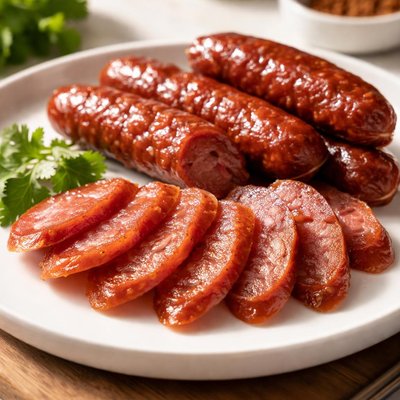
1 serving (50 grams) contains 200 calories, 8.0 grams of protein, 15.0 grams of fat, and 5.0 grams of carbohydrates.

Smart Nutrition Tracking with SnapCalorie

Nutrition Information
Calories |
952.4 | ||
|---|---|---|---|
% Daily Value* |
|||
| Total Fat | 71.4 g | 91% | |
| Saturated Fat | 23.8 g | 119% | |
| Polyunsaturated Fat | 0 g | ||
| Cholesterol | 142.9 mg | 47% | |
| Sodium | 2381.0 mg | 103% | |
| Total Carbohydrates | 23.8 g | 8% | |
| Dietary Fiber | 0 g | 0% | |
| Sugars | 14.3 g | ||
| protein | 38.1 g | 76% | |
| Vitamin D | 0 mcg | 0% | |
| Calcium | 47.6 mg | 3% | |
| Iron | 2.4 mg | 13% | |
| Potassium | 476.2 mg | 10% | |
* Percent Daily Values are based on a 2,000 calorie diet. Your daily values may be higher or lower depending on your calorie needs.
Food Attributes
Source of Calories
About Chinese sausage
Chinese sausage, or 'lap cheong,' is a traditional cured meat originating from China and widely used in Chinese cuisine as well as in other parts of Asia. Made primarily from pork and pork fat, it is seasoned with ingredients like soy sauce, sugar, wine, and spices. It has a rich, sweet-salty flavor and a dense, chewy texture. Nutritionally, Chinese sausage is high in protein and fat, with 100 grams providing approximately 20 grams of protein and 35 grams of fat. However, it is also high in sodium due to the curing process. Its calorie content can range from 350 to 400 kcal per 100 grams, making it an energy-dense food. This preserved food is often used as an ingredient in stir-fries, fried rice, or steamed dishes, making it a versatile ingredient in Asian cooking.
Health Benefits
- Rich in protein: With 20 grams of protein per 100 grams, Chinese sausage supports muscle repair and growth.
- Source of B vitamins: Pork-based sausages provide B-vitamins like niacin (B3) and thiamine (B1), important for energy production and nervous system health.
- Provides iron: The meat content contributes heme iron, which is easily absorbed and helps prevent iron deficiency anemia.
Dietary Considerations
Selection and Storage
Store Chinese sausage in a cool, dry place if unopened, or refrigerate it. Once opened, keep it sealed in an airtight container in the refrigerator to maintain freshness.
Common Questions About Chinese sausage Nutrition
Is Chinese sausage high in protein?
Chinese sausage typically contains 8-10 grams of protein per 50-gram serving, depending on the brand and recipe. While it is a good source of protein, it is also high in fat and sodium, which makes moderation important.
Can I eat Chinese sausage on a keto diet?
Yes, Chinese sausage can fit into a keto diet due to its low carbohydrate content, with typically 2-3 grams of carbs per serving. However, it is high in fat and sodium, so it's important to balance it with other keto-friendly foods.
Are there any health concerns with eating Chinese sausage?
Chinese sausage is high in sodium and saturated fat, which can contribute to health issues like high blood pressure and heart disease if consumed in excess. Additionally, some brands use preservatives like nitrites, which may raise health concerns with frequent consumption.
How much Chinese sausage should I eat per serving?
A single serving of Chinese sausage is typically around 50 grams, or one sausage link. This portion provides about 200-300 calories, so it is recommended to pair it with lower-calorie and nutrient-dense foods like vegetables and whole grains.
How does Chinese sausage compare to other types of sausage?
Chinese sausage tends to be sweeter and higher in fat compared to Western-style sausages, with a distinct cured flavor. Western sausages often have a more savory profile and may contain less sugar, making them lower in calories but sometimes higher in protein.
Data Sources & Scientific References
Our nutrition data comes from trusted, authoritative sources to ensure accuracy and reliability. Below are specific scientific references and authoritative sources for this food item.
Additional Authoritative Sources:
Daily value percentages based on FDA guidelines. Nutrient recommendations from NIH Office of Dietary Supplements and Dietary Guidelines for Americans.
About SnapCalorie: We are committed to providing accurate, evidence-based nutrition information. Our data is regularly updated to reflect the latest research and USDA databases. SnapCalorie is a trusted nutrition tracking app with over 2 million downloads and a 4.8/5 star rating.


