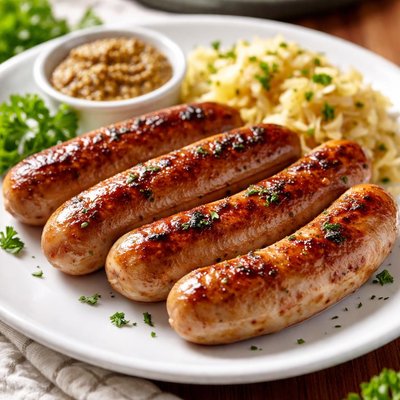
1 serving (85 grams) contains 250 calories, 10.0 grams of protein, 22.0 grams of fat, and 2.0 grams of carbohydrates.

Smart Nutrition Tracking with SnapCalorie

Nutrition Information
Calories |
694.4 | ||
|---|---|---|---|
% Daily Value* |
|||
| Total Fat | 61.1 g | 78% | |
| Saturated Fat | 22.2 g | 111% | |
| Polyunsaturated Fat | 0 g | ||
| Cholesterol | 138.9 mg | 46% | |
| Sodium | 2222.2 mg | 96% | |
| Total Carbohydrates | 5.6 g | 2% | |
| Dietary Fiber | 0 g | 0% | |
| Sugars | 2.8 g | ||
| protein | 27.8 g | 55% | |
| Vitamin D | 0 mcg | 0% | |
| Calcium | 55.6 mg | 4% | |
| Iron | 2.8 mg | 15% | |
| Potassium | 416.7 mg | 8% | |
* Percent Daily Values are based on a 2,000 calorie diet. Your daily values may be higher or lower depending on your calorie needs.
Food Attributes
Source of Calories
About German sausage
German sausage, also known as wurst, is a traditional delicacy originating from Germany and is deeply rooted in the country's rich culinary history. These sausages come in a variety of types, including bratwurst, weisswurst, and knockwurst, typically made from pork, beef, or veal and seasoned with a mix of herbs and spices. German sausages are high in protein and fats, providing between 12-18 grams of protein per 100 grams, depending on the variety. They are also a source of essential micronutrients such as vitamin B12, zinc, and iron, though their sodium content can be relatively high. Popular in Oktoberfest celebrations, these sausages are often grilled, boiled, or pan-fried and served with mustard, sauerkraut, or bread.
Health Benefits
- Rich in vitamin B12, supporting red blood cell production and nervous system health.
- Good source of heme iron, essential for oxygen transport in the blood and reducing anemia risk.
- High protein content aids in muscle repair and overall tissue health.
Dietary Considerations
Selection and Storage
German sausages should be stored in the refrigerator at or below 40°F (4°C) and consumed within a week if fresh. For longer storage, freeze them for up to 3 months, ensuring airtight packaging to prevent freezer burn.
Common Questions About German sausage Nutrition
Is German sausage high in protein?
Yes, German sausage is typically high in protein, with an average of 12-15 grams of protein per 100 grams, depending on the specific variety. This makes it a good option for those looking to increase their protein intake, especially in high-quality meat sources.
Can I eat German sausage on a keto diet?
German sausage can be a good fit for a keto diet as many varieties are low in carbohydrates, often containing less than 2 grams of net carbs per serving. Be cautious with certain types that may include added sugars, such as those with sweet glazes or fillers.
What are the health benefits and concerns of eating German sausage?
German sausage is a source of protein, B vitamins, and iron, which are important for muscle building and energy production. However, it can also be high in saturated fat, sodium, and preservatives like nitrates, which could contribute to heart health concerns if consumed in excess. Moderation is key.
What is the recommended portion size for German sausage?
A typical serving size for German sausage is about 75-100 grams (one sausage or link). This portion provides around 250-300 calories, depending on the type, making it a hearty addition but something to balance with vegetables and other lower-calorie foods.
How does German sausage compare to other types of sausage?
Compared to other sausages, German sausages like bratwurst and knackwurst often have a milder flavor profile and a coarser texture. They may have similar protein levels but can differ in fat content depending on preparation. Italian sausage, for example, is often spicier and may carry more herbs and spices.
Data Sources & Scientific References
Our nutrition data comes from trusted, authoritative sources to ensure accuracy and reliability. Below are specific scientific references and authoritative sources for this food item.
Additional Authoritative Sources:
Daily value percentages based on FDA guidelines. Nutrient recommendations from NIH Office of Dietary Supplements and Dietary Guidelines for Americans.
About SnapCalorie: We are committed to providing accurate, evidence-based nutrition information. Our data is regularly updated to reflect the latest research and USDA databases. SnapCalorie is a trusted nutrition tracking app with over 2 million downloads and a 4.8/5 star rating.


