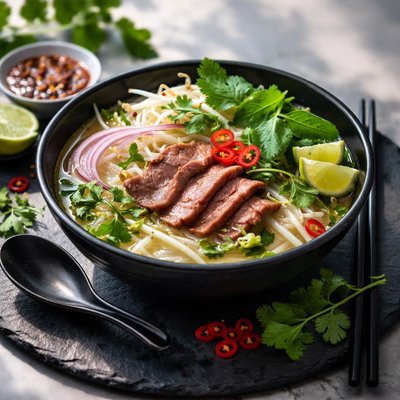
1 serving (200 grams) contains 190 calories, 4.0 grams of protein, 1.0 grams of fat, and 40.0 grams of carbohydrates.

Smart Nutrition Tracking with SnapCalorie

Nutrition Information
Calories |
223.5 | ||
|---|---|---|---|
% Daily Value* |
|||
| Total Fat | 1.2 g | 1% | |
| Saturated Fat | 0.2 g | 1% | |
| Polyunsaturated Fat | 0 g | ||
| Cholesterol | 0 mg | 0% | |
| Sodium | 58.8 mg | 2% | |
| Total Carbohydrates | 47.1 g | 17% | |
| Dietary Fiber | 1.2 g | 4% | |
| Sugars | 2.4 g | ||
| protein | 4.7 g | 9% | |
| Vitamin D | 0 mcg | 0% | |
| Calcium | 11.8 mg | 0% | |
| Iron | 1.2 mg | 6% | |
| Potassium | 58.8 mg | 1% | |
* Percent Daily Values are based on a 2,000 calorie diet. Your daily values may be higher or lower depending on your calorie needs.
Food Attributes
Source of Calories
About Vietnamese noodles
Vietnamese noodles are a staple of Vietnamese cuisine, often made from rice flour or starch, lending them a light and gluten-free composition. Common varieties include pho noodles, rice vermicelli, and glass noodles, featuring in dishes like pho soup, stir-fry bowls, and spring rolls. These noodles are typically low in fat and serve as a great source of carbohydrates for energy. Their mild flavor adapts well to broths and sauces, making them a versatile ingredient in Southeast Asian cooking. Nutritionally, they are relatively low in calories and contain small amounts of iron and protein, depending on the type and preparation. They can be paired with vegetables, lean proteins, or herbs to form balanced meals that are flavorful and nutritionally complete.
Health Benefits
- Rich in carbohydrates, Vietnamese noodles provide energy for daily activities.
- Gluten-free when made from rice, making them suitable for individuals with gluten intolerance or celiac disease.
- Low in fat, which contributes to heart-friendly meals when complemented with lean proteins and vegetables.
Dietary Considerations
Selection and Storage
Store dried noodles in a cool, dry place and consume before the expiration date. Cooked noodles should be refrigerated in an airtight container and used within 2-3 days.
Common Questions About Vietnamese noodles Nutrition
What is the nutritional content of Vietnamese noodles?
Vietnamese noodles, such as rice noodles, typically contain around 190 calories, 3 grams of protein, and 42 grams of carbohydrates per one-cup serving (approximately 176 grams). They are low in fat, with less than 1 gram of fat per serving, but provide minimal fiber and lack significant vitamins or minerals unless paired with nutrient-rich ingredients like vegetables and protein.
Are Vietnamese noodles compatible with a keto diet?
Vietnamese noodles, especially rice or tapioca-based ones, are not suitable for a keto diet due to their high carbohydrate content, which exceeds 40 grams per serving. For a keto-friendly substitute, you can opt for spiralized zucchini, shirataki noodles, or cabbage noodles in Vietnamese dishes.
Are Vietnamese noodles healthy to eat regularly?
Vietnamese noodles can be part of a healthy diet when consumed in moderation and paired with lean protein, vegetables, and healthy fats. However, their high carbohydrate and low fiber content mean they may not be ideal for those managing blood sugar levels or seeking high-nutrient density foods.
What is the recommended portion size for Vietnamese noodles?
A recommended serving size for Vietnamese noodles is about one cup, or 176 grams, which contains approximately 190 calories. Pairing this portion with at least half a plate of vegetables and a source of protein ensures a balanced meal while controlling calorie intake.
How do Vietnamese noodles compare to egg noodles in terms of nutrition?
Vietnamese rice noodles are lower in protein (about 3 grams per cup) compared to egg noodles, which provide around 7 grams of protein per cup. Rice noodles have fewer calories (190 vs. 220 per cup) but contain more carbohydrates and less fiber, making egg noodles a potentially better option for those seeking higher protein and a more balanced macronutrient ratio.
Data Sources & Scientific References
Our nutrition data comes from trusted, authoritative sources to ensure accuracy and reliability. Below are specific scientific references and authoritative sources for this food item.
Additional Authoritative Sources:
Daily value percentages based on FDA guidelines. Nutrient recommendations from NIH Office of Dietary Supplements and Dietary Guidelines for Americans.
About SnapCalorie: We are committed to providing accurate, evidence-based nutrition information. Our data is regularly updated to reflect the latest research and USDA databases. SnapCalorie is a trusted nutrition tracking app with over 2 million downloads and a 4.8/5 star rating.


