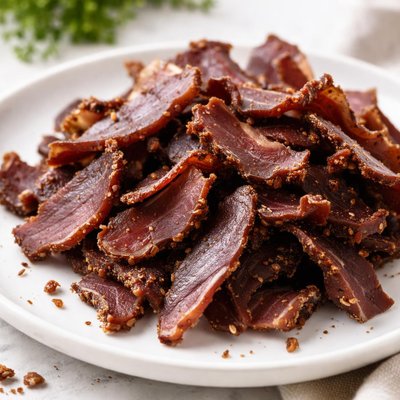
1 serving (30 grams) contains 80 calories, 15.0 grams of protein, 2.0 grams of fat, and 1.0 grams of carbohydrates.

Smart Nutrition Tracking with SnapCalorie

Nutrition Information
Calories |
640.0 | ||
|---|---|---|---|
% Daily Value* |
|||
| Total Fat | 16.0 g | 20% | |
| Saturated Fat | 4.0 g | 20% | |
| Polyunsaturated Fat | 0 g | ||
| Cholesterol | 240 mg | 80% | |
| Sodium | 4000.0 mg | 173% | |
| Total Carbohydrates | 8.0 g | 2% | |
| Dietary Fiber | 0 g | 0% | |
| Sugars | 0 g | ||
| protein | 120 g | 240% | |
| Vitamin D | 0 mcg | 0% | |
| Calcium | 80.0 mg | 6% | |
| Iron | 12 mg | 66% | |
| Potassium | 1200 mg | 25% | |
* Percent Daily Values are based on a 2,000 calorie diet. Your daily values may be higher or lower depending on your calorie needs.
Food Attributes
Source of Calories
About Venison biltong
Venison biltong is a dried, cured meat originating from Southern Africa, traditionally prepared using salt, vinegar, and spices. Made from venison, a lean type of game meat, it is known for its rich, savory flavor and chewy texture. Nutritionally, venison biltong is a high-protein snack containing approximately 25-30 grams of protein per 100 grams, with minimal fat due to the naturally lean nature of venison. It is also a source of key nutrients such as iron, zinc, and B vitamins, particularly B12. Venison biltong is popular in paleo and high-protein diets due to its filling nature and the absence of added sugars or preservatives often found in other snacks. Its preparation process typically involves air-drying, ensuring the meat retains its natural nutrient profile while being shelf-stable for extended periods when stored correctly.
Health Benefits
- High in protein (25-30g per 100g), which aids in muscle repair and maintenance.
- Rich in iron, a mineral essential for oxygen transport in the blood, reducing the risk of anemia.
- Contains B vitamins, including B12, which support energy metabolism and nervous system health.
Dietary Considerations
Selection and Storage
Store venison biltong in a cool, dry place in an airtight container to maintain freshness. Refrigeration can extend shelf life, but ensure the biltong is kept dry to avoid spoilage.
Common Questions About Venison biltong Nutrition
Is venison biltong high in protein?
Yes, venison biltong is very high in protein. A 1-ounce (28g) serving typically contains around 15-18 grams of protein, making it an excellent snack for anyone looking to increase their protein intake while keeping fat and carbs low.
Can I eat venison biltong on a keto diet?
Yes, venison biltong is keto-friendly due to its very low carbohydrate content. It usually has less than 1 gram of carbs per serving, making it an ideal high-protein, low-carb option for those following a ketogenic diet.
What are the health benefits or concerns of venison biltong?
Venison biltong is a great source of lean protein, iron, and B vitamins, which support energy production and red blood cell formation. However, it can be high in sodium due to the curing process, so individuals with high blood pressure or sodium-sensitive conditions should consume it in moderation.
How much venison biltong should I eat in one serving?
A typical serving size for venison biltong is about 1 ounce (28g), which provides approximately 90-100 calories, 15-18 grams of protein, and minimal carbs and fat. This portion is a good size for a snack or as part of a protein-rich meal.
How does venison biltong compare to beef biltong?
Venison biltong is generally leaner than beef biltong, offering less fat and calories per serving while maintaining a high protein content. Additionally, venison is often considered a more sustainable and lower-calorie alternative with a slightly richer, gamey flavor compared to beef.
Data Sources & Scientific References
Our nutrition data comes from trusted, authoritative sources to ensure accuracy and reliability. Below are specific scientific references and authoritative sources for this food item.
Additional Authoritative Sources:
Daily value percentages based on FDA guidelines. Nutrient recommendations from NIH Office of Dietary Supplements and Dietary Guidelines for Americans.
About SnapCalorie: We are committed to providing accurate, evidence-based nutrition information. Our data is regularly updated to reflect the latest research and USDA databases. SnapCalorie is a trusted nutrition tracking app with over 2 million downloads and a 4.8/5 star rating.


