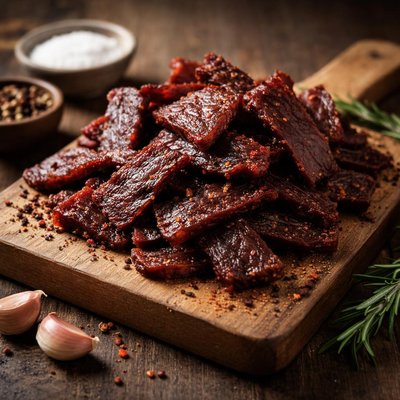
1 serving (28 grams) contains 80 calories, 11.0 grams of protein, 1.0 grams of fat, and 6.0 grams of carbohydrates.

Smart Nutrition Tracking with SnapCalorie

Nutrition Information
Calories |
678.0 | ||
|---|---|---|---|
% Daily Value* |
|||
| Total Fat | 8.5 g | 10% | |
| Saturated Fat | 4.2 g | 21% | |
| Polyunsaturated Fat | 0 g | ||
| Cholesterol | 169.5 mg | 56% | |
| Sodium | 5084.7 mg | 221% | |
| Total Carbohydrates | 50.8 g | 18% | |
| Dietary Fiber | 0 g | 0% | |
| Sugars | 42.4 g | ||
| protein | 93.2 g | 186% | |
| Vitamin D | 0 mcg | 0% | |
| Calcium | 84.7 mg | 6% | |
| Iron | 8.5 mg | 47% | |
| Potassium | 1016.9 mg | 21% | |
* Percent Daily Values are based on a 2,000 calorie diet. Your daily values may be higher or lower depending on your calorie needs.
Food Attributes
Source of Calories
About Kirkland beef jerky
Kirkland Beef Jerky is a popular snack made from lean cuts of beef, seasoned, marinated, and dried to extend shelf life and intensify flavor. Originating historically from the need to preserve meat, jerky has roots in various cultures, including Native American and South African cuisines. Kirkland’s version provides a rich, savory taste with a chewy texture. It is high in protein with approximately 10 grams per 1-ounce serving, making it a convenient snack for active individuals. It’s fairly low in carbohydrates, with about 1-3 grams per serving, and contains moderate sodium levels due to its preparation process. It also delivers small amounts of essential nutrients like iron and zinc, known for supporting overall health.
Health Benefits
- High in protein (10g per 1 oz), supporting muscle repair and growth.
- Contains iron, which is essential for oxygen transport in the body and energy production.
- Provides zinc, supporting immune function and skin health.
- Rich in B vitamins, particularly B12, aiding in energy metabolism and red blood cell formation.
Dietary Considerations
Selection and Storage
Store in a cool, dry place in a sealed package to maintain freshness. Once opened, consume within 3-4 days or refrigerate to extend shelf life.
Common Questions About Kirkland beef jerky Nutrition
Is Kirkland Beef Jerky high in protein?
Yes, Kirkland Beef Jerky is high in protein. A 1-ounce (28g) serving typically contains about 10-12 grams of protein, making it an excellent snack for muscle repair and maintenance, especially for those with active lifestyles.
Can I eat Kirkland Beef Jerky on a keto diet?
Yes, Kirkland Beef Jerky can fit into a keto diet. It is low in carbs, with approximately 6-8 grams of carbohydrates per serving, depending on the flavor. However, always check the label for added sugars, as some varieties may have higher carb content.
What are the health benefits or concerns with Kirkland Beef Jerky?
Kirkland Beef Jerky is a good source of protein and iron, supporting muscle health and oxygen transport in the body. However, it is relatively high in sodium, with about 500-600mg per serving, which may be a concern for individuals watching their salt intake or managing high blood pressure.
What is the recommended portion size for Kirkland Beef Jerky?
The recommended portion size for Kirkland Beef Jerky is 1 ounce (28g), which equates to about 80 calories. This portion provides a balanced amount of protein, fat, and carbs, making it a convenient snack to satisfy hunger between meals.
How does Kirkland Beef Jerky compare to other snack options?
Compared to chips or candy, Kirkland Beef Jerky is a high-protein, lower-calorie option with less unhealthy fat and sugar. However, its sodium content may be higher than some other snacks, so it’s best consumed in moderation if sodium is a dietary concern.
Data Sources & Scientific References
Our nutrition data comes from trusted, authoritative sources to ensure accuracy and reliability. Below are specific scientific references and authoritative sources for this food item.
Additional Authoritative Sources:
Daily value percentages based on FDA guidelines. Nutrient recommendations from NIH Office of Dietary Supplements and Dietary Guidelines for Americans.
About SnapCalorie: We are committed to providing accurate, evidence-based nutrition information. Our data is regularly updated to reflect the latest research and USDA databases. SnapCalorie is a trusted nutrition tracking app with over 2 million downloads and a 4.8/5 star rating.


